
Iron for Beginners: A Complete Guide
Iron for beginners is a topic worth understanding properly before you start supplementing. Iron is an essential trace mineral, but it is one of the few micronutrients where both too little and too much carry real health consequences. This guide explains what iron does, how to start supplementing, what to expect, and the mistakes that first-time users commonly make.
What Iron Does
Iron is the central component of haemoglobin, the protein in red blood cells that carries oxygen from the lungs to every cell in the body. It is also a component of myoglobin, which stores oxygen in muscle tissue. Beyond oxygen transport, iron is involved in mitochondrial energy production, neurotransmitter synthesis, and immune cell activity.
Iron deficiency is the most common nutrient deficiency globally. In athletes, endurance runners are especially at risk due to a combination of sweat losses, GI microbleeding from repeated impact, and elevated red blood cell turnover. Women of reproductive age are another high-risk group due to menstrual blood losses.
How to Start
Before starting iron supplementation, it is important to know your baseline status. Starting iron without confirming deficiency is unnecessary and carries the risk of excess intake, since excess iron generates oxidative stress rather than benefit. A simple serum ferritin test is the most sensitive indicator of iron stores and is available through a standard blood test.
If your ferritin is confirmed low or your doctor has identified iron-deficiency anaemia, supplementation is appropriate. Standard supplemental iron forms include:
- Ferrous bisglycinate: A chelated form with good bioavailability and generally fewer GI side effects than ferrous sulphate. Available at maxfit.ee as
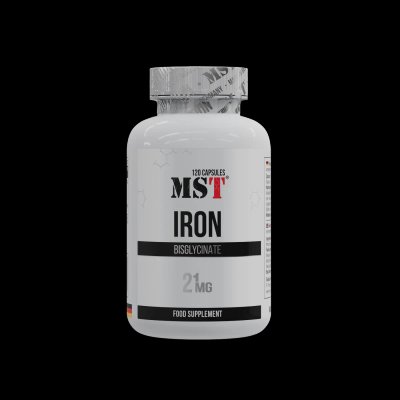 MST Iron bisglycinate€19.90 In stock 21mg 120caps and MST Iron bisglycinate 21mg 60caps.
 - Ferrochel (ferrous bisglycinate chelate): A patented chelated form. Available as NOW Iron 36mg Ferrochel 90caps.
- Ferrous complex: Products like NOW Iron Complex 100tabs and ICONFIT Capsules Ferrum + Vitamin C 90caps combine iron with co-factors including vitamin C, which meaningfully increases non-haem iron absorption (Cook & Reddy, 2001).
All these options are in the iron supplements category at maxfit.ee.
What to Expect and When
Iron supplementation does not produce fast results. Red blood cell production and haemoglobin restoration take weeks. Expect the following general timeline:
- Weeks 1–2: GI adjustment period. Some users experience constipation, nausea, or dark stools — these are normal.
- Weeks 4–8: Serum ferritin begins to rise in most people with confirmed deficiency who are supplementing consistently.
- Weeks 8–16: Haemoglobin levels typically normalise if deficiency was the cause of low values.
- Months 3–6: Full replenishment of iron stores takes several months for people who started with significantly depleted stores.
Energy levels, exercise tolerance, and cognitive focus often improve noticeably once haemoglobin and ferritin reach normal ranges.
Common Mistakes
- Supplementing without testing first: Take a ferritin test before starting. Iron toxicity, though rare from supplements alone in healthy adults, is a real risk in people with normal stores or haemochromatosis.
- Taking iron with calcium, tea, or coffee: These significantly reduce iron absorption. Calcium can reduce non-haem iron absorption. Polyphenols in tea and coffee also inhibit absorption. Take iron at a separate meal or between meals.
- Stopping too early: Many people stop as soon as they feel better, before stores are fully replenished. Consult a doctor or dietitian about how long to continue.
- Ignoring vitamin C co-ingestion: Iron combined with vitamin C is absorbed more efficiently (Cook & Reddy, 2001). Take iron with a source of vitamin C or choose a product that already contains it.
- Using high-dose iron without medical guidance: Higher doses are not always better. Confirm the right dose with a healthcare provider based on your test results.
Choosing a Product
For beginners, chelated forms (bisglycinate, Ferrochel) are generally preferable to traditional ferrous sulphate because they cause fewer GI side effects at equivalent doses. If your diet is already high in vitamin C, a plain iron supplement is fine; if not, a combination product simplifies things.
Start with the lower end of the dose range. If you experience GI discomfort, take the supplement with food or split the dose across two smaller meals.
FAQ
Do I need a doctor's recommendation before taking iron supplements?
For over-the-counter supplement doses, a doctor's prescription is not legally required. However, confirming you actually have low iron via a ferritin test before supplementing is strongly recommended. Taking iron when stores are already normal provides no benefit and may cause harm.
Can I take iron every day?
For therapeutic repletion of confirmed iron deficiency, daily dosing is standard. Some research suggests that alternate-day dosing may improve net absorption by reducing hepcidin upregulation, but for most users daily dosing within recommended amounts is practical and effective.
How long should I take iron supplements?
This depends on your starting ferritin level and the underlying reason for deficiency. Typically, supplementation continues for several months after haemoglobin normalises to fully replenish stores. Follow up with a repeat ferritin test to guide duration.
References
Cook, J. D., & Reddy, M. B. (2001). Effect of ascorbic acid intake on nonheme-iron absorption from a complete diet. American Journal of Clinical Nutrition, 73(1), 93-98. https://pubmed.ncbi.nlm.nih.gov/11124756/
Hurrell, R., & Egli, I. (2010). Iron bioavailability and dietary reference values. American Journal of Clinical Nutrition, 91(5), 1461S-1467S. https://pubmed.ncbi.nlm.nih.gov/20200263/
Tolkien, Z., et al. (2015). Ferrous sulfate supplementation causes significant gastrointestinal side-effects in adults: a systematic review and meta-analysis. PLoS ONE, 10(2), e0117383. https://pubmed.ncbi.nlm.nih.gov/25700159/



