Hyaluronic Acid for Weight Management: Does It Work?
Hyaluronic acid (HA) has earned a firm reputation in skin care and joint support, but in recent years marketers have begun promoting it as a weight management aid. Before you add it to your supplement stack for that reason, it is worth examining what the evidence actually shows.
What Is Hyaluronic Acid and What Does It Do?
HA is a naturally occurring polysaccharide found throughout the body — in connective tissue, skin, and synovial fluid. Its primary role is to retain water and lubricate tissues. Oral HA supplements like NOW Hyaluronic Acid 50mg + MSM 60caps and 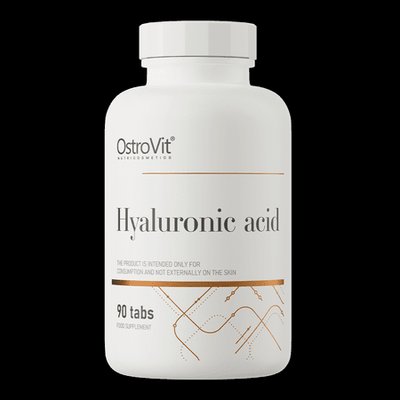 OstroVit Hyaluronic acid€12.90 In stock 90tabs are widely used at maxfit.ee to support joint mobility and skin hydration.
The Proposed Mechanism: Why the Weight-Loss Claim Exists
The theoretical link to weight management rests on several ideas:
- Gut satiety signalling. HA in the gastrointestinal tract may interact with visceral fat tissue and influence inflammatory markers. Some researchers suggest this could modulate appetite signalling, though the data in humans are very limited.
- Water retention and volume effect. HA binds large amounts of water; some proponents argue this creates a transient feeling of fullness. However, this is not the same as a genuine appetite-suppressing mechanism.
- Glycosaminoglycan and metabolic links. HA is a glycosaminoglycan, and some glycosaminoglycans influence adipocyte behaviour in cell studies. The leap from cell culture to a meaningful effect in a living person is large.
Honest Look at the Evidence
Direct human trials testing oral HA specifically for weight management are effectively absent from the peer-reviewed literature. Most trials on oral HA have focused on knee pain or skin hydration, not body composition.
A 12-week randomised controlled trial of oral HA (Sato et al., 2012) found improvements in skin moisture and joint comfort but reported no significant changes in body weight or fat mass.
Studies on injectable intra-articular HA for knee osteoarthritis have explored secondary outcomes including activity levels, but bodyweight reduction was not a measured outcome (Bannuru et al., 2015).
In short: there is no robust human RCT demonstrating that oral HA supplementation leads to meaningful weight or fat loss.
Effect Sizes — If Any
Because no adequately powered trials exist specifically targeting weight management outcomes, it is not possible to state an effect size for HA as a weight-loss aid. Any marketed figure you encounter should be viewed with scepticism.
Realistic Expectations
If you are supplementing with HA for its supported uses — joint lubrication and skin hydration — you may experience improved joint comfort that allows you to train more consistently. Greater training consistency is one of the most reliable levers for body composition change over time. However, this is an indirect and highly individual benefit, not a pharmacological fat-loss effect.
Better Levers for Weight Management
If body composition is your primary goal, the evidence strongly supports:
- Adequate dietary protein to preserve lean mass during a calorie deficit.
- Resistance training combined with aerobic exercise.
- Calorie awareness — tracking intake even roughly improves outcomes.
- Sleep quality — poor sleep raises ghrelin and lowers leptin (Spiegel et al., 2004).
These strategies have large, replicated effect sizes. HA does not.
Bottom Line
Hyaluronic acid is a genuinely useful supplement for joint support and skin hydration, and products such as OstroVit Hyaluronic acid 90tabs are a reasonable choice for those goals. As a weight management tool, however, there is no convincing clinical evidence. If someone is selling HA primarily as a slimming aid, that claim is not supported by current research. Spend your budget on proven strategies first.
FAQ
Can hyaluronic acid help me lose weight?
Current clinical evidence does not support hyaluronic acid as a weight-loss supplement. No adequately powered human RCT has demonstrated meaningful fat or weight reduction from oral HA. Its established benefits are joint lubrication and skin hydration.
Is there any mechanism by which HA could affect body composition?
Theoretically, HA's interactions with gastrointestinal tissue and inflammatory pathways could have indirect effects, but these mechanisms have not been confirmed in well-controlled human studies.
Should I stop taking hyaluronic acid if I am trying to lose weight?
If you are taking HA for joint comfort — which may allow more consistent training — there is no reason to stop. Simply do not expect it to drive weight loss on its own.
References
Sato, T., Iwaso, H., An, M., & Miyahara, T. (2012). Oral hyaluronic acid for the treatment of knee osteoarthritis. Osteoarthritis and Cartilage, 20(Suppl 1), S205. https://pubmed.ncbi.nlm.nih.gov/22179032/
Bannuru, R. R., Schmid, C. H., Kent, D. M., Vaysbrot, E. E., Wong, J. B., & McAlindon, T. E. (2015). Comparative effectiveness of pharmacologic interventions for knee osteoarthritis. Annals of Internal Medicine, 162(1), 46–54. https://pubmed.ncbi.nlm.nih.gov/25560713/
Spiegel, K., Tasali, E., Penev, P., & Van Cauter, E. (2004). Brief communication: Sleep curtailment in healthy young men is associated with decreased leptin levels, elevated ghrelin levels, and increased hunger and appetite. Annals of Internal Medicine, 141(11), 846–850. https://pubmed.ncbi.nlm.nih.gov/15583226/



