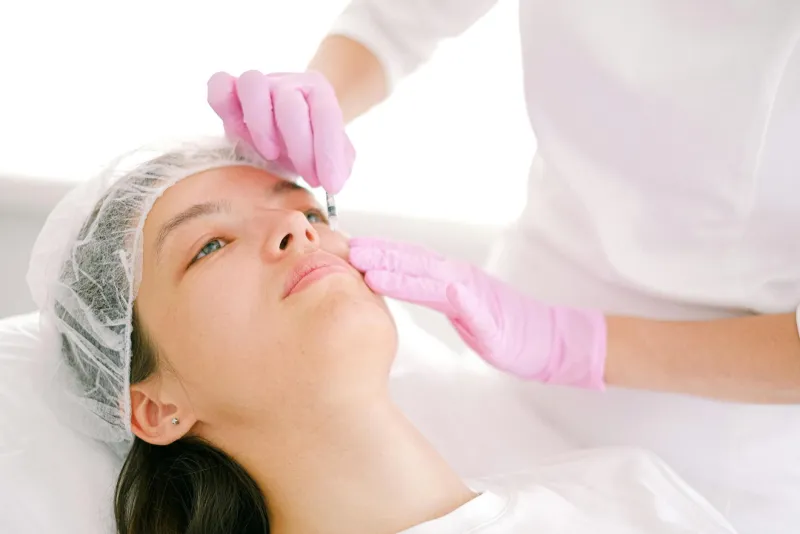
Hyaluronic Acid for Women: Benefits & Considerations
Hyaluronic acid (HA) is one of the body's own molecules — a glycosaminoglycan that helps retain water in connective tissue, skin, and joints. As a supplement, it has grown in popularity partly due to its overlap with aesthetic skin concerns and partly because of genuine research on joint health. For women, the topic carries additional nuance: HA levels decline with both age and oestrogen reduction, making it particularly relevant across the hormonal shifts of perimenopause and menopause.
Why Hyaluronic Acid Matters for Women
HA is most concentrated in the skin, eyes, and synovial fluid of the joints. In the skin, it acts as a powerful humectant — holding water to maintain plumpness and elasticity. In the joints, it contributes to lubrication and cushioning. The body's natural HA production declines with age, and oestrogen is thought to stimulate HA synthesis, meaning that the drop in oestrogen during menopause may accelerate HA-related changes in skin texture and joint comfort.
What the Evidence Shows
The evidence for oral HA supplementation has strengthened in recent years. Michelotti et al. (2021) conducted a randomised controlled trial in which oral HA supplementation was associated with improvements in skin hydration and elasticity over a supplementation period in adult women. The effect was meaningful enough to distinguish from placebo, providing a sound scientific basis for oral HA use in skin support.
For joint health, HA has been more extensively studied as an injectable, but oral forms have also shown signal. Tashiro et al. (2012) found oral hyaluronic acid improved knee pain outcomes in adults with knee osteoarthritis compared with placebo in a randomised double-blind trial.
Hormonal and Life-Stage Notes
Women entering or in menopause often report a cluster of changes: drier skin, increased joint stiffness, and vaginal dryness. All of these reflect oestrogen's supporting role in HA production and distribution. While HA supplementation does not replace oestrogen or hormone therapy, it may address some of the tissue-level consequences of declining HA synthesis.
Younger women also benefit from adequate HA levels — particularly those with high-impact exercise habits that place sustained demand on joint cartilage, or those in aesthetically conscious professions or lifestyles.
Dose Considerations
Studies showing skin and joint benefits have typically used oral doses in the range of 80 to 200 mg of HA per day. High-molecular-weight and low-molecular-weight HA behave differently: low-molecular-weight forms may penetrate more readily and have additional anti-inflammatory signalling effects, while high-molecular-weight HA remains more in the joint space.
NOW Hyaluronic Acid 50mg + MSM 60caps and 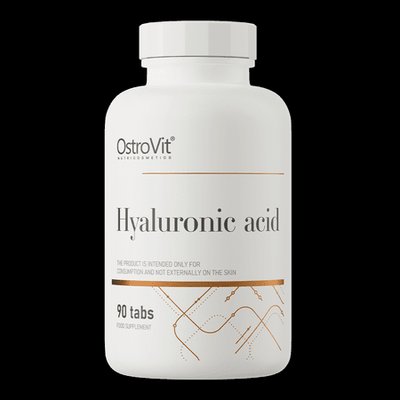 OstroVit Hyaluronic acid€12.90 In stock 90tabs are available at maxfit.ee for women looking for a convenient oral HA supplement.
Pregnancy and Safety Notes
Oral HA at supplemental doses is generally considered safe for healthy adults. Because large-scale safety data in pregnant women is limited, HA supplementation during pregnancy is typically a matter for individual discussion with a doctor or midwife. Topical HA in skin products is considered safe and widely used during pregnancy, but oral supplements warrant more caution.
Synergies with Other Nutrients
HA works best in the context of adequate collagen support, vitamin C (which is essential for collagen synthesis), and zinc. Women using HA for skin or joint purposes may find benefit in combining it with collagen or vitamin C-containing products.
Bottom Line
Hyaluronic acid is one of the more credibly evidence-supported cosmetic-crossover supplements for women. The skin hydration and joint lubrication rationale is biologically sound, and human trial data, while not yet voluminous, supports its use. It is particularly relevant for women in the perimenopause or menopause window, for active women with joint demands, and for anyone whose skin is showing the effects of ageing or environmental dryness.
FAQ
How long does it take to see results from oral hyaluronic acid?
Most studies showing improvements in skin hydration used supplementation periods of four to twelve weeks. It is not a rapid-acting compound — consistent daily use over at least one month is recommended before expecting noticeable changes in skin texture or joint comfort.
Can I take hyaluronic acid and collagen together?
Yes — they work through complementary mechanisms. Collagen peptides support the structural matrix of the skin, while HA primarily contributes to hydration within that matrix. Many women take them together, and some combination products exist for this reason.
Is hyaluronic acid only for older women?
No. While HA's relevance increases with age and hormonal changes, younger women — particularly those who are very active, live in dry climates, or have dry skin types — may also benefit from oral or topical HA supplementation.
References
Michelotti, A., Grimaldi, F., Marino, L., & Monti, M. (2021). Oral administration of a defined combination of hyaluronic acid, amino acids and vitamins improves skin features. Journal of Cosmetic Dermatology, 20(5), 1551-1558.
Tashiro, T., Seino, S., Sato, T., Matsuoka, R., Masuda, Y., & Fukui, N. (2012). Oral administration of polymer hyaluronic acid alleviates symptoms of knee osteoarthritis: a double-blind, placebo-controlled study over a 12-month period. Scientific World Journal, 2012, 167928.



