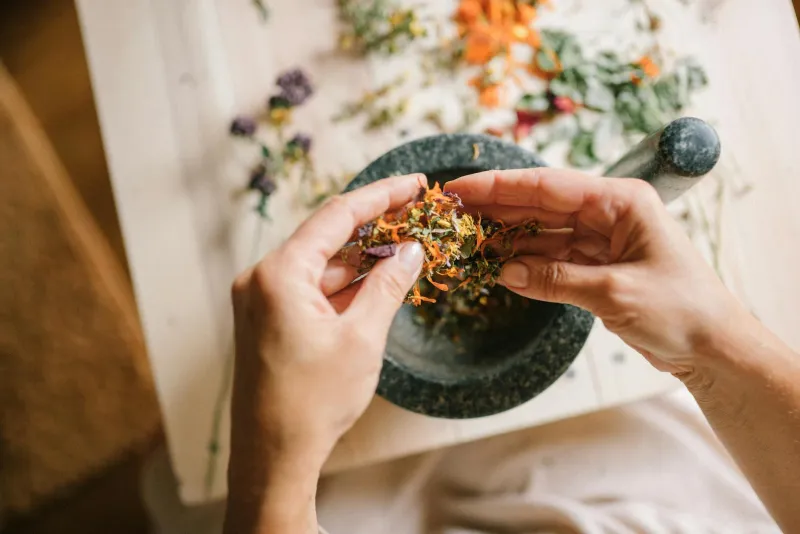
Herbal Supplements Safety: What Every Consumer Should Know
Herbal supplements are among the most widely used products in the wellness category. They are derived from plants and marketed for everything from sleep support to immune health. Yet many people treat them as entirely risk-free because they are "natural." This guide covers the real side effects and safety considerations you need before starting any herbal supplement regimen.
Common Side Effects of Herbal Supplements
The most frequently reported side effects are gastrointestinal: nausea, bloating, stomach cramps, and diarrhea. These typically occur when starting a new supplement or taking it on an empty stomach. Beyond the gut, some herbs affect the liver. A systematic review found that a minority of serious adverse events attributed to herbal supplements involve hepatotoxicity, meaning liver stress (Navarro et al., 2014). Valerian, kava, and green tea extract in concentrated form have all been implicated in rare liver cases.
Skin reactions — rashes, itching, photosensitivity — occur with St. John's Wort, chamomile, and echinacea in sensitive individuals. Cardiovascular effects such as elevated heart rate or blood pressure have been documented with stimulant herbs like ma huang (ephedra), now banned in many countries.
Upper Safe Limits
Unlike prescription drugs, herbal supplements lack official tolerable upper intake levels in most regulatory frameworks. The European Food Safety Authority (EFSA) has issued botanical guidance, but formal numeric limits for many herbs are absent. This means consumers must rely on clinical evidence and label guidance.
Botanical extracts are frequently standardised to an active compound — for example, a valerian extract standardised to valerenic acid, or a milk thistle extract standardised to silymarin. Standardisation matters because concentrated extracts deliver far more active compound per gram than raw plant material. Always follow the manufacturer's dosage — taking more does not always mean more benefit and may increase adverse risk.
Drug and Nutrient Interactions
This is where herbal supplement safety becomes most clinically significant. St. John's Wort (Hypericum perforatum) is one of the most studied herbal-drug interaction risks: it induces cytochrome P450 enzymes and P-glycoprotein, reducing plasma concentrations of numerous drugs including oral contraceptives, anticoagulants, and antiretrovirals (Borrelli & Izzo, 2009). Patients on these medications should avoid St. John's Wort entirely.
Garlic supplements may potentiate anticoagulant drugs. Ginkgo biloba has mild antiplatelet properties and should be used cautiously alongside aspirin or blood thinners. Ashwagandha may interact with thyroid medications and immunosuppressants.
ICONFIT Capsules Ashwagandha N90 and OstroVit KSM-66 Ashwagandha VEGE 120caps are well-known adaptogens available at maxfit.ee — if you take thyroid medication or immunosuppressants, consult your doctor before use.
Who Should Avoid Herbal Supplements
Certain groups face higher risk:
- Pregnant and breastfeeding women: Most herbs have not been safety-tested in pregnancy. Herbs such as blue cohosh, pennyroyal, and high-dose ginger are contraindicated.
- Children: Dosing data is largely absent for herbal products in paediatric populations.
- People with liver or kidney disease: These organs process botanical compounds; impaired function raises accumulation risk.
- Pre-surgery patients: Many herbs affect bleeding and anaesthesia metabolism. Standard guidance is to discontinue herbal supplements at least two weeks before elective surgery.
- Polypharmacy patients: Those on five or more medications face compounded interaction risk.
Quality and Contamination Risks
Herbal supplement safety is also a quality issue. A recurring problem in the supplement industry is contamination with heavy metals, pesticides, undisclosed pharmaceutical adulterants, and incorrect plant species. Third-party certification — from bodies such as NSF International or USP — significantly reduces but does not eliminate this risk.
When choosing herbal products, look for:
- A clear list of active and inactive ingredients with quantified amounts
- Evidence of third-party testing on the label or brand website
- GMP (Good Manufacturing Practice) facility certification
- Standardised extract with the specific compound and percentage stated
Buying from established retailers and brands reduces your exposure to adulterated or mislabelled products.
Practical Takeaway
Herbal supplements are not inherently dangerous, but they are not inherently safe either. The most common risks are drug interactions (particularly with St. John's Wort), liver stress from high-dose extracts, and contamination from poorly manufactured products. Starting with the lowest effective dose, informing your doctor, and choosing third-party tested brands are the three most protective steps you can take.
Explore the herbal supplement range at maxfit.ee/et/category/taimsed-toidulisandid-narvisusteemile-narvisusteem.
FAQ
Are herbal supplements regulated like medications in Estonia?
No. In Estonia and across the EU, herbal supplements are regulated as food supplements, not medicines. This means they do not require proof of efficacy before sale. EFSA evaluates health claims, but manufacturers bear responsibility for product safety. Choose brands that invest in third-party testing.
Can I take herbal supplements while on prescription medication?
It depends on the herb and the medication. The highest-risk combination is any CYP450-inducing herb (St. John's Wort being the prime example) with narrow-therapeutic-index drugs. Always inform your prescribing doctor of any supplements you take.
How long does it take to see effects from herbal supplements?
This varies widely by herb. Adaptogens like ashwagandha are typically trialled over four to eight weeks. Sleep herbs like valerian may show effects within one to two weeks of consistent use. Any supplement that claims to work within hours for non-acute conditions deserves scepticism.
References
Bent, S. (2008). Herbal medicine in the United States: review of efficacy, safety, and regulation. Journal of General Internal Medicine, 23(6), 854–859. https://pubmed.ncbi.nlm.nih.gov/18415652/
Navarro, V. J., Barnhart, H., Bonkovsky, H. L., Davern, T., Fontana, R. J., Grant, L., et al. (2014). Liver injury from herbals and dietary supplements in the U.S. Drug-Induced Liver Injury Network. Hepatology, 60(4), 1399-1408. https://pubmed.ncbi.nlm.nih.gov/25043597/
Borrelli, F., & Izzo, A. A. (2009). Herb-drug interactions with St John's Wort (Hypericum perforatum): an update on clinical observations. AAPS Journal, 11(4), 710-727. https://pubmed.ncbi.nlm.nih.gov/19859815/



