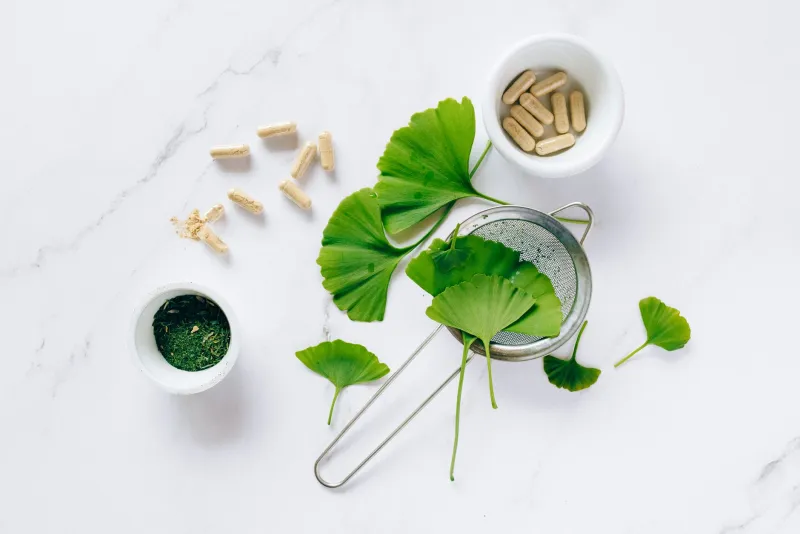
What Are Herbal Supplements?
Herbal supplements include products derived from plant roots, leaves, bark, seeds, or berries that are taken to support health, manage symptoms, or enhance performance. Unlike isolated nutrients such as vitamins or minerals, herbal supplements contain complex mixtures of bioactive compounds — which means their effects and interactions can be more variable and context-dependent.
Understanding which herbal supplements have meaningful clinical evidence — versus those that have strong traditional use but limited controlled research — helps set appropriate expectations and choose wisely.
Primary Evidenced Benefits
Ashwagandha (stress and cortisol reduction): Ashwagandha (Withania somnifera) is one of the best-studied adaptogens. Multiple randomised controlled trials have found that standardised ashwagandha extract reduces self-reported stress and measured cortisol levels compared to placebo. A well-designed double-blind RCT found that 300 mg of a high-concentration root extract twice daily significantly reduced stress scores and serum cortisol over 60 days (Chandrasekhar et al., 2012). Products such as ICONFIT Capsules Ashwagandha N90, OstroVit KSM-66 Ashwagandha VEGE 120caps, and 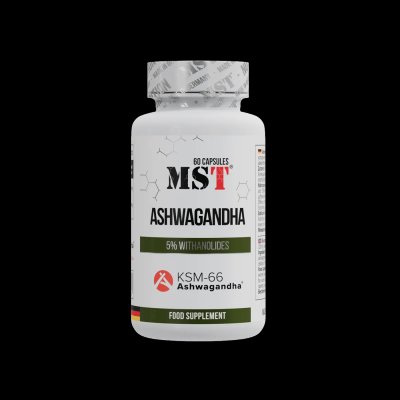 MST Ashwagandha KSM66€16.90 In stock 60caps are available at maxfit.ee.
Ginkgo biloba (cognitive and circulatory support): Ginkgo biloba extract has been studied for its effects on cognitive function and peripheral blood circulation. Meta-analyses of controlled trials in older adults suggest modest improvements in memory and attention, with the most consistent evidence in those with age-related cognitive decline. Ginkgo's mechanism involves improving cerebral blood flow and antioxidant activity. MST Ginkgo Biloba 60caps, 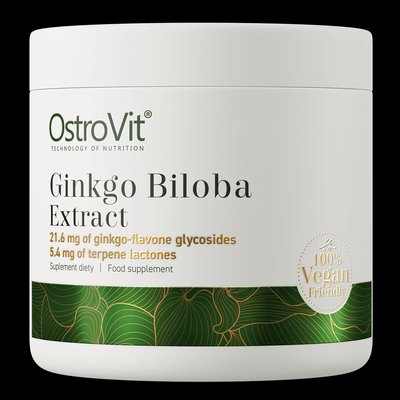 OstroVit Ginkgo Biloba Extract€12.90 In stock 50g, and
 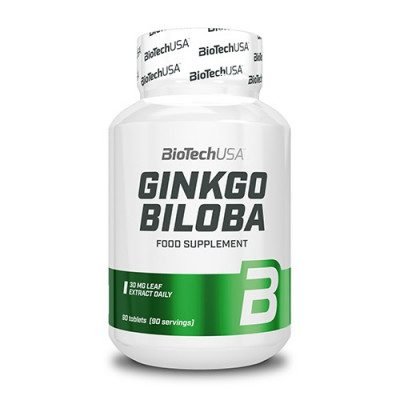 BIOTECHUSA Ginkgo Biloba€18.90 In stock 90tabs are available at maxfit.ee.
Berberine (metabolic support): Berberine is an alkaloid found in several plants including goldenseal and barberry. It has been studied for its effects on blood glucose regulation and lipid profiles. A systematic review and meta-analysis of controlled trials found that berberine produced significant reductions in fasting blood glucose and LDL cholesterol compared to placebo, with effect sizes comparable to some pharmaceutical interventions in people with type 2 diabetes or metabolic syndrome (Dong et al., 2013).
Secondary and Emerging Effects
Bacopa monnieri (memory and learning): Bacopa has a long history in Ayurvedic medicine and has been studied in small controlled trials for cognitive function. Some RCTs in healthy adults report improvements in memory consolidation and learning speed, though results across trials are not fully consistent. Trial durations of 12 weeks or more appear necessary to see effects.
Lion's mane mushroom (nerve and cognitive support): Lion's mane (Hericium erinaceus) contains compounds called hericenones and erinacines that may support nerve growth factor production. A controlled trial in older adults found improvements in cognitive function scores compared to placebo after 16 weeks of supplementation (Mori et al., 2009). This is a biologically plausible and emerging area with growing research interest. MST Lion's mane mushroom 60caps and OstroVit Lion's mane 60caps are available at maxfit.ee.
Turmeric/curcumin (anti-inflammatory): Curcumin, the main active compound in turmeric, has well-demonstrated anti-inflammatory effects in cell and animal studies. Human trial results are variable, largely because curcumin has poor bioavailability in standard forms. Enhanced formulations (such as phytosome or novaSOL) show more consistent absorption and better clinical outcomes. OstroVit Turmeric + Black pepper + Ginger 90tabs and 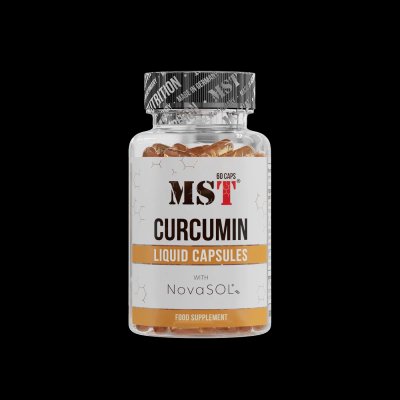 MST Curcumin NovaSOL€22.90 In stock 60 liquid caps address bioavailability through different strategies.
Where Evidence Is Weak
Many herbal supplements are sold with health claims that go well beyond what clinical research supports:
- Echinacea for immune support: Trial results are inconsistent. While echinacea may modestly reduce cold duration in some studies, meta-analyses have not found consistent effects. The quality of evidence is limited by variation in preparations and doses used across trials.
- Valerian for sleep: Controlled trials have produced mixed results. Some studies show modest sleep improvements; others show no significant difference from placebo. The inconsistency suggests the effect, if real, is small.
- Most generic herbal blends: Products that combine many herbs at low doses rarely have direct clinical evidence. The individual herbs may have some research backing, but combined formulas at sub-therapeutic doses have largely not been tested.
Be cautious of herbal products making dramatic claims. Traditional use provides a basis for investigating an ingredient, but it does not constitute proof of efficacy for specific applications.
Who Benefits Most
- Adults under chronic stress: Adaptogens such as ashwagandha have the most reliable evidence here. They are not a substitute for managing the sources of stress, but they may support resilience.
- Older adults concerned about cognitive ageing: Ginkgo biloba and lion's mane have the strongest evidence base for mild cognitive support in this group.
- Those with metabolic concerns: Berberine has been studied in populations with elevated blood glucose and cholesterol and has shown meaningful effects in those contexts.
- Athletes using adaptogens for recovery: Emerging evidence suggests ashwagandha may also support physical performance recovery and reduce exercise-induced muscle damage, though the evidence here is less robust than for stress reduction.
Realistic Expectations
Herbal supplements generally work subtly and over time. They are not comparable in magnitude to pharmaceutical drugs. Think of them as gentle modulators of physiological processes — capable of moving markers in a favourable direction under appropriate conditions, but not dramatic overnight transformations.
Excellent herbal options available at maxfit.ee/et/category/taimsed-toidulisandid-narvisusteemile-narvisusteem include ICONFIT Capsules Ashwagandha N90, OstroVit KSM-66 Ashwagandha VEGE 120caps, and OstroVit Bacopa Monnieri VEGE 90tabs for stress and cognitive support.
FAQ
Are herbal supplements safe to combine with medications?
Some herbal supplements have documented interactions with medications. St. John's Wort, for example, can reduce the effectiveness of many common drugs by inducing liver enzymes. Ginkgo can affect platelet aggregation and should be used cautiously by those on anticoagulants. Anyone on prescription medication should consult their physician or pharmacist before adding herbal supplements.
How do I know if an herbal supplement is high quality?
Look for products with standardised extracts — these state the percentage of key active compounds (e.g., "standardised to 5% withanolides" for ashwagandha, or "KSM-66" as a branded extract). Third-party testing certifications are a further quality indicator. The products available at maxfit.ee are sourced from established manufacturers with quality documentation.
How long should I take herbal supplements before assessing results?
Most adaptogens and cognitive-support herbs require at least 4–8 weeks of consistent use before effects become noticeable. For complex outcomes like stress resilience or memory support, 8–12 weeks is a more realistic assessment window. Short-term trials of one to two weeks are rarely sufficient to judge effectiveness.
References
Chandrasekhar, K., Kapoor, J., & Anishetty, S. (2012). A prospective, randomized double-blind, placebo-controlled study of safety and efficacy of a high-concentration full-spectrum extract of Ashwagandha root in reducing stress and anxiety in adults. Indian Journal of Psychological Medicine, 34(3), 255–262. https://pubmed.ncbi.nlm.nih.gov/23439798/
Dong, H., Wang, N., Zhao, L., & Lu, F. (2013). Berberine in the treatment of type 2 diabetes mellitus: a systemic review and meta-analysis. Evidence-Based Complementary and Alternative Medicine, 2012, 591654.
Mori, K., Inatomi, S., Ouchi, K., Azumi, Y., & Tuchida, T. (2009). Improving effects of the mushroom Yamabushitake (Hericium erinaceus) on mild cognitive impairment: a double-blind placebo-controlled clinical trial. Phytotherapy Research, 23(3), 367–372. https://pubmed.ncbi.nlm.nih.gov/18844328/



