Glucosamine Side Effects and Safety: What You Need to Know
Glucosamine is a naturally occurring compound found in cartilage and is one of the most widely used supplements for joint health worldwide. It is typically derived from shellfish (glucosamine sulphate or hydrochloride) or produced via fermentation for vegan options. Whether you are an athlete managing training load on your joints or someone looking to support long-term joint health, this guide covers the glucosamine safety evidence you need.
Common and Rare Side Effects
Glucosamine is generally well tolerated. The most frequently reported adverse effects are mild and gastrointestinal:
- Nausea, heartburn, or stomach upset — less pronounced when taken with food
- Diarrhoea or constipation — typically mild and transient
- Headache — occasionally reported, particularly in the first weeks of use
These effects are dose-dependent and usually resolve with continued use or dose adjustment. Glucosamine sulphate and glucosamine hydrochloride have similar tolerability profiles.
Rare but documented adverse effects include:
- Skin reactions — including rash, particularly relevant for those with shellfish allergy (though the allergenic proteins, not glucosamine itself, are typically responsible; cross-reactivity is theoretically possible but not consistently demonstrated)
- Elevated intraocular pressure — a few case reports exist; this warrants caution in people with glaucoma
- Hair loss — anecdotally reported but not confirmed in controlled trials
Upper Safe Limits
Glucosamine does not have a formal tolerable upper intake level established by regulatory bodies. Clinical trials studying glucosamine for osteoarthritis have typically used doses of 1,500 mg per day (often divided into three doses of 500 mg) for periods of several months to years without serious adverse events. The GAIT trial (Clegg et al., 2006) used 1,500 mg glucosamine hydrochloride daily for 24 weeks and found it safe in the study population (Clegg et al., 2006).
Long-term use at this established dose appears to have an acceptable safety profile in most healthy adults.
Drug and Nutrient Interactions
The most clinically significant interaction of glucosamine is with anticoagulants:
- Warfarin: Multiple case reports and pharmacovigilance data indicate that glucosamine (with or without chondroitin) can potentiate the anticoagulant effect of warfarin, significantly increasing INR and bleeding risk. This interaction is considered clinically important; patients on warfarin should not take glucosamine without close INR monitoring. Knudsen and Sokol (2008) reviewed this interaction and concluded the combination warrants caution (Knudsen & Sokol, 2008).
- NSAID pain medications: Glucosamine is sometimes taken alongside NSAIDs for osteoarthritis; no direct pharmacokinetic interaction has been established, but combination use should be monitored since both aim to address joint inflammation.
- Diabetes medications: Earlier concerns that glucosamine might affect insulin resistance or blood glucose are not supported by controlled trial data at typical supplement doses; however, monitoring is reasonable for people with diabetes or pre-diabetes.
Who Should Be Cautious or Avoid Glucosamine
- People on warfarin or other anticoagulants: Significant interaction risk; requires medical supervision.
- Those with shellfish allergy: Risk of cross-reactivity is debated, but precaution suggests either choosing a fermentation-derived (non-shellfish) glucosamine or consulting an allergist.
- People with diabetes: Monitor blood glucose periodically; evidence of effect is weak but not zero at very high doses.
- Those with glaucoma: Due to rare case reports of intraocular pressure changes.
- Pregnant and breastfeeding women: No adequate safety data; avoid until more evidence is available.
Quality and Contamination Concerns
Glucosamine products vary considerably in quality:
- Form of glucosamine: Glucosamine sulphate is the form studied most extensively in European osteoarthritis trials, often compared with prescription-grade glucosamine. Glucosamine hydrochloride is more commonly found in American supplements. Both are considered effective though the sulphate form has more robust trial data.
- Chondroitin combination: Glucosamine is frequently combined with chondroitin sulphate and MSM. The GAIT trial found that combination glucosamine + chondroitin was more effective than either alone for a subgroup of patients with moderate-to-severe knee pain.
- Label accuracy: Third-party testing has found that some glucosamine products contain less than the label-stated dose. Choose products with a certificate of analysis from an independent laboratory.
At maxfit.ee, the joint support range includes MST Chondroitin Glucosamine MSM + HA 90tabs, OstroVit Glucosamine + MSM + Chondroitin 90tab, 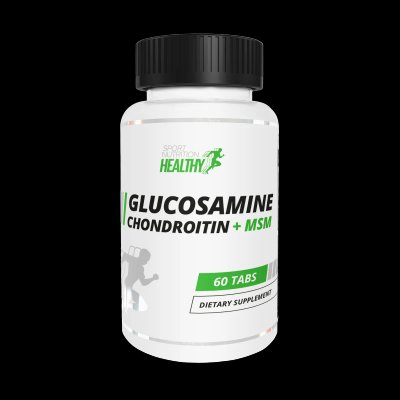 Healthy Chondroitin Glucosamine MSM€9.90 In stock 60tab, OstroVit Glucosamine 210g, and OstroVit Glucosamine + MSM + Chondroitin 150g Vaarikas — browse the full glucosamine category.
FAQ
Does glucosamine actually work for joint pain?
The evidence is mixed and depends on the population studied. In a major network meta-analysis, Gregori et al. (2018) found that glucosamine sulphate showed statistically significant effects on pain reduction in knee osteoarthritis (Gregori et al., 2018), though effect sizes vary across trials and some large high-quality trials showed minimal benefit over placebo. Glucosamine may work better for some individuals than others — a three-month trial is a reasonable test period.
How long does it take for glucosamine to work?
Glucosamine is not an acute pain reliever in the way that NSAIDs are. Effects, if they occur, typically emerge after four to eight weeks of consistent supplementation. Trials showing benefit generally use periods of at least twelve weeks. Patience is required.
Is vegan glucosamine as effective as shellfish-derived?
Vegan glucosamine (from fermented corn or other plant sources) contains the same active molecule as shellfish-derived glucosamine. There is no head-to-head clinical trial comparing the two sources, but from a biochemical standpoint they should behave identically. Vegan glucosamine eliminates the shellfish allergy concern and is a practical alternative.
References
Clegg, D. O., Reda, D. J., Harris, C. L., Klein, M. A., O'Dell, J. R., Hooper, M. M., Bradley, J. D., Bingham, C. O., Weisman, M. H., Jackson, C. G., Lane, N. E., Cush, J. J., Moreland, L. W., Schumacher, H. R., Oddis, C. V., Wolfe, F., Molitor, J. A., Yocum, D. E., Schnitzer, T. J., Furst, D. E., Sawitzke, A. D., Shi, H., Brandt, K. D., Moskowitz, R. W., & Williams, H. J. (2006). Glucosamine, chondroitin sulfate, and the two in combination for painful knee osteoarthritis. New England Journal of Medicine, 354(8), 795-808. https://pubmed.ncbi.nlm.nih.gov/16495392/
Knudsen, J. F., & Sokol, G. H. (2008). Potential glucosamine-warfarin interaction resulting in increased international normalized ratio: case report and review of the literature and MedWatch database. Pharmacotherapy, 28(4), 540-548. https://pubmed.ncbi.nlm.nih.gov/18363538/
Gregori, D., Giacovelli, G., Minto, C., Barbetta, B., Gualtieri, F., Azzolina, D., Vaghi, P., & Rovati, L. C. (2018). Association of pharmacological treatments with long-term pain control in patients with knee osteoarthritis: a systematic review and meta-analysis. JAMA, 320(24), 2564-2579. https://pubmed.ncbi.nlm.nih.gov/30575881/



