
Glucosamine Interactions: Drugs, Nutrients & Foods
Glucosamine is one of the most widely used joint-support supplements globally. It is a naturally occurring amino sugar involved in the synthesis of glycosaminoglycans — the structural components of joint cartilage. For athletes and active older adults dealing with joint stress, glucosamine remains a popular choice. However, before adding it to your stack, understanding its interaction profile is essential.
Drug Interactions
Warfarin and Anticoagulants
The most clinically significant interaction involves warfarin (and related vitamin K antagonist anticoagulants). Multiple case reports and a mechanism-based concern exist: glucosamine may potentiate the anticoagulant effect of warfarin, leading to elevated INR values (a measure of blood clotting time). The interaction appears to involve interference with warfarin metabolism.
A controlled pharmacokinetic study by Knudsen and Sokol (2008) documented cases of INR elevation in patients taking glucosamine concurrently with warfarin (Knudsen & Sokol, 2008). Anyone on warfarin or other blood-thinning medications should consult their prescriber before using glucosamine.
NSAIDs (Non-Steroidal Anti-Inflammatory Drugs)
Glucosamine is often used by people also taking NSAIDs for joint pain. There is no established pharmacokinetic interaction between glucosamine and NSAIDs. In fact, the combination is common in clinical practice: glucosamine may allow some individuals to reduce their NSAID dosage over time as joint symptoms improve, though this should always be done under medical supervision.
Diabetes Medication
Glucosamine is derived from glucose and there has been theoretical concern that it might raise blood glucose or reduce insulin sensitivity. Systematic reviews of the clinical evidence, including a review by Dostrovsky et al. (2011), found no clinically significant effect of standard-dose glucosamine supplementation on blood glucose control in people with or without diabetes (Dostrovsky et al., 2011). Nonetheless, those with diabetes or insulin resistance should monitor blood glucose when beginning glucosamine supplementation.
Nutrient Competition and Synergy
Glucosamine + Chondroitin
This is the most common combination in the supplement market, and there is a rationale for it: glucosamine provides the building blocks for glycosaminoglycans while chondroitin sulfate inhibits cartilage-degrading enzymes. The two nutrients are complementary rather than competitive, and combined products are widely used.
At maxfit.ee you will find MST Chondroitin Glucosamine MSM + HA 90tabs, which combines glucosamine with chondroitin, MSM, and hyaluronic acid for a comprehensive joint support formula. OstroVit Glucosamine + MSM + Chondroitin 90tab is another solid combination. OstroVit Glucosamine 210g and 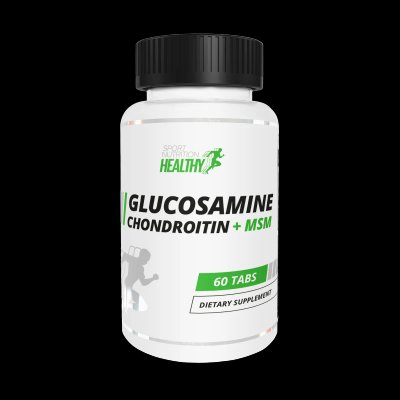 Healthy Chondroitin Glucosamine MSM€9.90 In stock 60tab are also available. Browse the glukoosamiin-ja-kondroitiin category for all options.
Glucosamine + MSM
Methylsulfonylmethane (MSM) is a natural sulfur compound that may provide additional anti-inflammatory support. It is frequently combined with glucosamine in joint formulas. The two work through complementary mechanisms and do not compete for absorption.
Glucosamine + Vitamin C
Vitamin C is required for collagen synthesis — which is the structural protein in cartilage alongside glycosaminoglycans. Including vitamin C alongside glucosamine is biochemically logical and widely practiced.
Food Effects
Glucosamine is generally well absorbed with or without food, but taking it with a meal is commonly recommended to reduce the low-level gastrointestinal discomfort (nausea, bloating) that some people experience on an empty stomach.
No major food-based interaction has been established. The idea that glucosamine absorption is blocked by any common dietary component is not supported by available evidence.
Who Must Be Cautious
- Anticoagulant users — warfarin interaction is the most important safety signal; discuss with your prescriber.
- Shellfish allergy — traditional glucosamine is derived from shellfish (shrimp/crab shells). Shellfish-allergic individuals should use plant-derived (typically fermented corn) or synthetic glucosamine.
- Diabetes management — monitor blood glucose in the initial weeks of supplementation.
- Pregnant or breastfeeding women — no safety data; avoid or discuss with a healthcare provider.
Practical Rules
- Check your medication list for anticoagulants before starting glucosamine.
- If you have shellfish allergy, verify the source of your glucosamine product.
- Combine with chondroitin, MSM, and vitamin C for a comprehensive joint support approach.
- Take with food to minimise any gastric discomfort.
- Allow at least 8 to 12 weeks of consistent use before evaluating effectiveness — glucosamine acts slowly and is not an acute pain reliever.
References
Knudsen, J. F., & Sokol, G. H. (2008). Potential glucosamine-warfarin interaction resulting in increased international normalized ratio: case report and review of the literature and MedWatch database. Pharmacotherapy, 28(4), 540-548. https://pubmed.ncbi.nlm.nih.gov/18363538/
Dostrovsky, N. R., Towheed, T. E., Hudson, R. W., & Anastassiades, T. P. (2011). The effect of glucosamine on glucose metabolism in humans: a systematic review of the literature. Osteoarthritis and Cartilage, 19(4), 375-380. https://pubmed.ncbi.nlm.nih.gov/21251987/
Towheed, T. E., Maxwell, L., Anastassiades, T. P., Shea, B., Houpt, J., Robinson, V., Hochberg, M. C., & Wells, G. (2005). Glucosamine therapy for treating osteoarthritis. Cochrane Database of Systematic Reviews, 2005(2), CD002946. https://pubmed.ncbi.nlm.nih.gov/15846645/
FAQ
Can glucosamine be taken with ibuprofen or other NSAIDs?
No established pharmacokinetic interaction exists between glucosamine and NSAIDs. They are frequently taken together in clinical practice. If you are relying on NSAIDs for joint pain, glucosamine may gradually reduce the need for them if it is effective for you — but do not reduce NSAID doses without medical guidance.
How long does glucosamine take to work?
Glucosamine should be evaluated over a minimum of 8 to 12 weeks of consistent use. It is not an anti-inflammatory in the acute sense and does not block pain receptors. Its mechanism is structural — gradually supporting cartilage health over time.
Is glucosamine safe if you have a shellfish allergy?
Traditional glucosamine is shellfish-derived. If you have a shellfish allergy, look for plant-derived glucosamine (from corn fermentation) or confirm with the manufacturer that the product is safe for shellfish-allergic individuals.



