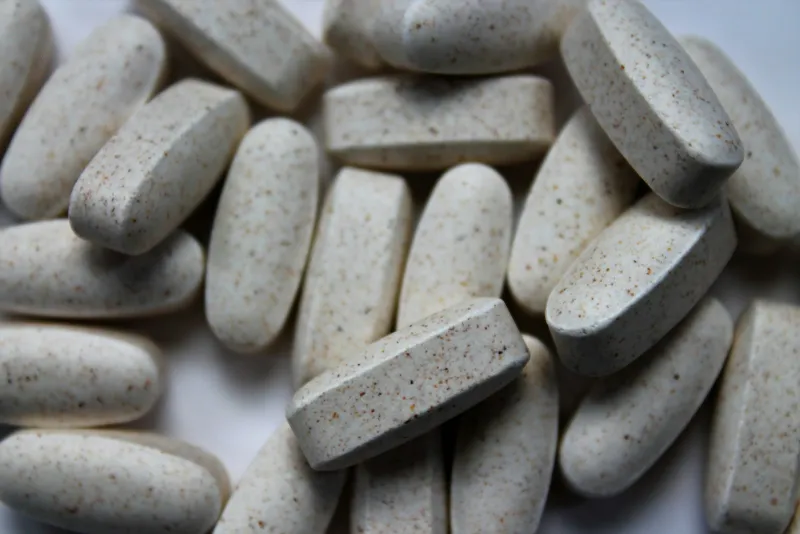
Glucosamine After 50: Benefits & Safety
Glucosamine is a naturally occurring compound in cartilage tissue. As we age, cartilage — the cushioning that prevents bone-on-bone contact in joints — gradually thins and becomes less resilient. This is the biological background behind why glucosamine supplements have become so popular among adults over 50 who notice joint stiffness, reduced range of motion, or early osteoarthritis symptoms.
Age-Related Need
Cartilage has limited blood supply and poor regenerative capacity. Endogenous glucosamine, which is used to build glycosaminoglycans (key structural components of cartilage), is synthesised from glucose, but this synthesis slows with age. The loss of cartilage integrity is a key feature of osteoarthritis, a condition that becomes increasingly prevalent after 50.
This biological rationale is why glucosamine supplementation has attracted sustained research interest since the 1990s. The underlying hypothesis is that providing exogenous glucosamine may support the substrate available for cartilage maintenance.
What Absorption Looks Like
Oral glucosamine is reasonably well absorbed in humans. After a single dose, a meaningful fraction reaches systemic circulation; whether enough reaches joint cartilage — which has limited blood supply — to exert a direct effect remains a question in the literature. Most researchers believe the effects, if present, are likely indirect (anti-inflammatory signalling, modulation of cartilage enzyme activity) rather than direct substrate incorporation.
Glucosamine sulfate and glucosamine hydrochloride are the two main supplemental forms. Several trials and meta-analyses have found that glucosamine sulfate performed better than glucosamine hydrochloride for symptom outcomes in osteoarthritis — a difference attributed partly to the sulfate ion and partly to the use of a crystalline form in the most-cited European trials (Towheed et al., 2005).
Dose and Safety
The dose used in most human trials is 1,500 mg of glucosamine sulfate per day, often taken as a single dose or split into two or three smaller doses. Lower doses have not been well studied for joint outcomes. Most trials have run for 12 weeks to three years.
Glucosamine is generally well tolerated. The most common side effects are mild gastrointestinal complaints — nausea, diarrhoea, heartburn — which typically resolve when the supplement is taken with food. Serious adverse events are uncommon.
A long-running safety concern was a theoretical effect on blood sugar, since glucosamine is a glucose derivative. A systematic review that pooled data from multiple trials found no clinically meaningful effect on glycaemic control in humans (Simon et al., 2011), which is reassuring for older adults who may be monitoring blood sugar.
MST Chondroitin Glucosamine MSM + HA 90tabs combines glucosamine with chondroitin, MSM, and hyaluronic acid — a multi-component approach used in several joint health trials. OstroVit Glucosamine + MSM + Chondroitin 90tab provides a similar combination. For those preferring standalone glucosamine powder, OstroVit Glucosamine 210g allows flexible dosing.
Interactions With Medication
The most clinically important interaction is with warfarin (and other anticoagulants). Multiple case reports and some pharmacokinetic studies suggest glucosamine — particularly when combined with chondroitin — may enhance the anticoagulant effect of warfarin, increasing bleeding risk. If you are on warfarin or another blood thinner, check with your physician before starting glucosamine.
Glucosamine is derived from shellfish chitin in most commercial products. Those with shellfish allergies should verify whether the product uses synthetic or plant-derived glucosamine instead.
When to Supplement
Glucosamine makes the most practical sense as a long-term supplement rather than a short-term fix. The trials showing meaningful effects generally ran for at least three months, and some of the most cited evidence for structural benefit comes from studies lasting one to three years.
The evidence is most supportive for adults with mild to moderate knee osteoarthritis. For healthy joints with no symptoms, the evidence base for preventive supplementation is much thinner.
You can browse glucosamine options at maxfit.ee/et/category/glukoosamiin-ja-kondroitiin.
FAQ
Does glucosamine rebuild cartilage?
The evidence for actual cartilage rebuilding in humans is limited and inconsistent. The clearest evidence is for symptom relief — reduced pain and improved function — rather than structural tissue regeneration demonstrated by imaging.
Should I take glucosamine with chondroitin?
Many commercial products combine both, and there is rationale for the pairing (chondroitin provides a complementary structural component of cartilage matrix). A large US trial (GAIT) found the combination performed better than placebo in a subgroup with moderate-to-severe osteoarthritis pain.
How long before I notice a difference?
Most trials reporting positive outcomes show effects emerging after six to twelve weeks of consistent daily use. If there is no change after three months, the supplement may not be the right fit for your situation.
References
Towheed, T. E., Maxwell, L., Anastassiades, T. P., Shea, B., Houpt, J., Robinson, V., & Wells, G. (2005). Glucosamine therapy for treating osteoarthritis. Cochrane Database of Systematic Reviews, (2), CD002946.
Simon, R. R., Marks, V., Leeds, A. R., & Anderson, J. W. (2011). A comprehensive review of oral glucosamine use and effects on glucose metabolism in normal and diabetic individuals. Diabetes/Metabolism Research and Reviews, 27(1), 14-27. https://pubmed.ncbi.nlm.nih.gov/21218504/
McAlindon, T. E., LaValley, M. P., Gulin, J. P., & Felson, D. T. (2000). Glucosamine and chondroitin for treatment of osteoarthritis: a systematic quality assessment and meta-analysis. JAMA, 283(11), 1469-1475. https://pubmed.ncbi.nlm.nih.gov/10732937/



