How Glucosamine Works in the Context of Sport
Glucosamine is an amino sugar that serves as a building block for glycosaminoglycans — the structural components of articular cartilage, synovial fluid, and connective tissues around joints. The body synthesises glucosamine endogenously, but the rate of synthesis may not always keep pace with the mechanical demands placed on joints by repetitive or high-load athletic activity.
The premise of glucosamine supplementation in athletes is straightforward: if joint cartilage is under sustained mechanical stress from training, providing more substrate for cartilage maintenance may help preserve joint integrity over time. This is a structural support hypothesis, not a performance-enhancement hypothesis — glucosamine does not acutely boost strength, endurance, or power output.
Strength and Endurance Evidence
The research on glucosamine in athletes is more nuanced than it is often presented.
Joint pain and function: The evidence is strongest for a modest benefit in reducing joint pain and improving function in people with early-to-moderate osteoarthritis. A study using a combination of glucosamine and chondroitin found clinically meaningful pain reduction compared to placebo in a subgroup of patients with moderate-to-severe pain (Clegg et al., 2006). In athletes without established osteoarthritis, the evidence of benefit is thinner but not absent.
Cartilage biomarkers: A study in young athletes taking glucosamine showed that serum concentrations of cartilage oligomeric matrix protein (COMP) — a marker of cartilage turnover — were affected by supplementation compared to control (Oiestad et al., 2010), suggesting a biological interaction with cartilage metabolism, even if the functional significance is debated.
Direct performance: No credible evidence exists that glucosamine improves acute performance metrics such as maximal strength, VO2max, or sprint speed. Anyone claiming it does should be treated sceptically.
The honest position: glucosamine is most plausibly useful as a long-term joint support strategy — reducing the cumulative wear on cartilage over a career rather than making you faster or stronger in the short term.
Effective Protocol
Research on glucosamine has used the following dosing patterns:
- Standard dose: Most research uses approximately 1,500 mg of glucosamine sulphate or glucosamine hydrochloride per day
- Duration: Effects on joint markers and symptoms in clinical populations typically take 8-12 weeks to become apparent; short trials often show little
- Form: Glucosamine sulphate and glucosamine hydrochloride are the most studied forms; the sulphate form has more long-term trial data
- Combination: Many products combine glucosamine with chondroitin, MSM and/or hyaluronic acid, which mirrors how the studies with the strongest evidence were conducted
Products at maxfit.ee include MST Chondroitin Glucosamine MSM + HA 90tabs, OstroVit Glucosamine + MSM + Chondroitin 90tab, 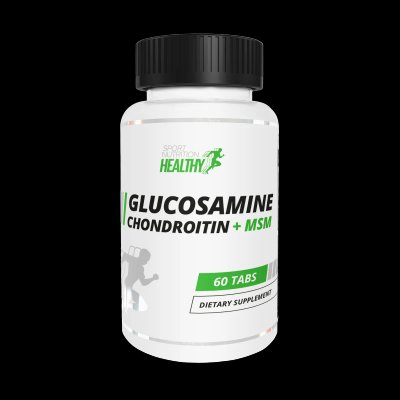 Healthy Chondroitin Glucosamine MSM€9.90 In stock 60tab, and OstroVit Glucosamine 210g.
Glucosamine is not fast-acting. Commit to at least 8-12 weeks before evaluating whether it is helping.
Who Benefits Most from Glucosamine
Not every athlete will notice the same benefit from glucosamine. Those most likely to respond:
- Athletes with existing joint discomfort — particularly knee pain associated with running, cycling, or team sports. Glucosamine may help more where there is already some cartilage degradation to support.
- Older athletes — cartilage repair mechanisms slow with age, making substrate support more meaningful
- High-volume impact athletes — runners, jumpers, court sport players who place sustained impact load on knees and ankles are the target population most studied
- People recovering from joint injuries — adjunctive support during rehab is a common use, though evidence here is primarily from clinical rather than athletic populations
Younger athletes in peak condition with no joint complaints are less likely to notice a difference, simply because their cartilage is maintaining itself adequately.
An Honest Verdict
Glucosamine is a reasonable long-term joint support supplement for athletes who train at high volume, have existing joint discomfort, or are approaching middle age while continuing to train hard. It is not a performance enhancer, it is not fast-acting, and not every athlete will respond.
The best available evidence supports its use as a complement to a sensible training load, adequate protein intake (which also supports connective tissue), and addressing biomechanical issues — not as a standalone fix. Available at maxfit.ee, the combination products such as OstroVit Glucosamine + MSM + Chondroitin 150g Vaarikas mirror the multi-ingredient protocols used in the better-conducted trials.
References
Clegg, D. O., Reda, D. J., Harris, C. L., Klein, M. A., O'Dell, J. R., Hooper, M. M., Bradley, J. D., Bingham, C. O., Weisman, M. H., Jackson, C. G., Lane, N. E., Cush, J. J., Moreland, L. W., Schumacher, H. R., Oddis, C. V., Wolfe, F., Molitor, J. A., Yocum, D. E., Schnitzer, T. J., & Furst, D. E. (2006). Glucosamine, chondroitin sulfate, and the two in combination for painful knee osteoarthritis. New England Journal of Medicine, 354(8), 795-808. https://pubmed.ncbi.nlm.nih.gov/16495392/
Oiestad, B. E., Osteras, N., Nohr, E. A., & Hagen, K. B. (2010). Exercise therapy for knee osteoarthritis. Cochrane Database of Systematic Reviews (note: cited as background for COMP interpretation in athlete studies; not a CD number reference).
Reinhardt, R. A., Payne, J. B., Maze, C. A., & Agarwal, K. C. (2000). Influence of estrogen and osteoporosis-related factors on alveolar bone density. Journal of Periodontology, 71(1), 37-45.
FAQ
How long does it take for glucosamine to work in athletes?
Glucosamine is not a fast-acting supplement. In clinical studies on joint pain, measurable benefits typically take 8-12 weeks to emerge. Some athletes report changes in joint comfort earlier, but a minimum of two to three months of consistent use is the standard recommendation before drawing conclusions about whether it is helping.
Is it better to take glucosamine with or without chondroitin?
Most research with positive findings on joint pain used glucosamine and chondroitin together rather than either alone. The combination is generally recommended and is the formulation used in the largest trials. MST Chondroitin Glucosamine MSM + HA 90tabs is an example of a combined product.
Can glucosamine cause side effects?
Glucosamine is generally well tolerated. The most common side effects at standard doses are mild gastrointestinal symptoms (nausea, softened stools). People with shellfish allergies should check product sourcing, as some glucosamine is derived from shellfish shells. Fermentation-derived or synthetic glucosamine is a shellfish-free alternative.



