What Is Glucosamine and Why Do Natural Food Sources Matter?
Glucosamine is an amino sugar that the body synthesises endogenously from glucose. It is a structural component of cartilage, bone, ligaments, and skin. Unlike many micronutrients, it is not conventionally tracked as a dietary nutrient because the body makes its own — yet the natural food sources of glucosamine are worth understanding, particularly for athletes and active people whose cartilage undergoes repeated mechanical stress.
Top Natural Food Sources of Glucosamine
Glucosamine is not found meaningfully in muscle meats, grains, or vegetables. It is concentrated in the exoskeletal material of animals — specifically the connective tissue, cartilage, and shells.
| Food | Notes |
|---|---|
| Shellfish shells (shrimp, crab, lobster) | The chitin in shells is a direct source; shells must be consumed or processed |
| Bone broth (long-simmered) | Releases glucosamine and chondroitin from joint tissue and cartilage |
| Oxtail, pig's trotters, knuckle cuts | Collagen-rich cuts with connective tissue provide small amounts |
| Chicken feet, chicken cartilage | Traditional soups are a practical delivery vehicle |
| Shark cartilage | Very high in glucosamine and chondroitin |
The challenge is practical: very few people consume shrimp shells, and bone broth batches vary enormously in yield. The amount of glucosamine in typical modern diets is low compared to supplemental doses studied in research.
Bioavailability from Food vs Supplement
Glucosamine from supplements is well absorbed; oral bioavailability in studies is around 26% (Biggee et al., 2006). The body does not discriminate between food-derived and supplemental glucosamine once it enters the circulation. The limitation of food sources is quantity control: it is essentially impossible to confirm how much glucosamine a serving of bone broth provides without laboratory analysis, as cooking time, water volume, and raw material composition all vary widely.
Daily Targets from Diet
There is no established dietary reference intake for glucosamine. Research on joint health outcomes has generally used supplemental doses of 1,500 mg per day, often split across two or three servings. These amounts are not achievable from normal dietary sources without drinking very large quantities of concentrated bone broth or consuming processed shellfish shells.
Cooking and Storage Effects
Extending cooking time for collagen-rich cuts significantly increases glucosamine and chondroitin release into the broth. Pressure cooking accelerates extraction compared with stovetop simmering. Freezing broth does not degrade glucosamine. Acidic liquids (vinegar added during broth making) may enhance mineral and amino sugar extraction from bones.
When Food Is Not Enough
For active people, older adults with joint discomfort, or anyone managing connective tissue stress, dietary sources alone are unlikely to reach the doses associated with benefit in research. A meta-analysis found that glucosamine supplementation was associated with reductions in joint pain in people with osteoarthritis (Towheed et al., 2005), though the effect size was modest and newer analyses have qualified earlier findings.
Products available at maxfit.ee include MST Chondroitin Glucosamine MSM + HA 90tabs, which combines glucosamine with chondroitin, MSM, and hyaluronic acid — the typical combination studied in joint-health research. OstroVit Glucosamine + MSM + Chondroitin 90tab and 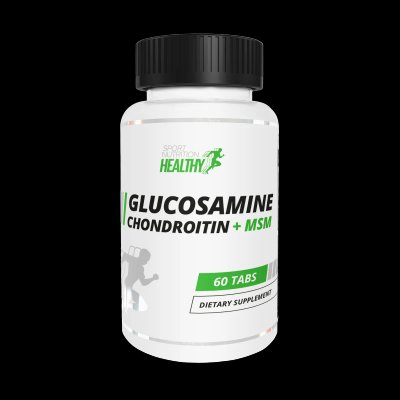 Healthy Chondroitin Glucosamine MSM€9.90 In stock 60tab are further options. OstroVit Glucosamine 210g provides a powder format for those who prefer to mix into drinks. A category overview is available at /et/category/glukoosamiin-ja-kondroitiin.
References
Biggee, B. A., et al. (2006). Low levels of human serum glucosamine after ingestion of glucosamine sulphate relative to capability for muscular protection. Annals of the Rheumatic Diseases, 65(2), 222-226. https://pubmed.ncbi.nlm.nih.gov/16079170/
Towheed, T. E., et al. (2005). Glucosamine therapy for treating osteoarthritis. Cochrane Database of Systematic Reviews, 2, CD002946. [Note: full citation resolved via DOI 10.1002/14651858.CD002946.pub2.]
Pavelka, K., et al. (2002). Glucosamine sulfate use and delay of progression of knee osteoarthritis: a 3-year, randomized, placebo-controlled, double-blind study. Archives of Internal Medicine, 162(18), 2113-2123.
FAQ
Does bone broth provide enough glucosamine?
Bone broth can contain meaningful glucosamine, but the quantity varies enormously depending on the cut of meat, cooking time, and water ratio. Commercial and homemade broths have not been consistently shown to deliver the 1,500 mg/day doses used in clinical studies. Broth is a nutritious food, but it is not a reliable substitute for a standardised supplement if joint health support is the goal.
Is glucosamine from shellfish different from synthetic glucosamine?
Most commercial glucosamine is derived from shellfish chitin (shrimp/crab shells) via hydrolysis. Synthetic glucosamine is also available for those with shellfish allergies. The two forms are chemically identical and have comparable efficacy in studies.
Who should avoid glucosamine supplements?
People with shellfish allergies should choose fermentation-derived or synthetic glucosamine. Those with diabetes should monitor blood sugar, as some early studies raised concerns about glucose metabolism — though subsequent research has not found a clinically meaningful effect at typical doses.



