Glucosamine Benefits: What the Science Actually Shows
Glucosamine is one of the most studied joint-support supplements on the market. It is a naturally occurring compound found in cartilage, and supplemental forms — primarily glucosamine sulfate and glucosamine hydrochloride — have been evaluated in hundreds of clinical trials. Understanding what glucosamine benefits are real, which are emerging, and where evidence is weak helps you set realistic expectations.
Primary Evidenced Benefits
Modest Pain Relief in Knee Osteoarthritis
The most consistent finding across long-term trials is that glucosamine sulfate may reduce pain and slow joint-space narrowing in knee osteoarthritis. A three-year randomised controlled trial found that patients taking glucosamine sulfate experienced less radiographic progression of knee osteoarthritis compared to placebo (Pavelka et al., 2002). A separate three-year study with a similar design replicated this structural finding (Reginster et al., 2001).
The effect size for pain relief is modest and not everyone responds — pooled analyses show meaningful benefit in a subset of patients, particularly those with moderate-to-severe symptoms at baseline.
Cartilage and Synovial Fluid Support
Glucosamine is a precursor to glycosaminoglycans, structural molecules in cartilage and synovial fluid. In vitro and animal work shows that supplemental glucosamine can stimulate proteoglycan synthesis in chondrocytes. Whether oral doses reach cartilage in sufficient concentrations to replicate this in humans is still debated, but the biological plausibility is well-established.
Secondary and Emerging Effects
Combined with Chondroitin
Many practitioners and trials pair glucosamine with chondroitin sulfate. The GAIT trial — a large multicentre RCT — found that the combination showed numerically greater pain reduction than either agent alone in a subgroup with moderate-to-severe knee pain, though the overall primary endpoint was not statistically significant versus placebo (Clegg et al., 2006). Combination products such as MST Chondroitin Glucosamine MSM + HA 90tabs, OstroVit Glucosamine + MSM + Chondroitin 90tab, and 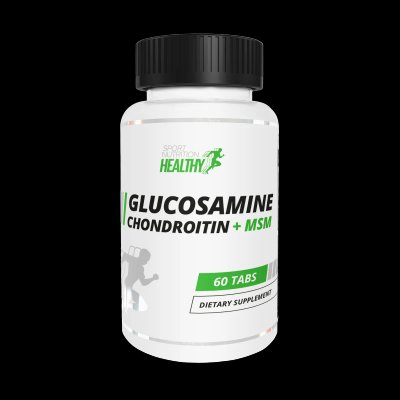 Healthy Chondroitin Glucosamine MSM€9.90 In stock 60tab are available at maxfit.ee.
Anti-Inflammatory Properties
Glucosamine may inhibit certain pro-inflammatory pathways, though the evidence in humans is weaker and more exploratory than the structural/pain data.
Where Evidence Is Weak
- Hip osteoarthritis: Data are much more limited than for the knee; benefits are less consistent.
- Rheumatoid arthritis: Glucosamine is not an established treatment for autoimmune joint conditions.
- Athletes without joint damage: No strong evidence that glucosamine prevents injury or speeds recovery in healthy young athletes.
- Short trials (under 3 months): Most structural benefits appear only after 6–12 months of continuous use.
Who Gains Most
The population most likely to benefit from glucosamine benefits is adults aged 45 and older with mild-to-moderate knee osteoarthritis and confirmed joint-space narrowing. Those who start supplementation early in the disease course appear to show the most radiographic benefit. People with a healthy BMI may also have better outcomes, as excess weight accelerates cartilage breakdown independently of supplementation.
Realistic Expectations
Glucosamine is not a pain medication and is unlikely to produce rapid relief. The typical response window in trials is 3–6 months. Many users report subtle improvements in morning stiffness and range of motion before noticing pain reduction. If no benefit is apparent after 3 months of consistent use, re-evaluating supplementation with a healthcare professional is reasonable.
Dose used in the majority of positive trials is 1,500 mg glucosamine sulfate per day. Product-label doses vary, so check the serving information on the pack you choose.
References
- Pavelka, K., Gatterova, J., Olejarova, M., Machacek, S., Giacovelli, G., & Rovati, L. C. (2002). Glucosamine sulfate use and delay of progression of knee osteoarthritis: a 3-year, randomized, placebo-controlled, double-blind study. Archives of Internal Medicine, 162(18), 2113–2123.
- Reginster, J. Y., Deroisy, R., Rovati, L. C., Lee, R. L., Lejeune, E., Bruyere, O., ... & Gosset, C. (2001). Long-term effects of glucosamine sulphate on osteoarthritis progression: a randomised, placebo-controlled clinical trial. Lancet, 357(9252), 251–256. https://pubmed.ncbi.nlm.nih.gov/11214126/
- Clegg, D. O., Reda, D. J., Harris, C. L., Klein, M. A., O'Dell, J. R., Hooper, M. M., ... & Kolba, K. S. (2006). Glucosamine, chondroitin sulfate, and the two in combination for painful knee osteoarthritis. New England Journal of Medicine, 354(8), 795–808. https://pubmed.ncbi.nlm.nih.gov/16495392/
FAQ
Does glucosamine work for all types of joint pain?
No. The strongest evidence is for knee osteoarthritis in middle-aged to older adults. Evidence for hip osteoarthritis is weaker, and glucosamine has not been shown to help with joint pain from rheumatoid arthritis, injuries, or general muscle soreness.
How long does glucosamine take to work?
Most clinical trials showing structural benefits ran for at least three years. Subjective improvements in stiffness and pain may appear in as few as 3–6 months. Short-term use is unlikely to produce measurable effects.
Is glucosamine safe to combine with other supplements?
Glucosamine is generally well-tolerated. It is commonly combined with chondroitin and MSM. People taking blood-thinning medications should consult a healthcare professional before use, as some case reports suggest an interaction with warfarin.



