
What Ginkgo Biloba Does
Ginkgo biloba is one of the most researched herbal supplements for cognitive function and circulation. Its primary active constituents are flavonol glycosides and terpene trilactones (ginkgolides and bilobalide), which contribute to its studied effects on cerebral blood flow and antioxidant activity. Research has focused mainly on memory, attention, and circulation support.
A key finding from a meta-analysis examining ginkgo in age-related cognitive decline found significant improvements in cognitive function scores with standardised GBE (ginkgo biloba extract) at 240 mg daily (Gauthier & Schlaefke, 2014). Most standardised extracts are normalised to 24% flavone glycosides and 6% terpene lactones.
For stacking purposes, understanding ginkgo's mechanism is essential: it modulates platelet-activating factor (PAF) and has mild anticoagulant properties. This shapes both its synergies and its conflicts.
Evidence-Based Synergies
Ginkgo + Bacopa monnieri: Both herbs are researched for cognitive function through different mechanisms. Ginkgo primarily influences cerebral circulation; bacopa affects synaptic plasticity and acetylcholine activity. Used together, they address complementary aspects of cognitive support without known pharmacological conflicts.
Ginkgo + Panax ginseng: This combination has been studied in double-blind trials. A randomised controlled trial found that the combination improved working memory and attention in healthy middle-aged volunteers significantly more than either herb alone (Kennedy et al., 2002). This is one of the more robustly studied herbal stacks.
Ginkgo + Lion's mane mushroom: Both support neurological function through different pathways — ginkgo via circulation and antioxidant effects, lion's mane via nerve growth factor (NGF) synthesis support. Combining them addresses both blood flow and neuroplasticity, with no known negative interaction.
Ginkgo + Phosphatidylserine: Phosphatidylserine (PS) is a phospholipid important for neuronal membrane integrity. Some researchers have examined ginkgo-PS combinations for cognitive support. The mechanisms are complementary — circulation versus membrane structure.
Antagonistic and Caution Combinations
Ginkgo + Anticoagulant medications (warfarin, heparin, aspirin): This is the most important conflict. Ginkgo inhibits platelet-activating factor and has antiplatelet properties. Combining with anticoagulant medications raises bleeding risk and should be avoided without physician guidance.
Ginkgo + Fish oil at high doses: Both have antiplatelet effects. In practice, low to moderate doses of fish oil combined with standard ginkgo doses are widely used without reported issues, but at high doses (several grams of fish oil daily plus high-dose ginkgo) the combined antiplatelet effect warrants awareness.
Ginkgo + St John's Wort: St John's Wort is a potent CYP3A4 inducer affecting drug metabolism. Both herbs can affect MAO activity and combining them with each other or with antidepressants is an area of caution.
Ginkgo + Stimulants (high-dose caffeine): Ginkgo mildly affects adrenergic pathways. Combining with very high caffeine doses may heighten stimulant effects and cardiovascular response in sensitive individuals. Standard pre-workout caffeine levels alongside ginkgo are generally considered fine.
Timing Within a Stack
Ginkgo is typically taken with meals to reduce the chance of mild stomach discomfort. Most protocols use two divided doses — morning and midday — rather than one large dose. Consistent daily timing supports stable plasma levels of the active compounds.
For a cognitive-focused stack, ginkgo pairs well with a morning routine. Taking it with breakfast, alongside any other cognitive supplements, is a practical approach.
For athletes stacking for circulation or training performance, pre-workout timing (30–60 minutes before exercise) has been used, though the acute circulation benefit of ginkgo in trained athletes is less studied than its long-term cognitive effects.
Sample Stacks by Goal
Cognitive performance and memory (general adult):
- Ginkgo biloba standardised extract (e.g. MST Ginkgo Biloba 60caps or OstroVit Ginkgo Biloba Extract 50g)
- Bacopa monnieri (Brahmi) — at a separate time of day
- Omega-3 (DHA/EPA) — with meals
Mental energy and focus:
- Ginkgo biloba
- Panax ginseng
- L-theanine + moderate caffeine (from tea)
Circulation and antioxidant support:
- Ginkgo biloba
- Coenzyme Q10
- Omega-3
Browse the ginkgo biloba category at maxfit.ee for current in-stock options including 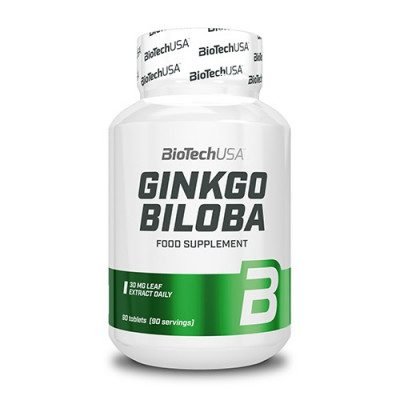 BIOTECHUSA Ginkgo Biloba€18.90 In stock 90tabs.
What to Avoid
- Any anticoagulant or antiplatelet medications without medical supervision
- Combining multiple herbs with antiplatelet activity at high doses simultaneously
- Using ginkgo if you have a bleeding disorder
- Starting a complex stack all at once — introduce each component separately to identify individual tolerability
- Proprietary blends where ginkgo dose is unlisted — effective doses require standardised, quantified extracts
FAQ
Can I take ginkgo biloba with omega-3 fish oil?
At standard doses, the combination is widely used and generally well tolerated. Both have mild antiplatelet effects, so very high doses of both together warrant awareness of this property, particularly if you take other blood-thinning agents. Standard supplemental doses of each are considered safe to combine by most practitioners.
Does stacking ginkgo with ginseng really improve cognition more than either alone?
A randomised controlled trial found that the ginkgo plus ginseng combination improved working memory and attention significantly more than either supplement alone in healthy volunteers (Kennedy et al., 2002). This makes it one of the better-studied herbal cognitive stacks.
Is it safe to take ginkgo biloba with a stimulant pre-workout?
Standard pre-workout caffeine levels alongside normal ginkgo doses are generally considered safe for healthy adults. At very high caffeine doses (above typical pre-workout ranges), the combination may increase cardiovascular response in sensitive individuals, so starting at lower amounts and assessing tolerance is sensible.
References
Gauthier, S., & Schlaefke, S. (2014). Efficacy and tolerability of Ginkgo biloba extract EGb 761 in dementia: a systematic review and meta-analysis of randomized placebo-controlled trials. Clinical Interventions in Aging, 9, 2065-2077. https://pubmed.ncbi.nlm.nih.gov/25506211/
Kennedy, D. O., Scholey, A. B., & Wesnes, K. A. (2002). Modulation of cognition and mood following administration of single doses of Ginkgo biloba, Ginseng, and a Ginkgo/Ginseng combination to healthy young adults. Physiology and Behavior, 75(5), 739-751. https://pubmed.ncbi.nlm.nih.gov/12020739/



