
Ginkgo Biloba Myths vs Facts
Ginkgo biloba extract is derived from one of the oldest tree species on Earth. It has been used in traditional Chinese medicine for centuries and is now one of the most widely sold herbal supplements globally. Despite this popularity, a number of claims about ginkgo biloba are poorly supported by modern research while others have a genuine (if more modest) evidence base. Let us go through the main ones.
Common Myths About Ginkgo Biloba
Myth 1: Ginkgo will prevent or treat Alzheimer's disease
This is the claim that launched ginkgo's modern fame. The GEM (Ginkgo Evaluation of Memory) study — a large, double-blind, placebo-controlled trial involving over 3,000 older adults — found that ginkgo biloba extract (EGb 761) did not reduce the incidence of dementia or Alzheimer's disease compared to placebo (DeKosky et al., 2008). This is one of the largest and most carefully conducted trials of any herbal supplement in older adults. The finding was consistent with several other large European trials. The myth persists in marketing, but the large RCT evidence does not support dementia prevention.
Myth 2: Ginkgo significantly improves memory in healthy people
A systematic review of controlled trials found that ginkgo biloba has no convincingly significant effect on memory in healthy people without baseline cognitive impairment (Laws et al., 2012). Results in healthy young adults are particularly weak. The perception that it is a universal memory booster does not hold up under scrutiny.
Myth 3: More ginkgo = more benefit
There is no good clinical evidence that escalating doses produce linear benefit. Most positive trial results cluster around standardised doses of the EGb 761 extract. Non-standardised products with undefined flavonoid and terpene content have unpredictable effects.
What the Evidence Actually Shows
Ginkgo biloba has genuine — if modest and context-specific — areas of support:
- Tinnitus: Some evidence suggests ginkgo may help certain patients with tinnitus, though a Cochrane review found the evidence insufficient to draw firm conclusions. The area remains a legitimate grey zone.
- Peripheral circulation: Ginkgo has vasodilatory properties and some evidence suggests it may support symptoms of peripheral arterial disease, though this is a medical context requiring physician oversight.
- Cognitive symptoms in mild impairment: In people with mild cognitive impairment or age-associated memory impairment (as opposed to healthy people), some trials find modest benefits on specific cognitive tests. This is a more nuanced picture than either "it works for memory" or "it does nothing."
MST Ginkgo Biloba 60caps, OstroVit Ginkgo Biloba Extract 50g, and 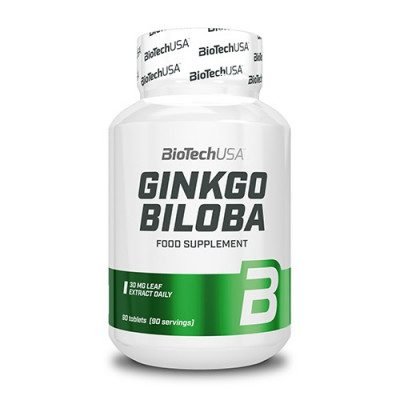 BIOTECHUSA Ginkgo Biloba€18.90 In stock 90tabs are available in the ginkgo-biloba category at maxfit.ee.
Marketing Claims vs Reality
| Claim | Reality |
|---|---|
| Prevents dementia | Not supported by large RCT evidence (DeKosky et al., 2008) |
| Boosts memory in healthy adults | Not convincingly supported (Laws et al., 2012) |
| Improves tinnitus | Possible benefit in some patients; evidence inconclusive |
| Supports circulation | Some vasodilatory evidence; clinical relevance context-dependent |
| Ancient = safe and effective | Age of use is not evidence of efficacy; safety profile is generally acceptable but drug interactions exist |
Grey Areas
Ginkgo biloba can interact with anticoagulant medications (including warfarin and aspirin), potentially increasing bleeding risk. This interaction is well-documented. Anyone on blood thinners, scheduled for surgery, or taking multiple medications should consult a physician before use. The supplement is generally well tolerated in healthy people but is not entirely without risk.
Bottom Line
Ginkgo biloba has a genuinely interesting pharmacological profile — flavonoids and terpenoids with antioxidant and vasodilatory properties — but its most popular marketed claims (preventing Alzheimer's, boosting memory in healthy people) are not well supported by large controlled trials. Use it for the areas where evidence is more credible (peripheral circulation support, specific cognitive symptom management in impaired populations) and with realistic expectations. Choose standardised EGb 761 extracts when possible.
FAQ
Is ginkgo biloba safe to take daily?
For most healthy adults, short to medium-term daily use is generally well tolerated. The key caution is drug interactions — particularly with blood thinners. Consult a doctor if you are on any medication.
Can ginkgo cause side effects?
Yes, including headache, gastrointestinal discomfort, and dizziness, though these are generally mild. More importantly, ginkgo can interact with anticoagulants to increase bleeding risk.
Which form of ginkgo is most studied?
The standardised extract EGb 761 (containing a fixed ratio of flavone glycosides and terpene lactones) is the form used in most clinical trials. Choosing a product with stated standardisation gives more predictability.
References
DeKosky, S. T., Williamson, J. D., Fitzpatrick, A. L., Kronmal, R. A., Ives, D. G., Saxton, J. A., Lopez, O. L., Burke, G., Carlson, M. C., Fried, L. P., Kuller, L. H., Robbins, J. A., Tracy, R. P., Woolard, N. F., Dunn, L., Snitz, B. E., Nahin, R. L., Furberg, C. D., & GEM Study Investigators. (2008). Ginkgo biloba for prevention of dementia: a randomized controlled trial. JAMA, 300(19), 2253–2262. https://pubmed.ncbi.nlm.nih.gov/19017911/
Laws, K. R., Sweetnam, H., & Kondel, T. K. (2012). Is Ginkgo biloba a cognitive enhancer in healthy individuals? A meta-analysis. Human Psychopharmacology: Clinical and Experimental, 27(6), 527–533. https://pubmed.ncbi.nlm.nih.gov/23001963/



