
Ginkgo Biloba for Women: Benefits and Considerations
Ginkgo biloba is one of the oldest medicinal plants on Earth. Extracts from its leaves have been extensively studied for effects on circulation, cognitive function, and antioxidant status. While much of the clinical research does not separate outcomes by sex, there are meaningful reasons why women — at different life stages — may find ginkgo particularly relevant or may need to approach it with specific awareness.
This guide addresses what the evidence says about ginkgo biloba for women, including hormonal context, dosing, and safety.
Why Women May Find Ginkgo Relevant
The key mechanisms of ginkgo biloba — improved peripheral microcirculation, antioxidant protection via flavonoid glycosides and terpene lactones, and modulation of platelet-activating factor — are not sex-specific. However, several life-stage contexts make ginkgo of particular interest to women:
Memory and cognitive support: Age-related cognitive concerns are reported more frequently in women, partly because women live longer on average. Ginkgo has been studied for cognitive function in older adults, with some evidence of benefit in attention and processing speed (Tan et al., 2015).
Circulation and extremity cold sensitivity: Women are more commonly affected by Raynaud's phenomenon — reduced peripheral circulation causing cold fingers and toes. Ginkgo's vasoregulatory effects may be relevant here, though clinical evidence specifically in Raynaud's is limited.
Mood and well-being: Some studies have explored ginkgo in the context of mood and anxiety, with mixed results. The evidence is not conclusive enough to make firm claims, but it has been an area of inquiry.
Hormonal and Life-Stage Notes
Ginkgo biloba is not a phytoestrogenic herb in the manner of red clover or soy isoflavones — it does not contain known phytoestrogens and is not expected to directly modulate estrogen receptors. This is reassuring for women with estrogen-sensitive conditions who wish to avoid phytoestrogen exposure.
During perimenopause and menopause, some women experience cognitive changes and mood fluctuations. While ginkgo has been explored in this context, large high-quality trials specific to menopausal women are limited, and ginkgo should not be positioned as a substitute for hormonal or other medical management if that is what is clinically indicated.
Dose Considerations
Standardised ginkgo extract (typically standardised to 24% flavonoid glycosides and 6% terpene lactones) is the form used in most clinical research. Studies have used doses ranging from 120 to 240 mg per day, divided across one or two servings.
Products like MST Ginkgo Biloba 60caps, OstroVit Ginkgo Biloba Extract 50g, and 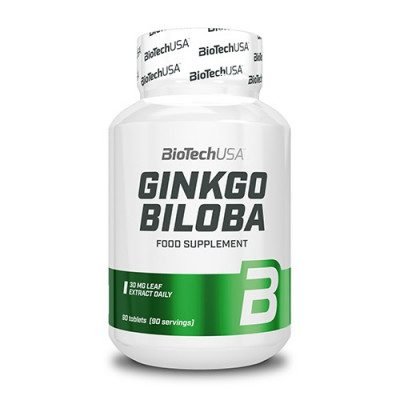 BIOTECHUSA Ginkgo Biloba€18.90 In stock 90tabs are available at maxfit.ee. Check the per-serving standardisation percentage on the label; unspecified "ginkgo leaf powder" without a standardisation statement provides unpredictable active compound content.
Pregnancy and Safety Notes
Ginkgo biloba is not recommended during pregnancy. It has anticoagulant properties through inhibition of platelet-activating factor, which raises concerns about bleeding risk during labour and delivery. Some animal studies also raised questions about potential effects on uterine muscle, though human evidence is limited. Most professional bodies advise avoiding ginkgo during pregnancy as a precaution.
Ginkgo should also be avoided by women who are breastfeeding, as safety data in this context is insufficient.
For women taking anticoagulants (warfarin, heparin), antiplatelet drugs (aspirin, clopidogrel), or certain antidepressants including MAOIs, ginkgo warrants a conversation with a prescriber before starting. The anticoagulant and serotonergic interaction risks are the most clinically relevant.
Bottom Line
Ginkgo biloba is a well-studied herbal supplement with a reasonable evidence base for cognitive and circulatory support. For most healthy non-pregnant women, it is well tolerated at standardised doses. The critical caveats are avoiding use during pregnancy and breastfeeding, and checking for interactions with anticoagulant or antiplatelet medications. Standardised extract products provide more consistent active compound content than unstandardised leaf powders.
References
Tan, M. S., Yu, J. T., Tan, C. C., Wang, H. F., Meng, X. F., Wang, C., et al. (2015). Efficacy and adverse effects of ginkgo biloba for cognitive impairment and dementia: a systematic review and meta-analysis. Journal of Alzheimer's Disease, 43(2), 589-603. https://doi.org/10.3233/jad-140837
Kent, C. M., Shah, S., Fitzmaurice, D. A., & Sherr, L. (2002). Safety of ginkgo biloba in elderly patients: a randomised placebo-controlled trial. Age and Ageing, 31(suppl 1), 19-22.
FAQ
Is ginkgo biloba safe for women with hormone-sensitive conditions?
Ginkgo biloba does not contain phytoestrogens and is not expected to interact with estrogen-sensitive conditions in the way that soy isoflavones or red clover might. However, always discuss any new supplement with your specialist if you have a hormone-sensitive condition.
Can women take ginkgo biloba long term?
Long-term clinical trials, including a large US trial running for several years, found ginkgo well tolerated in older adults without significant safety concerns at the doses studied. Ongoing use beyond one year should include periodic review, especially if you take medications that interact with anticoagulants.
At what age do women typically start considering ginkgo?
Interest in ginkgo biloba is most common among women in their 40s and beyond, typically in the context of supporting cognitive function, circulation, and well-being during perimenopause and ageing. However, age alone does not determine need — individual health context matters more.



