
Ginkgo Biloba After 50: Benefits & Safety
Ginkgo biloba is one of the most researched herbal supplements in the world, with a particularly strong research focus on its use in older adults. The extract, typically standardised to 24% flavone glycosides and 6% terpene lactones, acts via multiple mechanisms: vasodilation, inhibition of platelet-activating factor, antioxidant activity, and modulation of neurotransmitter systems. For people over 50, where age-related changes in cerebral blood flow and cognitive function are well documented, these mechanisms translate into plausible practical benefits.
Age-Related Need
The brain undergoes measurable changes from the mid-40s onward: reduced cerebral blood flow, increased oxidative stress, declining cholinergic and dopaminergic signalling, and progressive reductions in working memory speed and verbal recall. These are normal ageing processes, not early dementia, and they are present to varying degrees in healthy older adults.
Ginkgo biloba's proposed mechanisms map directly onto several of these changes. Its terpene lactones (bilobalide and ginkgolides) inhibit platelet-activating factor and improve microvascular blood flow. Its flavonoids act as antioxidants against reactive oxygen species that accumulate with age. Collectively, these actions have made ginkgo one of the most studied supplements for age-related cognitive maintenance.
What the Evidence Shows
A large multicentre RCT (the GuidAge study) found that ginkgo biloba extract EGb 761 did not significantly reduce the rate of conversion to Alzheimer's disease in older adults with memory complaints compared with placebo over five years, though subgroup analyses suggested possible benefit in those with neuropsychiatric symptoms (Vellas et al., 2012). This is an important calibration: ginkgo is not a dementia-prevention treatment, but absence of disease-prevention effect does not rule out benefit for normal age-related cognitive maintenance.
A meta-analysis found that standardised ginkgo extract significantly improved scores on cognitive and neuropsychiatric tests in people with mild cognitive impairment or dementia compared with placebo (Tan et al., 2015). For healthy older adults seeking to maintain cognitive function, the picture is more modest — effects are real but small.
Absorption Changes
Absorption of ginkgo's active compounds (flavone glycosides and terpene lactones) does not appear to change dramatically with age per se, but factors common in older adults can modulate it:
- Reduced gastric acidity: affects dissolution of the extract tablet; enteric-coated or well-formulated products minimise this concern.
- Altered hepatic metabolism: age-related reductions in liver blood flow and enzyme capacity may modestly slow ginkgo's metabolic clearance, slightly extending its effective half-life — generally not clinically problematic but worth knowing.
- Co-administered medications: older adults often take multiple drugs that may interact (see below).
Dose and Safety
The most studied dose is 120 mg to 240 mg of standardised extract (EGb 761 or equivalent) per day, divided into two doses. Starting at 120 mg daily and titrating up over 4 to 6 weeks allows assessment of tolerance. Most trials run 12 to 24 weeks before meaningful cognitive outcomes can be assessed.
MST Ginkgo Biloba 60caps, OstroVit Ginkgo Biloba Extract 50g, and 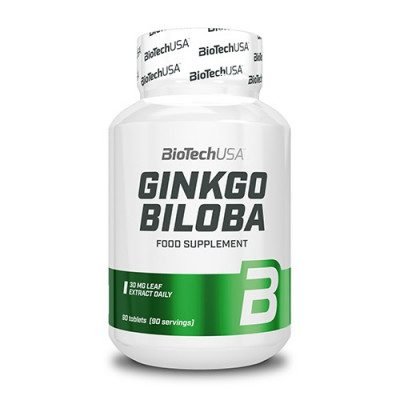 BIOTECHUSA Ginkgo Biloba€18.90 In stock 90tabs are options available at maxfit.ee.
At recommended doses, ginkgo is generally well tolerated. Gastrointestinal upset, headache, and dizziness are the most common side effects, typically mild and transient.
Interactions with Medication
This is the most critical consideration for adults over 50:
- Anticoagulants and antiplatelets (warfarin, aspirin, clopidogrel): ginkgo has antiplatelet effects that may additively increase bleeding risk. This combination requires medical supervision.
- NSAIDs: case reports of increased bleeding risk when combined with ginkgo.
- Anticonvulsants: ginkgo contains compounds that may lower seizure threshold; avoid in people with epilepsy or taking anti-seizure medications.
- CYP2C9 and CYP3A4 substrates: ginkgo can modestly induce or inhibit hepatic cytochrome enzymes, potentially altering blood levels of drugs metabolised by these pathways.
Anyone over 50 on prescription medication — especially blood thinners — must discuss ginkgo supplementation with their doctor before starting.
When to Supplement
Ginkgo biloba after 50 is most evidence-supported for people with subjective cognitive complaints (memory lapses, slower recall) or those seeking general cognitive maintenance. It is not a rapid-onset supplement — meaningful effects typically require consistent use for at least 8 to 12 weeks. It is not indicated for primary prevention of dementia in healthy cognitively intact adults based on current large-trial evidence.
Browse the ginkgo biloba category at maxfit.ee.
References
Vellas, B., Coley, N., Ousset, P. J., Berrut, G., Dartigues, J. F., Dubois, B., Grandjean, H., Pasquier, F., Piette, F., Robert, P., Touchon, J., Garnier, P., Mathiex-Fortunet, H., & Andrieu, S. (2012). Long-term use of standardised ginkgo biloba extract for the prevention of Alzheimer's disease (GuidAge): a randomised placebo-controlled trial. Lancet Neurology, 11(10), 851-859. https://pubmed.ncbi.nlm.nih.gov/22959217/
Tan, M. S., Yu, J. T., Tan, C. C., Wang, H. F., Meng, X. F., Wang, C., Jiang, T., Zhu, X. C., & Tan, L. (2015). Efficacy and adverse effects of ginkgo biloba for cognitive impairment and dementia: a systematic review and meta-analysis. Journal of Alzheimer's Disease, 43(2), 589-603. https://doi.org/10.3233/jad-140837
FAQ
Can ginkgo biloba improve memory in healthy older adults?
The evidence suggests modest but real improvements in cognitive speed and verbal recall for older adults with subjective memory complaints. For cognitively healthy adults with no complaints, the benefit is less clear.
How long does ginkgo biloba take to work?
Most trials run 12 to 24 weeks for meaningful outcomes. Users should not expect dramatic results in the first few weeks. Consistent daily use at the correct dose is more important than timing.
Can I take ginkgo biloba with blood pressure medication?
Some antihypertensives may interact with ginkgo's vasodilatory effects. Always disclose all supplements to your prescribing doctor. This is especially important for older adults managing multiple conditions.



