
Ginkgo Biloba for Athletes: Performance Evidence
Ginkgo biloba is one of the world's most-studied herbal extracts. Known primarily as a cognitive and circulation supplement, ginkgo biloba has attracted interest among athletes looking for an edge in performance, recovery, or mental focus during training. This article reviews the mechanisms relevant to sport, examines the strength and endurance evidence, outlines an effective protocol, identifies who benefits, and gives an honest verdict.
Mechanism in Sport
Ginkgo biloba's potential sports-relevant effects stem from several mechanisms:
- Cerebrovascular and peripheral circulation: Ginkgo contains flavonoid glycosides and terpenoids (ginkgolides, bilobalide) that inhibit platelet-activating factor and support vasodilation, potentially improving blood flow to muscles and the brain during exercise.
- Antioxidant activity: Intense exercise produces reactive oxygen species. Ginkgo's flavonoids act as free-radical scavengers, which may attenuate exercise-induced oxidative stress.
- Neurotransmitter modulation: Ginkgo has shown effects on serotonin and dopamine receptor binding, which may be relevant to mood, motivation, and perception of effort during training.
- Altitude adaptation: Some research has explored ginkgo's ability to support oxygenation at altitude, which is of interest to endurance athletes training in hypoxic conditions.
Strength and Endurance Evidence
Cognitive Performance Under Physical Stress
The strongest evidence for ginkgo in sports contexts relates to cognitive function under physical or environmental stress. Studies have found that ginkgo may help maintain reaction time and mental clarity under conditions that would otherwise impair cognition (Mix & Crews, 2002). For team sport athletes and those in technically demanding events, this is practically meaningful.
Altitude Performance
A randomised controlled trial found that ginkgo supplementation was associated with reduced symptoms of acute mountain sickness and better peripheral oxygenation in subjects ascending to altitude, compared with placebo (Gertsch et al., 2004). For endurance athletes who train or compete at altitude, this evidence is worth noting.
Aerobic Performance at Sea Level
Evidence for ginkgo improving VO2max, time trial performance, or maximal strength at sea level is limited and inconsistent. Most studies in healthy trained athletes at sea level do not show significant performance gains. Ginkgo is not an ergogenic aid in the direct sense that creatine or beta-alanine is.
Effective Protocol
Studies that have found meaningful effects generally use standardised extracts containing a known percentage of flavonoid glycosides and terpenoids — typically branded as EGb 761. Doses used in research range from 120 mg to 240 mg per day, typically split into two doses.
Effects on cognitive function and circulation require several weeks of consistent use to become apparent. This is not a supplement you take once pre-workout and feel immediately.
Ginkgo should not be combined with blood thinners such as warfarin or aspirin without medical guidance, as it has mild anticoagulant properties.
Who Benefits
Ginkgo biloba for athletes is likely most relevant for:
- Endurance athletes training or competing at altitude.
- Athletes in technically complex sports where cognitive acuity under fatigue matters (team sports, martial arts, racquet sports).
- Older athletes for whom age-related declines in circulation and cognitive sharpness are relevant.
- Athletes in high-stress training blocks who want antioxidant support.
For the average beginner training at sea level focused on basic strength and hypertrophy, ginkgo is unlikely to produce noticeable performance gains.
Honest Verdict
Ginkgo biloba is not a primary performance supplement for most athletes. Its most credible roles are supporting cognitive function under stress, peripheral circulation, and altitude adaptation. The evidence does not support it as a direct strength or aerobic performance enhancer at sea level.
Think of ginkgo as a supportive, not primary, ergogenic tool. If you are in a relevant use case — altitude, cognitive sport demands, or older-age training — it may be worth a sustained trial.
MST Ginkgo Biloba 60caps, OstroVit Ginkgo Biloba Extract 50g, and 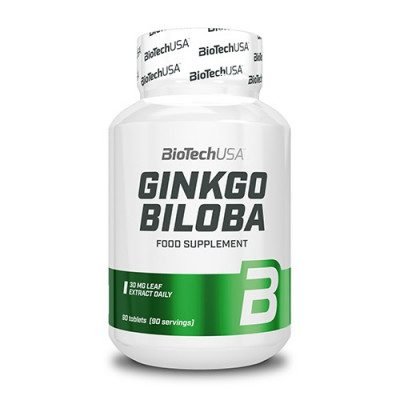 BIOTECHUSA Ginkgo Biloba€18.90 In stock 90tabs are available in the ginkgo-biloba category at maxfit.ee.
FAQ
Does ginkgo biloba improve athletic performance?
Direct ergogenic evidence at sea level in healthy athletes is limited and inconsistent. Ginkgo's strongest supported roles are in cognitive function under stress and altitude adaptation, not direct strength or aerobic output.
How long does ginkgo biloba take to work for athletes?
Studies showing effects on circulation and cognition typically use ginkgo for at least four to eight weeks of daily supplementation. Don't expect immediate performance changes from acute use.
Can athletes take ginkgo biloba safely?
Ginkgo is generally safe for healthy athletes at standard doses. The primary caution is its mild anticoagulant effect — avoid combining it with blood thinners (warfarin, aspirin, NSAIDs). Stop use at least two weeks before surgery.
References
Mix, J. A., & Crews, W. D. (2002). A double-blind, placebo-controlled, randomized trial of Ginkgo biloba extract EGb 761 in a sample of cognitively intact older adults: neuropsychological findings. Human Psychopharmacology, 17(6), 267-277. https://pubmed.ncbi.nlm.nih.gov/12404671/
Gertsch, J. H., Basnyat, B., Johnson, E. W., Onopa, J., & Holck, P. S. (2004). Randomised, double blind, placebo controlled comparison of ginkgo biloba and acetazolamide for prevention of acute mountain sickness among Himalayan trekkers. BMJ, 328(7443), 797. https://pubmed.ncbi.nlm.nih.gov/15070635/



