
What Is Ginkgo Biloba and Why Does Dosage Matter?
Ginkgo biloba is one of the oldest living tree species on earth, and its leaf extract has been used medicinally for centuries. Modern interest focuses on two families of active compounds: flavonoid glycosides and terpene lactones (ginkgolides and bilobalide). These are thought to act primarily by improving cerebral blood flow, acting as antioxidants, and inhibiting platelet-activating factor. Ginkgo biloba dosage matters because the research base is built almost entirely on standardised extracts rather than raw leaf powder — so the dose of the standardised extract and its ginkgo flavonoid glycoside and terpenoid content determine whether you are taking what the studies tested.
Studied Effective Dose Ranges
The most studied form of ginkgo is EGb 761, a standardised extract containing 24% flavonoid glycosides and 6% terpene lactones. The majority of clinical trials on cognitive outcomes and memory support have used 120–240 mg of standardised extract per day, divided across two or three administrations (Mix & Crews, 2002). This is the dose range with the most human clinical evidence behind it.
For circulatory support (peripheral arterial disease, claudication), studies have also used 120–240 mg of standardised extract daily. Evidence for meaningful benefit in this context is moderate-quality.
For cognitive decline in older adults, some trials used doses up to 240 mg/day, while the lower 120 mg/day range is more common in studies on healthy younger adults with subtler endpoints.
Dose by Goal and Bodyweight
Unlike many amino acids, ginkgo dosing in trials is not weight-based — the studied doses are flat amounts of standardised extract regardless of body mass:
| Goal | Typical dose of standardised extract | Notes |
|---|---|---|
| Cognitive support (healthy adults) | 120 mg/day | Usually divided into 2 doses |
| Memory and cognitive decline (older adults) | 120–240 mg/day | 240 mg may be more effective in age-related decline contexts |
| Circulation / peripheral blood flow | 120–240 mg/day | Divided doses |
Productly MST Ginkgo Biloba 60caps, OstroVit Ginkgo Biloba Extract 50g, and 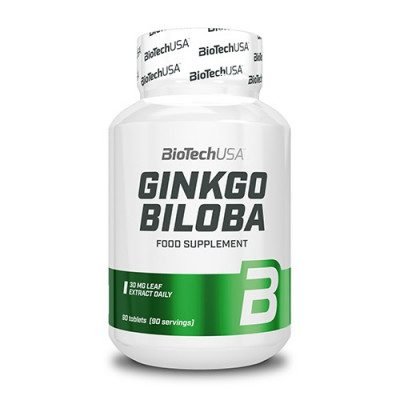 BIOTECHUSA Ginkgo Biloba€18.90 In stock 90tabs are the ginkgo options at maxfit.ee. When reading a ginkgo product label, look for the total standardised extract weight and the stated percentage of flavonoid glycosides and terpene lactones — products without this specification may not deliver the doses tested in research.
Upper Limits and Safety Signals
Ginkgo biloba is generally well-tolerated at studied doses. The most clinically relevant safety concern is anticoagulant activity: ginkgolides inhibit platelet-activating factor, which can extend bleeding time. This is particularly relevant for:
- People taking anticoagulant or antiplatelet medications (warfarin, aspirin at therapeutic doses, clopidogrel, heparin)
- People scheduled for surgery — guidelines generally recommend stopping ginkgo supplementation at least 2 weeks before any surgical procedure
- People with bleeding disorders
Common side effects at therapeutic doses include headache, GI upset, and dizziness — all generally mild and dose-related. Rare but more serious effects include seizures at very high doses. There are no formal EFSA-published tolerable upper intake levels for ginkgo supplementation.
Ginkgo leaf raw powder (not standardised extract) may also contain ginkgolic acids, which are allergenic compounds present in the fruit and raw leaves; high-quality standardised extracts are processed to minimise these.
Timing Relative to the Dose
Ginkgo is typically taken with meals to reduce GI side effects. Pharmacokinetic studies show peak plasma levels of flavonoid glycosides occur approximately 1–2 hours after ingestion. For cognitive effects, dividing the dose into two administrations (morning and noon, for example) may maintain more consistent plasma levels compared to a once-daily dose. Taking ginkgo in the evening is generally avoided as some users report mild stimulatory or alerting effects.
Practical Protocol
- Choose a standardised extract: look for 24% ginkgo flavonoid glycosides and 6% terpene lactones on the label. This matches EGb 761, the form used in most clinical trials.
- Start at 120 mg/day in two divided doses: a morning dose with breakfast and a midday dose with lunch. Assess response over 4–6 weeks before considering escalation to 240 mg/day.
- Expect gradual onset: cognitive effects in research typically emerge over 4–12 weeks of consistent supplementation. Ginkgo is not an acute cognition enhancer — it works over time.
- Medication check: if you take anticoagulants, antiplatelet drugs, or are preparing for surgery, consult your doctor before starting ginkgo.
- Stop before surgery: discontinue at least 2 weeks before any planned surgical procedure.
Ginkgo biloba supplements are available at maxfit.ee in the ginkgo-biloba category.
References
Mix, J. A., & Crews, W. D. Jr. (2002). A double-blind, placebo-controlled, randomized trial of Ginkgo biloba extract EGb 761 in a sample of cognitively intact older adults: Neuropsychological findings. Human Psychopharmacology, 17(6), 267–277. https://pubmed.ncbi.nlm.nih.gov/12404671/
Hofferberth, B. (1994). The efficacy of EGb 761 in patients with senile dementia of the Alzheimer type. Human Psychopharmacology, 9(3), 215–222. https://doi.org/10.1002/hup.470090308
FAQ
How much ginkgo biloba should I take daily?
For most cognitive health goals, 120 mg/day of standardised ginkgo extract (24% flavonoid glycosides, 6% terpene lactones) divided into two doses is the most commonly studied and well-tolerated approach. For age-related cognitive decline, some studies have used 240 mg/day.
How long does it take for ginkgo biloba to work?
In clinical trials, meaningful effects on cognitive measures typically appear after 4–12 weeks of consistent daily supplementation. Ginkgo is not a fast-acting stimulant — it requires sustained use to build up meaningful plasma levels and exert its proposed mechanisms.
Can I take ginkgo biloba with other supplements?
Ginkgo combines well with most standard supplements. The main caution is combining with other anticoagulant or blood-thinning supplements (high-dose fish oil, vitamin E, nattokinase) or medications — the additive antiplatelet effect may increase bleeding risk. If in doubt, consult a pharmacist.



