
Understanding Ginkgo Biloba Deficiency
Ginkgo biloba is not a vitamin or mineral. There is no established "ginkgo biloba deficiency" in the classical nutritional sense, because it is not an essential nutrient that the human body requires to function. Unlike magnesium or vitamin D, you will not develop a deficiency disease from the absence of ginkgo in your diet.
However, the concept of ginkgo biloba deficiency is useful in a different sense: certain functional symptoms — particularly those related to cognitive decline, poor peripheral circulation, and tinnitus — may reflect reduced activity of the biological pathways that ginkgo supports. When people ask "do I need ginkgo biloba?", they are essentially asking whether their symptoms align with the conditions where ginkgo supplementation has a reasonable evidence base.
Symptoms That May Indicate You Could Benefit
Memory and Cognitive Performance
Subjective cognitive decline — the experience of mild memory lapses, slower recall, or reduced focus that is not yet diagnosable as dementia — is the most common reason people consider ginkgo. Ginkgo biloba extract (standardised to 24% flavonol glycosides and 6% terpene lactones) has been studied in this context. A large randomised controlled trial in adults over 70 with subjective memory complaints found no significant effect on the rate of progression to dementia compared to placebo (DeKosky et al., 2008), which tempers earlier optimism.
However, ginkgo may still provide meaningful support for healthy adults experiencing age-related cognitive changes below the threshold of clinical dementia. Meta-analyses of shorter-duration trials show modest effects on memory and attention tasks in older adults (Tan et al., 2015).
Poor Peripheral Circulation
Ginkgo has documented vasodilatory effects via its influence on nitric oxide pathways and platelet-activating factor inhibition. People who experience cold hands and feet, especially in Nordic and Estonian winters, often explore ginkgo because these symptoms can reflect peripheral circulation limitations that ginkgo may modestly support.
Tinnitus
Tinnitus (ringing in the ears) is a condition sometimes linked to reduced cochlear circulation. Ginkgo has been studied for this indication. Results are mixed, with some trials showing benefit and others not (Rejali et al., 2004). The evidence is insufficient to recommend ginkgo as a primary treatment but supports its use as a well-tolerated adjunct when tinnitus is associated with circulatory factors.
Altitude Sickness (Niche)
Ginkgo may reduce symptoms of acute mountain sickness by supporting cerebral blood flow. This is a niche application but supported by randomised trials.
At-Risk Groups
- Adults over 50: The most studied population for cognitive support. Age-related changes in cerebral blood flow and neuronal function are the primary rationale.
- People with sedentary lifestyles: Reduced physical activity impairs peripheral circulation, a domain where ginkgo may contribute.
- Individuals in Northern Europe during winter: Limited daylight, reduced physical activity, and seasonal mood changes create a period where cognitive and circulatory support is sought. Ginkgo is a pragmatic option alongside vitamin D in the Estonian winter context.
- People with early cognitive complaints: Those noticing memory lapses below clinical thresholds.
How It Is Tested
There is no blood test for ginkgo status. Assessment is based on symptoms and the decision to supplement is empirical — try it for 4–12 weeks and evaluate subjective changes. Standardised cognitive assessments can be administered before and after a trial period by a healthcare provider.
Nordic and Estonian Context
In Estonia, long winters, limited sun exposure, and an ageing population make cognitive and circulatory support supplements relevant. Ginkgo biloba is not a traditional Estonian herb — it originates from China — but it has become a widely used supplement in the Baltic region. The typical indication is preventive support for middle-aged and older adults concerned about cognitive ageing.
When to Supplement vs Diet
Ginkgo compounds are not present in meaningful concentrations in any common food. The active constituents (flavonol glycosides and terpene lactones) are specific to the Ginkgo biloba tree, not found in the typical Estonian diet. Supplementation is the only practical route.
Products available at maxfit.ee include MST Ginkgo Biloba 60caps, OstroVit Ginkgo Biloba Extract 50g, and 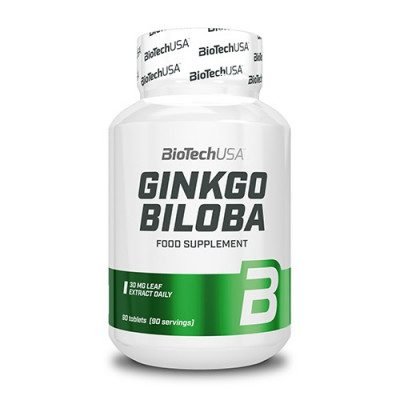 BIOTECHUSA Ginkgo Biloba€18.90 In stock 90tabs. Explore the ginkgo biloba category at maxfit.ee.
Important: Ginkgo may interact with anticoagulants (blood thinners) and antiplatelet drugs. People taking warfarin, aspirin, or similar medications should consult a doctor before using ginkgo supplements.
References
DeKosky, S. T., Williamson, J. D., Fitzpatrick, A. L., Kronmal, R. A., Ives, D. G., Saxton, J. A., Lopez, O. L., Burke, G., Carlson, M. C., Fried, L. P., Kuller, L. H., Robbins, J. A., Tracy, R. P., Woolard, N. F., Dunn, L., Snitz, B. E., Nahin, R. L., & Furberg, C. D. (2008). Ginkgo biloba for prevention of dementia: a randomized controlled trial. JAMA, 300(19), 2253-2262. https://pubmed.ncbi.nlm.nih.gov/19017911/
Tan, M. S., Yu, J. T., Tan, C. C., Wang, H. F., Meng, X. F., Wang, C., Jiang, T., Zhu, X. C., & Tan, L. (2015). Efficacy and adverse effects of ginkgo biloba for cognitive impairment and dementia: a systematic review and meta-analysis. Journal of Alzheimer's Disease, 43(2), 589-603. https://doi.org/10.3233/jad-140837
Rejali, D., Sivakumar, A., & Balaji, N. (2004). Ginkgo biloba does not benefit patients with tinnitus: a randomized placebo-controlled double-blind trial and meta-analysis of randomized trials. Clinical Otolaryngology, 29(3), 226-231. https://pubmed.ncbi.nlm.nih.gov/15142066/
FAQ
Is there a test for ginkgo biloba deficiency?
No. Ginkgo is not an essential nutrient, so there is no blood test for deficiency. The decision to supplement is based on symptoms — primarily age-related cognitive changes, poor peripheral circulation, or tinnitus — and is evaluated empirically over 4–12 weeks of use.
How long does it take for ginkgo biloba to work?
Most studies use supplementation periods of 4–12 weeks before assessing changes. Cognitive effects, if they occur, are typically gradual. Do not expect immediate results.
Can ginkgo biloba be taken long-term?
Ginkgo is generally well-tolerated in the short to medium term. Long-term safety in healthy adults is not fully characterised. People taking anticoagulant medications should not use ginkgo without medical supervision due to the risk of increased bleeding.



