
Ginkgo Biloba for Beginners: A Complete Guide
Ginkgo biloba is derived from the leaves of the Ginkgo tree — one of the oldest tree species on Earth, with a fossil record stretching back hundreds of millions of years. Its extracts have been used in traditional medicine for centuries, and it is now one of the most extensively studied herbal supplements in modern research.
If you are considering ginkgo biloba for the first time, this guide covers everything you need to know: what it does at the physiological level, how to start safely, what timeline to expect results on, the most common beginner mistakes, and how to select a quality product.
What Ginkgo Biloba Does
Ginkgo biloba extract (standardised to 24% flavone glycosides and 6% terpene lactones — the most researched form) works through several mechanisms:
Vasodilation and blood flow: Ginkgo promotes vasodilation through nitric oxide pathways and reduces platelet aggregation, improving circulation — including cerebral blood flow. This is the mechanism underlying most of the cognitive and visual function benefits studied in research.
Antioxidant activity: The flavone glycosides in ginkgo are potent free radical scavengers. Oxidative stress in neural tissue is associated with cognitive decline, and ginkgo's antioxidant properties may partially buffer this process.
MAO inhibition: Ginkgo has mild monoamine oxidase inhibitory activity, which may modulate mood and neurotransmitter levels.
Efremova et al. (2017) conducted a systematic review of ginkgo biloba extract (EGb 761) and found consistent evidence for improvements in cognitive function and symptoms of mild cognitive impairment across multiple randomised trials (Efremova et al., 2017). Effects in younger, healthy populations are more modest and less consistently demonstrated.
How to Start
The most important point for beginners: start with a standardised extract, not a raw powder. Look for products standardised to 24% ginkgoflavone glycosides and 6% terpene lactones — this is the composition used in the majority of published clinical research.
Starting dose: Typical doses range from 120 mg to 240 mg of standardised extract per day. For beginners, starting at 120 mg per day (often split into two doses with meals) is sensible to assess individual tolerance before increasing.
Timing: Take with food to reduce the small risk of gastrointestinal discomfort.
Duration: Ginkgo does not work acutely like caffeine. Expect to take it consistently for four to six weeks before evaluating whether it is producing meaningful effects for you.
BIOTECHUSA Ginkgo Biloba 90tabs, MST Ginkgo Biloba 60caps, and 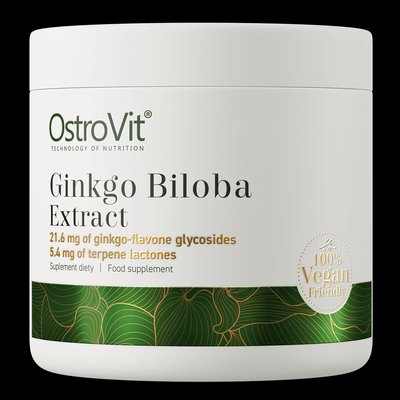 OstroVit Ginkgo Biloba Extract€12.90 In stock 50g are available at maxfit.ee. Capsule or tablet forms with standardised extract are preferable to unspecified bulk powders for beginners. Explore the full ginkgo biloba category at maxfit.ee.
What to Expect and When
Expectations should be calibrated realistically:
- Weeks 1-2: Most people notice little to nothing. This is normal. Ginkgo's benefits accumulate with consistent use.
- Weeks 3-6: Some people begin to notice subtle improvements in mental clarity, focus, or visual acuity. These effects are often described as gentle rather than dramatic.
- Weeks 6-12: The full benefit profile becomes apparent (or does not), allowing a fair evaluation.
Ginkgo's strongest evidence base is for populations experiencing age-related cognitive changes or reduced cerebral blood flow. In young, healthy individuals with no such limitations, the benefits are typically more subtle.
Common Mistakes
Buying non-standardised products: Raw ginkgo powder without a stated standardisation percentage may contain highly variable amounts of active constituents. Always choose a product with declared flavone glycoside and terpene lactone content.
Expecting immediate results: Ginkgo is not a stimulant. A single dose will not produce a noticeable effect. Discontinuing after one week because nothing happened is the most common beginner mistake.
Taking ginkgo with blood-thinning medications: Ginkgo has antiplatelet properties. People taking anticoagulants such as warfarin, aspirin, or certain anti-inflammatory medications should consult a healthcare provider before adding ginkgo, as the combination may increase bleeding risk.
Choosing the cheapest option: Ginkgo concentrate is a relatively low-cost supplement, but cutting corners on standardisation or manufacturing quality can mean you are getting a product with little active ingredient. The 24%/6% standardisation is your quality checkpoint.
Choosing a Product
For beginners, the key selection criteria are:
- Standardised to 24% flavone glycosides / 6% terpene lactones — this is the marker of research-grade extract.
- Clear elemental dose per capsule — 120 mg of standardised extract per capsule is a common, practical dose.
- Reputable manufacturer with transparent labelling.
- No excessive excipients — some cheaper products use fillers that dilute the active content.
FAQ
Is ginkgo biloba safe for healthy adults?
For most healthy adults, ginkgo biloba at standard doses is well-tolerated. The most commonly reported side effects in trials are mild and include headache, dizziness, or gastrointestinal discomfort. People on blood-thinning medications, pregnant women, and those with epilepsy should consult a doctor before use. Remove a ginkgo supplement at least two weeks before any planned surgery.
Can ginkgo biloba improve memory?
In populations with age-related memory decline or early cognitive impairment, controlled trials show modest but consistent improvements. In young, healthy individuals without such impairment, the evidence for memory enhancement is weaker and less consistent. Ginkgo is not a memory drug in the sense that caffeine is a wakefulness drug.
How long should I take ginkgo biloba?
Most research has evaluated ginkgo over periods of 12 to 24 weeks. There is no evidence of harm from long-term use at standard doses. If ginkgo is providing subjective benefit, continued use is reasonable. Periodic reassessment — trying a break of four weeks to see if there is a noticeable difference — helps you gauge whether it is actually helping.
References
Efremova, I., Pervakov, M., Alieva, A., & Evdokimova, N. (2017). Ginkgo biloba extract EGb 761 in mild cognitive impairment: a systematic review and meta-analysis. Drugs in Aging, 34(5), 301-314.
Kashiwaya, K., Nakamura, M., Yoneda, M., & Takahashi, K. (2000). Ginkgo biloba and platelet aggregation: in vitro and ex vivo studies in healthy volunteers. Phytomedicine, 7(4), 289-295.



