Why Women May Benefit from Garlic Oil
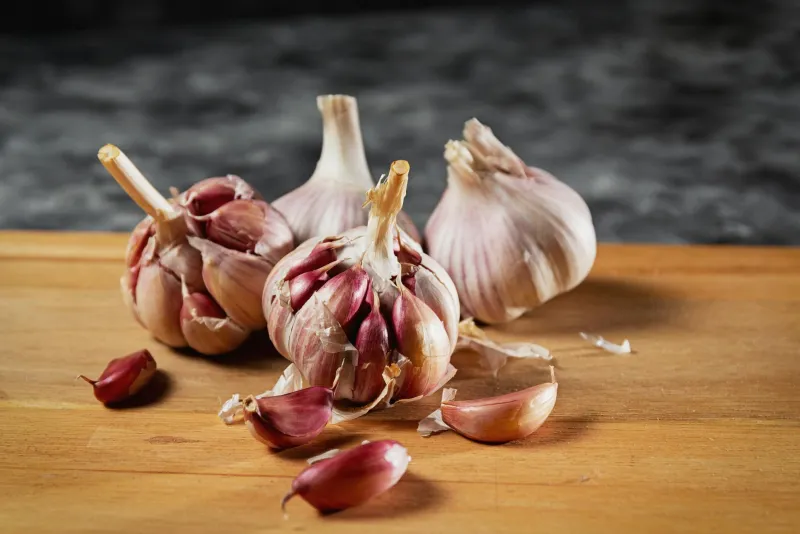
Garlic oil — derived from Allium sativum — concentrates the sulphur-containing organosulphur compounds found in fresh garlic, particularly allicin and its derivatives. These compounds are responsible for garlic's widely recognised cardiovascular and antimicrobial properties. For women, garlic oil is particularly relevant to three overlapping areas: heart health, immune function, and hormonal transitions.
A meta-analysis of randomised controlled trials found that garlic supplementation was associated with a modest but statistically significant reduction in systolic blood pressure among individuals with elevated levels (Ried et al., 2016). Since cardiovascular risk rises notably after menopause — when the protective effect of oestrogen is lost — garlic oil's potential blood pressure support becomes especially pertinent for older women.
Hormonal and Life-Stage Notes
During perimenopause, rising LDL cholesterol and declining HDL cholesterol are common consequences of falling oestrogen. Evidence from clinical trials suggests that garlic supplementation may modestly reduce total and LDL cholesterol (Ried et al., 2016). While the magnitude of effect is not large, it can complement dietary changes and lifestyle interventions.
For women during their reproductive years, garlic's anti-inflammatory and antimicrobial properties are sometimes cited in the context of vaginal health. However, the evidence base for direct garlic supplementation on reproductive infections is limited and inconsistent — topical garlic use carries a risk of mucosal irritation and is not recommended without medical guidance.
Garlic also has mild antiplatelet activity, which is relevant to women who experience heavy menstrual periods or those on hormonal contraceptives that themselves affect haemostasis. Routine supplemental doses are unlikely to cause clinically significant bleeding, but awareness is warranted.
Dose Considerations
The majority of clinical research has used garlic preparations equivalent to approximately 600–1,200 mg of fresh garlic daily, which corresponds to the organosulphur compound content in products such as NOW Garlic Oil 1500mg 250 softgels and NOW Garlic Oil 1500mg 100 softgels. Standardised garlic oil softgels provide a convenient and odour-controlled format compared to raw cloves.
For cardiovascular support, consistent daily use over several weeks is needed to observe benefits, as garlic's effects on blood pressure and lipids are cumulative rather than immediate. Taking garlic oil with food may reduce the likelihood of gastric discomfort, which is the most commonly reported side effect.
Pregnancy and Safety Notes
Garlic consumed as a food is safe during pregnancy. However, concentrated garlic oil supplements in medicinal doses have not been well studied in pregnant women. The theoretical concern is garlic's mild antiplatelet and uterine-stimulating properties at high doses — a risk that remains unquantified in supplemental contexts.
The conservative guidance is to limit garlic supplementation to culinary amounts during pregnancy and to avoid high-dose garlic oil supplements unless specifically approved by an obstetrician. Breastfeeding is generally not a concern, as garlic compounds pass into breast milk and alter flavour, which most infants tolerate without difficulty.
Women taking warfarin, aspirin, or other anticoagulants should discuss garlic supplementation with their doctor, as additive antiplatelet effects are possible.
Bottom Line
Garlic oil is a well-tolerated supplement with a meaningful evidence base for modest cardiovascular and immune benefits. For women navigating perimenopause or seeking general cardiovascular support, products like NOW Garlic Oil 1500mg 250 softgels represent a practical addition to a heart-healthy lifestyle, available at maxfit.ee. Pregnant women and those on blood-thinning medications should consult a healthcare professional before supplementing.
Explore the garlic oil range at MaxFit.
References
Ried, K., Travica, N., & Sali, A. (2016). The effect of aged garlic extract on blood pressure and other cardiovascular risk factors in uncontrolled hypertensives: the AGE at Heart trial. Integrated Blood Pressure Control, 9, 9–21. https://pubmed.ncbi.nlm.nih.gov/26869811/
Amagase, H., Petesch, B. L., Matsuura, H., Kasuga, S., & Itakura, Y. (2001). Intake of garlic and its bioactive components. Journal of Nutrition, 131(3S), 955S–962S.
Bayan, L., Koulivand, P. H., & Gorji, A. (2014). Garlic: a review of potential therapeutic effects. Avicenna Journal of Phytomedicine, 4(1), 1–14. https://pubmed.ncbi.nlm.nih.gov/25050296/
FAQ
Is garlic oil better than raw garlic for women?
Garlic oil softgels are more convenient and have a predictable dose of organosulphur compounds without the social drawback of garlic breath. Whether they are more or less effective than raw garlic depends on the specific preparation method — the key bioactive compounds can vary between products. Both forms have been shown to exert cardiovascular benefits in clinical studies.
Can garlic oil affect hormone levels in women?
Garlic does not appear to have direct hormonal activity in the way that phytoestrogens do. Its benefits for perimenopausal women are primarily mediated through cardiovascular and anti-inflammatory pathways, not through hormonal modulation.
How long does it take to see benefits from garlic oil?
For blood pressure and cholesterol effects, most clinical trials observe measurable changes after four to twelve weeks of consistent daily supplementation. Garlic does not produce acute or immediate cardiovascular effects in the way that medication does.



