What Is Garcinia and What Are Its Natural Sources?
Garcinia is a large genus of tropical trees and shrubs, with Garcinia cambogia (also known as Garcinia gutta or Malabar tamarind) being the species most widely used in dietary supplements. The fruit is native to South and Southeast Asia, particularly southern India, Sri Lanka, and parts of Southeast Asia.
The fruit rind of Garcinia cambogia is the primary source of hydroxycitric acid (HCA), the compound credited with most of the plant's proposed metabolic effects. HCA is structurally similar to citric acid and acts as a competitive inhibitor of ATP-citrate lyase, an enzyme involved in fatty acid synthesis from carbohydrates.
Natural Food Sources of Garcinia
Garcinia fruits are not commonly found in European or Baltic supermarkets. They are primarily a regional food in:
- South India and Sri Lanka: The dried rind (Gamboge) is used as a souring agent in fish curries and other dishes, particularly in Kerala and Tamil Nadu. The rind imparts a sour, tamarind-like flavour.
- Southeast Asia: Related Garcinia species, including Garcinia atroviridis and Garcinia mangostana (mangosteen), are used in cooking and traditional medicine across Thailand, Malaysia, and Indonesia.
- Traditional medicinal preparations: Ayurvedic medicine uses dried Garcinia rind as a digestive stimulant and for treating obesity.
The following table maps Garcinia HCA content relative to natural food contexts:
| Form | HCA availability |
|---|---|
| Fresh Garcinia rind | Moderate HCA in raw form |
| Dried Garcinia rind (culinary) | Concentrated HCA per gram |
| Mangosteen (G. mangostana) | Negligible HCA; different phytochemistry |
| Standardised Garcinia extract (60% HCA) | High, consistent HCA |
Is Garcinia Available as Food in Estonia?
Fresh Garcinia cambogia is not commercially available in Estonian supermarkets. Dried tamarind (from a completely different plant, Tamarindus indica) is sometimes used as an acidic flavour substitute, but it contains no HCA. Asian grocery stores in Tallinn may occasionally stock dried Garcinia rind as a culinary import.
Practically, Garcinia as a food source is not accessible in the Estonian diet. Supplementation is the only realistic way to consume HCA in a controlled, meaningful amount.
Bioavailability: Food vs Supplement
When Garcinia rind is consumed as a food (dried, cooked in curry), HCA is present but its bioavailability is influenced by:
- Cooking and pH: HCA is unstable at high temperatures and very low pH. Extended high-heat cooking degrades a proportion of the HCA in food preparations.
- Matrix effects: When HCA is embedded in a food matrix (rind fibre, other polyphenols), its absorption may be slower and less complete than from an isolated extract.
- Dose uncertainty: The HCA content of culinary Garcinia rind varies with geography, maturity, and drying methods. There is no standardised dose in traditional culinary use.
Standardised Garcinia extracts (typically 50–60% HCA) in supplement form provide consistent, measurable doses with documented bioavailability. A study using calcium-potassium salt of HCA found detectable plasma HCA levels within 2 hours of supplementation (Loe et al., 2001).
Daily Targets From Diet
There is no established dietary reference value for HCA because Garcinia is not a conventional nutrient. In research contexts:
- Studies exploring HCA effects on appetite and fat metabolism have used standardised extracts equivalent to approximately 1500–3000 mg of HCA per day, divided into doses before meals.
- Traditional culinary use in South Asian cooking provides highly variable and typically lower amounts of HCA than what is studied in research.
For anyone outside the traditional use regions (i.e., virtually all Europeans), achieving a meaningful HCA intake from food alone is not practical. Supplementation is the only realistic approach.
Cooking and Storage Effects
Heat instability: HCA is a sensitive organic acid. Studies in food chemistry show that heating dried Garcinia rind above 70°C for extended periods causes measurable HCA degradation. This means that Garcinia rind used in slow-cooked or high-temperature curries may have reduced HCA activity compared to raw or lightly processed preparations.
Storage of culinary Garcinia: Dried Garcinia rind should be stored in airtight containers away from heat and moisture. Properly stored dried rind maintains its HCA content for 6–12 months.
Supplement stability: Quality Garcinia supplements encapsulate the HCA extract in protective capsule shells and are formulated as calcium or potassium salts, which are more stable than free HCA.
When Food Is Not Enough
For European consumers, Garcinia as a food source presents near-insurmountable practical barriers:
-
Geographic unavailability. Fresh or even dried Garcinia cambogia is not a staple ingredient in Estonian or European cooking and is difficult to source reliably.
-
Dose consistency. Even when Garcinia rind is available as an imported culinary ingredient, its HCA content is variable and cooking degrades a proportion of it. Supplements provide standardised, consistent doses.
-
Research-equivalent dosing. The doses studied in clinical research (HCA equivalent of 1500 mg/day or more) are not achievable from culinary use of Garcinia rind in typical amounts.
For Estonians and Balts interested in Garcinia's proposed metabolic effects, supplementation via products at maxfit.ee is the practical choice. When building a metabolic support stack, products like OstroVit L-Carnitine 1250 60caps and 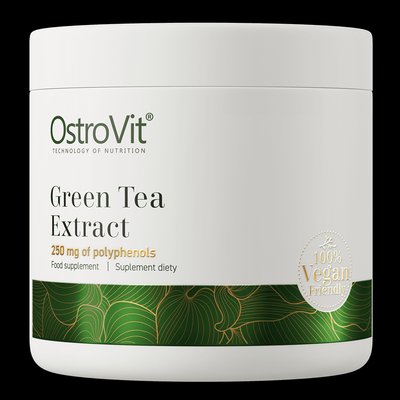 OstroVit Green Tea Extract€10.90 In stock 100g are frequently used alongside Garcinia for complementary fat-metabolism support. Use alongside a calorie-appropriate diet — HCA's proposed mechanism requires managing carbohydrate and calorie intake to be meaningful.
References
Loe, Y. C., Bergeron, N., Rodriguez, N., & Schwarz, J. M. (2001). Gas chromatography/mass spectrometry method to quantify blood hydroxycitrate concentration. Analytical Biochemistry, 292(1), 148-154. https://pubmed.ncbi.nlm.nih.gov/11319829/
FAQ
What is HCA and why does it matter?
HCA (hydroxycitric acid) is the primary bioactive compound in Garcinia cambogia rind. It is proposed to inhibit ATP-citrate lyase, an enzyme that converts carbohydrates into fatty acids for storage. By inhibiting this enzyme, HCA may reduce fat synthesis. It has also been studied for effects on appetite through interactions with serotonin metabolism. Results in clinical trials are mixed, with modest effects at best when used as part of a calorie-controlled diet.
Does eating mangosteen give me the same benefits as Garcinia cambogia?
No. Mangosteen (Garcinia mangostana) is a different Garcinia species with a completely different phytochemical profile. Mangosteen is valued for its xanthone antioxidants (especially alpha-mangostin), which have different properties from HCA. Mangosteen contains negligible HCA. The two are not interchangeable for metabolic purposes.
Is Garcinia cambogia safe?
At typical supplement doses (up to 2800 mg of Garcinia extract or about 1500 mg HCA per day) for short periods (8–12 weeks), Garcinia has a reasonable safety record. However, case reports link very high doses with liver toxicity, and the FDA has issued warnings about certain multi-ingredient products containing Garcinia in combination with other compounds. Use single-ingredient, correctly dosed products and avoid exceeding the label recommendation.



