What Is GABA and Why Does It Come From Food?
Gamma-aminobutyric acid (GABA) is the brain's primary inhibitory neurotransmitter. It slows neural activity, supporting a calm, focused mental state and healthy sleep. While your body synthesises GABA from glutamate, a meaningful fraction also arrives through the diet — and certain foods are surprisingly rich in it.
Understanding GABA food sources matters because diet may complement the body's own production, especially when stress, poor sleep, or intense training push the nervous system into overdrive. This guide covers the top food sources, what happens to GABA during cooking and fermentation, how much you can realistically get from meals, and when a supplement becomes the practical choice.
Top Natural Food Sources of GABA
GABA is synthesised in plants by glutamate decarboxylase (GAD), the same enzyme family found in mammals. Plants produce it in response to stress such as mechanical damage or low oxygen. As a result, the richest food sources tend to be fermented or sprouted items, where microbial and enzymatic activity amplifies natural GABA levels.
Fermented Foods
Fermented foods are among the most concentrated dietary sources. Kimchi, tempeh, miso, and naturally fermented pickles all contain measurable GABA formed by lactic acid bacteria during fermentation. Research shows that certain Lactobacillus strains can dramatically raise GABA content in the fermented matrix (Dhakal et al., 2012). The exact amount varies by fermentation time, starter culture, and temperature, but regularly eating traditionally fermented foods provides a consistent low-level dietary intake.
Sprouted and Germinated Grains
Germination triggers enzymatic activity that converts glutamate to GABA. Sprouted brown rice — often called GABA rice or germinated brown rice — is one of the best-studied examples. Research has found that germinated brown rice contains markedly higher GABA concentrations than unsprouted rice, and this form has been investigated for potential sleep quality benefits. Sprouted wheat, barley, and oats follow the same pattern.
Vegetables and Fruits
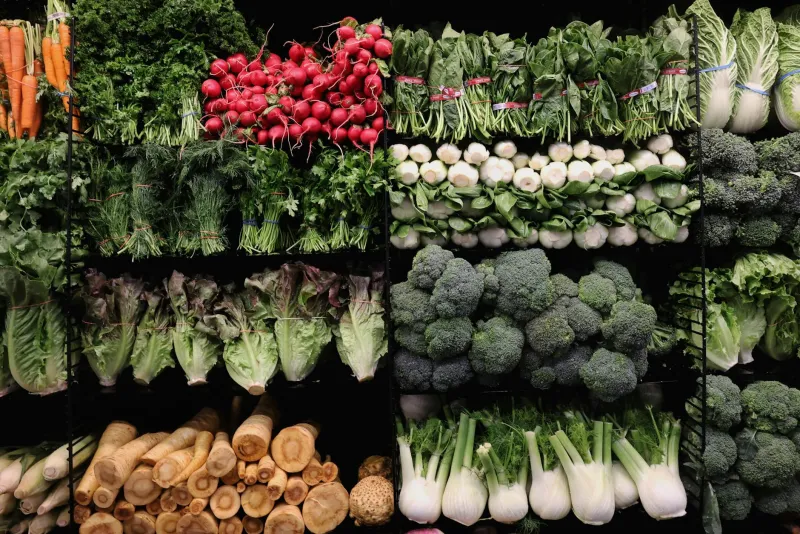
Fresh vegetables contain small but real amounts of GABA. Tomatoes, spinach, broccoli, potatoes, and sweet corn are among the commonly cited sources. Adzuki beans, soybeans, and other legumes are also reasonable contributors. Cruciferous vegetables accumulate GABA under stress, so fresh and minimally processed versions tend to retain more than canned or overcooked counterparts.
Green and black tea deserve a special mention. The tea plant (Camellia sinensis) is unusually rich in GABA when leaves are processed under nitrogen-rich conditions, producing what is commercially labelled GABA tea. Studies suggest that regular GABA tea consumption may support blood pressure regulation, though the precise mechanism in humans is still being researched (Abe et al., 2000).
Fermented Dairy
Yogurt, kefir, and aged cheeses produced with GABA-producing bacterial cultures can contain meaningful amounts. The quantity depends heavily on the culture used and fermentation duration, making it difficult to give precise dietary targets, but including fermented dairy in the regular diet contributes to overall intake.
Bioavailability: Food vs Supplement
This is where the picture becomes more nuanced. Even if a food is rich in GABA, how much actually reaches the brain?
The blood-brain barrier (BBB) is selectively permeable. For some time it was believed that orally ingested GABA could not cross the BBB in meaningful quantities, meaning peripheral GABA might not directly influence brain GABA levels. However, more recent research has complicated that picture. A randomised crossover trial found that an oral GABA supplement reduced psychological stress markers and modified brain activity compared to placebo (Abdou et al., 2006), suggesting some functional uptake does occur, at least under controlled conditions.
Food-derived GABA faces the same barrier considerations as supplemental GABA, but with the added variable of food matrix effects — the presence of other nutrients, fibre, and compounds that can slow or compete with absorption. In practice, bioavailability from whole foods is likely lower and more variable than from standardised supplements.
The practical takeaway: food sources are a useful and health-supporting way to maintain background GABA intake alongside a varied diet. They are not a reliable route to the kind of targeted, consistent dose that sports and sleep research has used in studies.
Daily Targets From Diet
There is no established dietary reference value for GABA intake because it is not classified as an essential nutrient — the body produces it endogenously. Researchers studying food GABA have used dietary patterns rather than precise mg targets.
A diet that regularly includes fermented foods, sprouted grains, leafy greens, and legumes will provide a meaningful background level of dietary GABA without needing to track milligrams. Think of it as broadly supportive rather than therapeutically dosed.
If specific outcomes such as improved sleep onset or reduced stress response are the goal, the research base points to supplemental doses rather than dietary amounts, simply because food sources are too variable in content and bioavailability to reach consistent physiological thresholds.
Cooking and Storage Effects
GABA is water-soluble and heat-sensitive. Key practical points:
- Boiling leaches GABA into cooking water. Steaming or stir-frying vegetables retains more.
- Fermentation increases GABA. The longer a food ferments under appropriate conditions, the more glutamate is converted to GABA.
- Sprouting increases GABA. Even soaking legumes overnight activates GAD and raises GABA content before cooking.
- Freezing has modest negative effects on GABA content; fresh or minimally processed foods are preferable.
- Acidic environments (pickling brine, citrus) can help preserve GABA by stabilising the enzyme responsible for its production.
These practical principles mean that how you prepare food matters as much as what you choose. A briefly steamed portion of spinach retains more GABA than the same spinach boiled for ten minutes and drained.
When Food Is Not Enough
For athletes, people dealing with elevated stress loads, or individuals struggling with sleep quality, food sources alone are unlikely to deliver the consistent, measurable intake that has been studied in clinical contexts. This is where supplemental GABA becomes relevant.
Products such as NOW GABA 750 mg 100 veg. caps. and NOW GABA 500mg 100 veg. caps. provide standardised doses that allow you to experiment with a consistent amount daily. OstroVit GABA 200g offers a powder form for flexible dosing, while NOW GABA 500mg 200 veg. caps. is a practical economy option for longer-term use.
All of the above are available in the GABA supplement category at maxfit.ee, alongside sleep and relaxation products that complement GABA intake.
Supplements are most sensibly used as an addition to — not a replacement for — a nutrient-rich diet. Eating fermented foods, sprouted grains, and fresh vegetables creates the dietary backdrop that supports the body's own GABA production. A supplement then adds a reliable, measurable layer on top.
References
- Dhakal, R., Bajpai, V. K., & Baek, K. H. (2012). Production of GABA (gamma-aminobutyric acid) by microorganisms: a review. Brazilian Journal of Microbiology, 43(4), 1230-1241. https://pubmed.ncbi.nlm.nih.gov/24031948/
- Abdou, A. M., Higashiguchi, S., Horie, K., Kim, M., Hatta, H., & Yokogoshi, H. (2006). Relaxation and immunity enhancement effects of gamma-aminobutyric acid (GABA) administration in humans. BioFactors, 26(3), 201-208. https://pubmed.ncbi.nlm.nih.gov/16971751/
- Abe, Y., Umemura, S., Sugimoto, K., Hirawa, N., Kato, Y., Yokoyama, N., Yokoyama, T., Iwai, J., & Ishii, M. (2000). Effect of green tea rich in gamma-aminobutyric acid on blood pressure of Dahl salt-sensitive rats. American Journal of Hypertension, 8(1), 74-79. https://doi.org/10.1016/0895-7061(94)00141-w
FAQ
Which everyday food is highest in GABA?
Fermented foods such as kimchi, miso, and tempeh tend to have the highest GABA concentrations among common foods, because lactic acid bacteria produce GABA as a metabolic byproduct during fermentation. Sprouted brown rice is another well-studied source.
Can I get enough GABA purely from diet?
For general background support, a varied diet rich in fermented foods, sprouted grains, and leafy vegetables is a sensible approach. However, if you are specifically targeting sleep or stress outcomes with a defined daily dose, a supplement offers the consistency that food sources cannot reliably provide due to variable GABA content and uncertain bioavailability.
Does cooking destroy GABA in food?
Heat and water exposure do reduce GABA content. Boiling vegetables in water and discarding the cooking liquid removes a significant portion. Steaming, brief stir-frying, and eating certain items raw or fermented are the most effective ways to preserve the GABA naturally present in food.



