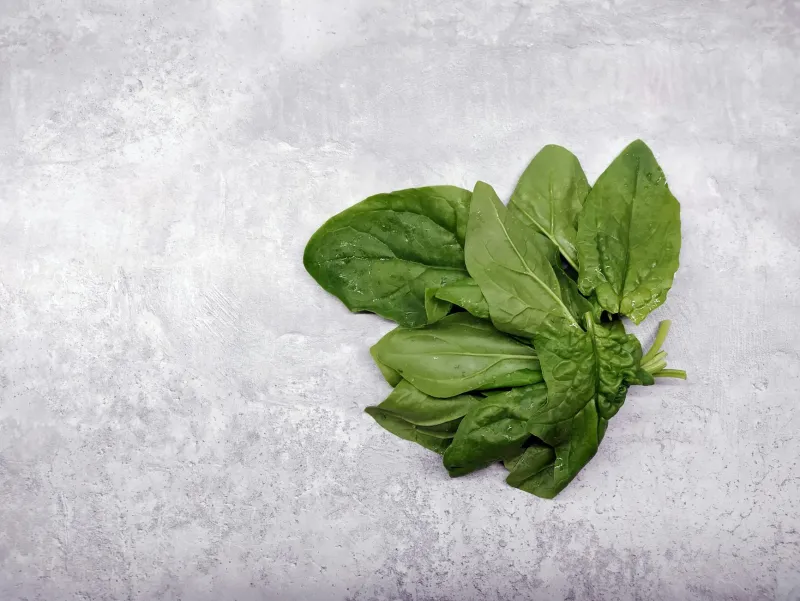
Why Plant-Based Diets May Fall Short in Folic Acid
Folic acid for vegans and vegetarians is a topic that might initially seem surprising — leafy greens, legumes, and fortified cereals, all staples of plant-based eating, are among the richest dietary sources of folate (the natural food form of vitamin B9). However, several factors can mean that even well-intentioned plant-based eaters do not reliably meet their folate needs.
First, cooking significantly reduces the folate content of vegetables. Boiling leafy greens can destroy a substantial portion of their folate. Second, a common genetic variant in the MTHFR gene — carried by a significant proportion of the general population — reduces the body's ability to convert dietary folate and synthetic folic acid into the active form (5-methyltetrahydrofolate or 5-MTHF) used by cells. Individuals with this variant may need more dietary folate or specifically the active methylated form to maintain adequate tissue levels.
Third, if animal products such as liver (extremely high in folate), eggs, and fortified dairy are absent from the diet, overall folate density requires more careful planning. Vegans who rely heavily on cooked plant foods without careful attention to folate-rich raw sources and fortified foods may be at higher risk of marginal status.
Vegan-Friendly Sources
The best plant-based food sources of folate include: dark leafy greens (spinach, kale, rocket), cooked lentils and chickpeas, asparagus, avocado, edamame, and oranges. Consuming a variety of these foods daily, with attention to preserving folate through gentler cooking methods (steaming rather than boiling), provides a strong dietary foundation.
For supplementation, folic acid (synthetic) is the most common and well-studied form. All three products available at maxfit.ee in this category — OstroVit Folic Acid 800 90tabs, ICONFIT Capsules Folic Acid 400mg N90, and NOW Folic Acid 800mcg 250tab — are plant-derived capsules or tablets, free of animal-derived excipients, making them fully suitable for vegans and vegetarians.
For those with MTHFR variants or who prefer the active form, methylfolate (L-methylfolate or 5-MTHF) supplements are also available, though less commonly stocked than standard folic acid.
Dose Targets
For healthy adults who are not pregnant, dietary reference values across European nutrition agencies suggest a daily target of around 400 mcg of dietary folate equivalents (DFE). Folic acid, being more bioavailable than food folate, requires a smaller dose to achieve the same effect — standard supplement doses of 400–800 mcg are well within established safe ranges for healthy adults.
A large observational study examining folate status in different dietary groups found that plasma folate concentrations were significantly associated with dietary folate intake, with supplementation effectively correcting inadequate dietary intake (Smith et al., 2008).
For those planning pregnancy, higher targeted doses are specifically recommended in medical guidance — but this is a clinical area where individual healthcare advice takes precedence over general supplementation guidance.
What to Combine
Folate works closely with vitamins B12 and B6 in the one-carbon metabolism cycle — the biochemical pathway responsible for DNA synthesis, amino acid metabolism, and methylation reactions. A deficiency in B12 can produce a functional folate deficiency even when folate intake is adequate, by trapping folate in an unusable form (the methylfolate trap). This interplay makes vitamin B12 status particularly important for vegans taking folic acid supplements.
Supplement the two together or use a B-complex that includes both. At maxfit.ee, the /et/category/b-vitamiin category includes both standalone folic acid products and broader B-complex formulations.
Zinc also interacts with folate metabolism; adequate zinc status supports efficient folate utilisation. Ensuring dietary zinc is covered — or supplementing if needed — rounds out the folate support picture for vegans.
Choosing a Vegan Product
When selecting a folic acid supplement at maxfit.ee:
- All three products in the /et/category/foolhape category — OstroVit Folic Acid 800 90tabs, ICONFIT Capsules Folic Acid 400mg N90, and NOW Folic Acid 800mcg 250tab — are suitable for vegans
- Standard 400–800 mcg doses are appropriate for maintenance supplementation in non-pregnant adults
- If MTHFR polymorphism is a concern, specifically seek products labelled as methylfolate or L-5-MTHF
- Check for minimal excipients and no gelatin or animal-sourced stearates in the capsule or tablet
References
Smith, A. D., Kim, Y. I., & Refsum, H. (2008). Is folic acid good for everyone? American Journal of Clinical Nutrition, 87(3), 517-533. https://doi.org/10.1093/ajcn/87.3.517
McNulty, H., Rollins, M., Cassidy, T., Caffrey, A., Marshall, B., Dornan, J., McLaughlin, M., McNulty, B. A., Ward, M., Johnston, P. G., Pentieva, K., & Scott, J. M. (2019). Effect of continued folic acid supplementation beyond the first trimester of pregnancy on cognitive performance in the child: a follow-up study from a randomized controlled trial (FASSTT Offspring Trial). BMJ Open, 9(7), e029948. https://pubmed.ncbi.nlm.nih.gov/31662380/
FAQ
Do vegans need to supplement folic acid?
Not everyone on a plant-based diet requires supplementation, but it is a practical safeguard. Heavy cooking of folate-rich vegetables, genetic variants in folate metabolism (MTHFR), and periods of higher need all increase the case for supplementation. A 400 mcg supplement is a low-cost, low-risk way to close potential dietary gaps.
What is the difference between folic acid and folate?
Folate is the umbrella term for all forms of vitamin B9, including the natural food form. Folic acid is the synthetic, oxidised form used in most supplements and food fortification; it must be converted to the active form in the body. Methylfolate (5-MTHF) is the already-active form, which bypasses the conversion step — useful for those with impaired conversion due to genetics.
Can I take too much folic acid?
At standard supplement doses of 400–800 mcg, excess folic acid is generally excreted via urine and well-tolerated. Very high supplemental intake may mask vitamin B12 deficiency symptoms — a particular concern for vegans. This further underlines the importance of ensuring adequate B12 status alongside folic acid supplementation.



