
Why Folic Acid Research Has Evolved
Folic acid — the synthetic form of folate (vitamin B9) — is one of the most studied vitamins in clinical medicine. Its role in preventing neural tube defects during early pregnancy is among the most robust findings in nutritional epidemiology. However, the decade from 2015 to 2025 has layered significant new complexity onto this foundation: the growing understanding of MTHFR genetic polymorphisms, debate about whether synthetic folic acid is the optimal supplemental form, revised thinking on cardiovascular outcomes, and emerging evidence on cognition and mood. This update covers where the evidence now stands.
At maxfit.ee, folic acid is available as OstroVit Folic Acid 800 90tabs, ICONFIT Capsules Folic Acid 400mg N90, and 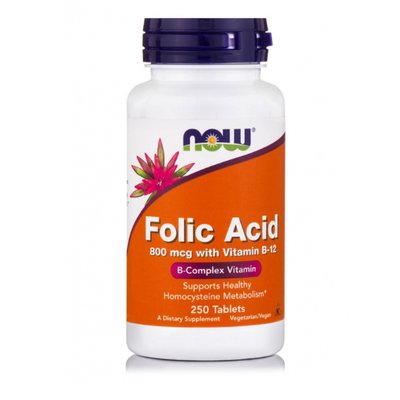 NOW Folic Acid 800mcg€10.90 In stock 250tab — options covering different dose levels and formats.
What Recent Trials Show
Pregnancy and Neural Tube Defect Prevention
The core finding remains unchanged and is among the strongest in nutritional science: adequate folate status around conception and in early pregnancy substantially reduces the risk of neural tube defects. The consistent recommendation — supported by decades of trial data and public health surveillance — is supplemental folic acid or methylfolate beginning before conception and continuing through the first trimester. This finding does not need restatement as a debate; it is established.
MTHFR Polymorphisms and Methylfolate
The most practically significant development in folate research in recent years concerns the MTHFR gene. Variants such as C677T reduce the enzyme's efficiency in converting folic acid to its active form, 5-methyltetrahydrofolate (5-MTHF). A substantial proportion of the population carries at least one MTHFR variant. Individuals with homozygous MTHFR C677T have lower plasma folate for a given supplemental dose of folic acid, and may benefit from direct 5-MTHF (methylfolate) supplementation.
A meta-analysis found that methylfolate supplementation significantly increased plasma folate concentrations compared to folic acid in MTHFR C677T homozygotes (Prinz-Langenohl et al., 2009). This has shifted clinical thinking toward offering methylfolate as the preferred form for people with known or suspected MTHFR variants.
Cardiovascular Outcomes and Homocysteine
Earlier enthusiasm for folic acid reducing cardiovascular events via homocysteine lowering has been significantly tempered. Large randomised trials such as HOPE-2 and SEARCH found that folic acid and B12 supplementation lowered homocysteine but did not reduce the rate of major cardiovascular events (Lonn et al., 2006). The homocysteine-lowering effect is real; the translation to clinical cardiovascular outcomes in people already on optimal medical therapy was not demonstrated. This shifts the clinical framing: folate supplementation is appropriate for deficiency correction and specific indications, not as a general cardiovascular risk reducer.
Cognition and Mental Health
Emerging research continues to explore folate's role in depression, cognitive decline, and dementia risk. Observational studies consistently link low folate status with increased depression risk. Randomised trial evidence is more mixed, but a meta-analysis found that folate supplementation had a modest benefit on depression outcomes as an adjunct to antidepressant therapy in adults with low baseline folate (Papakostas et al., 2012). Whether this reflects a causal role or a deficiency correction effect is debated.
Shifts in Consensus
- The superiority of methylfolate over folic acid for individuals with MTHFR variants is now increasingly accepted in clinical practice, though population-wide evidence for hard outcomes remains limited.
- The homocysteine-cardiovascular link, while real biochemically, does not translate reliably into event reduction in well-treated populations.
- Fortification has raised concerns about high unmetabolised folic acid (UMFA) in plasma, which occurs when intake exceeds the liver's conversion capacity. The clinical significance of UMFA is debated and remains an active research area.
Still-Open Questions
Optimal dose and form for MTHFR carriers: How much methylfolate is needed relative to synthetic folic acid for homozygous C677T individuals in pregnancy? Trial data are not yet conclusive.
Cancer risk modulation: Both protective and promotional effects of folate on cancer risk have been proposed, with the relationship depending on timing, existing folate status, and cancer type. No clear supplemental recommendation for cancer prevention from folate has been established.
Long-term high-dose effects: The safety of very high folic acid doses over many years is not fully characterised, particularly regarding potential masking of B12 deficiency and UMFA accumulation.
What It Means Practically
| Situation | Current Evidence-Based Approach |
|---|---|
| Pre-conception and pregnancy | Supplemental folic acid or methylfolate is well-established and strongly recommended |
| Known MTHFR C677T homozygote | Consider methylfolate (5-MTHF) over folic acid |
| Depression with confirmed low folate | Adjunct folate may support antidepressant response |
| General health maintenance without deficiency | Adequate dietary folate from vegetables is the primary goal; supplementation not universally required |
| Cardiovascular disease prevention | Folate supplementation alone is not evidence-based for this purpose |
Bottom Line
Folic acid research has matured from a single strong finding (neural tube defect prevention) into a complex landscape covering genetic variation, form selection, and nuanced outcomes for mood and cognition. The core pregnancy recommendation stands unchanged. The field has learned to think more carefully about who benefits from synthetic folic acid versus active methylfolate, and has been humbled by the failure of homocysteine lowering to translate reliably into cardiovascular event reduction.
FAQ
Should I take folic acid or methylfolate?
For most people without MTHFR variants, standard folic acid is adequate and is the most studied form. For those with confirmed or suspected MTHFR C677T homozygosity, or for anyone preferring the active form, methylfolate (5-MTHF) bypasses the MTHFR conversion step and reaches plasma folate levels at least as effectively. If you are uncertain, a conversation with your doctor and, where available, MTHFR genotyping is a reasonable step.
What dose of folic acid is recommended for pregnancy?
Public health guidelines in most countries recommend folic acid supplementation before conception and during the first trimester. The standard recommended dose is typically in the range of four hundred to eight hundred micrograms per day, with higher doses recommended for individuals at elevated risk of neural tube defects. Always follow guidance from your healthcare provider regarding your specific situation.
Can you get too much folate from supplements?
The tolerable upper intake level for folic acid in adults is set at one thousand micrograms per day of synthetic folic acid. Exceeding this level chronically can mask vitamin B12 deficiency by correcting the megaloblastic anaemia while neurological damage continues. Food folate does not have an established upper limit and is not associated with toxicity. Supplemental doses within commonly recommended ranges are safe for the majority of healthy adults.
References
Prinz-Langenohl, R., Bramswig, S., Tobolski, O., Smulders, Y. M., Smith, D. E., Finglas, P. M., Pietrzik, K. (2009). [6S]-5-methyltetrahydrofolate increases plasma folate more effectively than folic acid in women with the homozygous or wild-type 677C-->T polymorphism of methylenetetrahydrofolate reductase. British Journal of Pharmacology, 158(8), 2014-2021. https://pubmed.ncbi.nlm.nih.gov/19917061/
Lonn, E., Yusuf, S., Arnold, M. J., Sheridan, P., Pogue, J., Micks, M., McQueen, M. J., Probstfield, J., Fodor, G., Held, C., Genest, J. (2006). Homocysteine lowering with folic acid and B vitamins in vascular disease. New England Journal of Medicine, 354(15), 1567-1577. https://pubmed.ncbi.nlm.nih.gov/16531613/
Papakostas, G. I., Shelton, R. C., Zajecka, J. M., Etemad, B., Rickels, K., Clain, A., Baer, L., Dalton, E. D., Solis, E. M., Thase, M. E., Lamon-Fava, S., Fava, M. (2012). L-methylfolate as adjunctive therapy for SSRI-resistant major depression: results of two randomized, double-blind, parallel-sequential trials. American Journal of Psychiatry, 169(12), 1267-1274. https://pubmed.ncbi.nlm.nih.gov/23212058/



