
Why Folic Acid Matters After 50
Folic acid — the synthetic, stable form of the water-soluble B vitamin folate — is often associated with pregnancy, but its importance does not diminish with age. For adults over 50, folic acid for seniors plays a central role in DNA repair, red blood cell production, homocysteine regulation, and cognitive health. As population-level data show elevated homocysteine in a notable share of older adults, and as homocysteine is a recognised risk marker for cardiovascular and neurological outcomes, the case for paying attention to folate status after 50 is strong.
Age-Related Need: Why the Requirement Grows
Several age-related changes converge to make adequate folate harder to maintain after 50:
- Reduced caloric intake — older adults often eat less, which proportionally reduces micronutrient intake from food.
- Decreased gastric acid production — common in older adults and associated with reduced folate absorption from food, though the synthetic folic acid in supplements and fortified foods is absorbed more reliably regardless of gastric acid levels.
- Increased use of medications — several drugs commonly prescribed after 50 (see below) impair folate status.
- MTHFR polymorphisms — variants in the gene encoding methylenetetrahydrofolate reductase, which become clinically relevant with age, can reduce conversion of folic acid to its active form. People with these variants may benefit more from methylfolate-containing products.
Absorption Changes With Age
Dietary folate from food is absorbed in the small intestine after enzymatic conversion. Synthetic folic acid, however, does not require this enzymatic step and therefore has higher bioavailability from a starting point of roughly twice the dietary folate equivalent. This is why fortification and supplementation remain effective even when gastric function declines.
A secondary concern is vitamin B12. Folate and B12 share metabolic pathways, and B12 deficiency — which becomes more common after 50 due to reduced intrinsic factor — can mask macrocytic anaemia while allowing neurological damage to progress. Supplementing folate without checking B12 status is not recommended for older adults.
Dose and Safety
The recommended dietary allowance for folate in adults is 400 mcg dietary folate equivalents per day. The tolerable upper intake level for folic acid from supplements and fortified foods is set at 1000 mcg per day by European authorities, above which unmetabolised folic acid may accumulate in plasma. In practice, standard supplement doses of 400–800 mcg daily are within the safe range for healthy older adults.
Products such as OstroVit Folic Acid 800 90tabs, ICONFIT Capsules Folic Acid 400mg N90, and 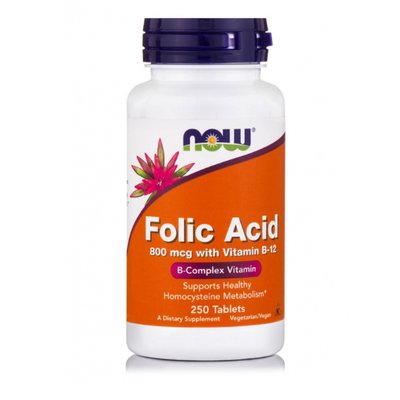 NOW Folic Acid 800mcg€10.90 In stock 250tab provide doses in this safe range and are available at maxfit.ee.
High-dose folic acid should not be started without medical advice in people with a history of cancer, as some research suggests very high folate may promote growth of pre-existing abnormal cell populations in certain individuals, though evidence is mixed (Figueiredo et al., 2009).
Interactions With Medication
Several medications commonly used in people over 50 interact with folate:
| Medication class | Interaction |
|---|---|
| Methotrexate (rheumatoid arthritis, psoriasis) | Folate antagonist — supplementation may reduce side effects |
| Metformin (type 2 diabetes) | May reduce folate and B12 absorption over time |
| Proton pump inhibitors (acid reflux) | Reduce gastric acid, may slightly impair dietary folate absorption |
| Anticonvulsants (e.g., phenytoin) | Reduce folate absorption and may lower plasma folate |
| Sulfasalazine (inflammatory bowel disease) | Inhibits folate absorption |
In any of these situations, discuss supplementation with your doctor or pharmacist.
When to Supplement
Supplementation is particularly worth considering for:
- Adults with low dietary folate intake (limited green vegetable intake, restrictive diets)
- People taking the medications above
- Individuals with confirmed elevated homocysteine
- Anyone with an MTHFR polymorphism identified via genetic testing
For general health maintenance, a daily supplement of 400–800 mcg is a low-risk intervention. Combining it with an active lifestyle and a folate-rich diet (leafy greens, legumes, whole grains) remains the most comprehensive approach.
FAQ
Is folic acid the same as folate?
Folate is the generic term for the vitamin; folic acid is the synthetic form used in supplements and fortified foods. The body converts folic acid to the active form (5-methyltetrahydrofolate). Methylfolate supplements skip this step and may be preferred by people with MTHFR variants.
Can too much folic acid be harmful after 50?
Staying within the tolerable upper limit of 1000 mcg per day from supplements is prudent. Above this level, unmetabolised folic acid accumulates in the bloodstream. High-dose supplementation is not warranted without a medical reason, especially in people with a personal or family history of colorectal cancer.
Does folic acid help with memory and cognitive function in older adults?
Observational studies consistently associate low folate status with poorer cognitive outcomes. Intervention trials have shown that B-vitamin combinations including folic acid can slow brain atrophy in people with elevated homocysteine (Smith et al., 2010). However, supplementation should not be seen as a standalone cognitive treatment.
References
Smith, A. D., Smith, S. M., de Jager, C. A., Whitbread, P., Johnston, C., Agacinski, G., Oulhaj, A., Bradley, K. M., Jacoby, R., & Refsum, H. (2010). Homocysteine-lowering by B vitamins slows the rate of accelerated brain atrophy in mild cognitive impairment. PLOS ONE, 5(9), e12244.
Figueiredo, J. C., Grau, M. V., Haile, R. W., Sandler, R. S., Summers, R. W., Bresalier, R. S., Burke, C. A., McKeown-Eyssen, G. E., & Baron, J. A. (2009). Folic acid and risk of prostate cancer. Journal of the National Cancer Institute, 101(6), 432-435. https://pubmed.ncbi.nlm.nih.gov/19276452/
Refsum, H., Nurk, E., Smith, A. D., Ueland, P. M., Gjesdal, C. G., Bjelland, I., Tverdal, A., Tell, G. S., Nygard, O., & Vollset, S. E. (2006). The Hordaland Homocysteine Study. American Journal of Clinical Nutrition, 83(4), 984-990.



