
How to Maximize Folic Acid Absorption
Folic acid — the synthetic form of vitamin B9 — is among the most studied water-soluble vitamins in nutritional science. Despite its reputation as a straightforward supplement, folic acid absorption is surprisingly nuanced: genetic variants, gut health, drug interactions, and even meal composition can all push uptake up or down. Understanding these variables helps you get the most from every dose.
What Limits Absorption
Several factors can meaningfully reduce how much folate actually reaches your bloodstream:
Genetic variants (MTHFR polymorphisms). The enzyme methylenetetrahydrofolate reductase (MTHFR) converts folic acid into its biologically active form, 5-methyltetrahydrofolate (5-MTHF). People carrying the common C677T variant of MTHFR have reduced enzyme activity, meaning they convert synthetic folic acid less efficiently (Frosst et al., 1995). This is relevant to a notable share of the Estonian and broader European population.
High-dose supplementation. At intakes above the upper recommended dose, unconverted folic acid may appear in blood — a phenomenon called unmetabolised folic acid (UMFA). While UMFA's health significance is debated, some researchers consider it a marker of saturation (Bailey et al., 2010).
Proton pump inhibitors (PPIs) and metformin. Both drug classes have been associated with lower folate status in observational studies, though the mechanism differs. PPIs alter gastric pH; metformin may affect intestinal transport.
Alcohol consumption. Ethanol impairs hepatic folate retention and can accelerate urinary excretion of folate metabolites, reducing overall status.
Cofactors That Help
Folate metabolism is closely interlinked with vitamins B6 and B12. B12 is required for the methionine synthase reaction that recycles 5-MTHF back into the active pool. Without adequate B12, folate can become functionally trapped — a mechanism underlying the so-called folate trap. Supplementing B vitamins together (as in a B-complex) addresses this interdependency.
Zinc also plays a supportive role in folate-dependent one-carbon metabolism, though it does not directly enhance intestinal absorption of folic acid.
Form and Timing Effects
The two main supplemental forms are folic acid (synthetic, oxidised) and methylfolate (5-MTHF, the reduced, biologically active form). Methylfolate bypasses the MTHFR conversion step entirely, making it the preferred choice for individuals with confirmed MTHFR variants (Prinz-Langenohl et al., 2009). For most people without known variants, standard folic acid from a reputable supplement is effective.
Timing matters less for folate than for fat-soluble vitamins. Folic acid is water-soluble and absorbs well with or without food. However, taking it with a small meal may reduce the likelihood of mild nausea at higher doses.
OstroVit Folic Acid 800 90tabs and ICONFIT Capsules Folic Acid 400mg N90 are both available at maxfit.ee — check the label to confirm the form (folic acid vs methylfolate) and dose per serving. 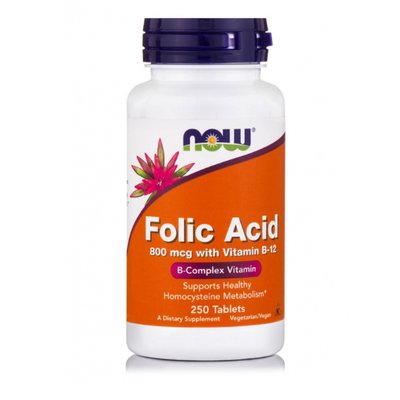 NOW Folic Acid 800mcg€10.90 In stock 250tab offers a larger pack for sustained use.
Food Pairings
Dietary folate from food (polyglutamate forms) must be hydrolysed before absorption and is generally less bioavailable than synthetic folic acid. However, folate-rich foods (leafy greens, legumes, fortified cereals) still contribute meaningfully to daily intake. Pairing supplements with whole foods does not interfere with absorption — indeed, vitamin C-rich foods may slightly support folate stability in the gut.
Cooking significantly reduces food folate: boiling vegetables can destroy a substantial portion of their folate content. Raw or lightly steamed greens retain more.
Practical Tips
- If you know you carry an MTHFR variant, consider asking your GP about switching to methylfolate (5-MTHF) rather than standard folic acid.
- Take your supplement consistently at the same time each day — steady-state levels matter more than precise timing.
- Pair with B12: especially important for vegetarians and vegans, who are at higher risk of B12 insufficiency that can create a functional folate trap.
- Avoid high alcohol intake: even moderate regular consumption can meaningfully reduce folate retention.
- Check for interactions: if you take methotrexate or anticonvulsants, discuss supplementation with a healthcare professional first.
Explore the folic acid range at maxfit.ee for currently available products and dosage options.
FAQ
Is methylfolate better than folic acid for everyone?
Not necessarily. For people without MTHFR variants, standard folic acid converts efficiently and is well supported by decades of research. Methylfolate is particularly beneficial for those with confirmed MTHFR polymorphisms. Without genetic testing, either form is a reasonable starting point.
Can I take too much folic acid?
High doses of folic acid can mask vitamin B12 deficiency by correcting anaemia without addressing neurological damage — a well-documented concern in older adults. For this reason, tolerance upper levels exist and routine mega-dosing is not recommended without medical supervision.
How long before I notice effects from folic acid supplementation?
Folate status improves gradually over several weeks of consistent supplementation. Blood folate levels can rise within a few weeks, but tissue-level replenishment (e.g., red blood cell folate) typically takes about eight to twelve weeks of regular intake.
References
Frosst, P., Blom, H. J., Milos, R., Goyette, P., Sheppard, C. A., Matthews, R. G., Boers, G. J., den Heijer, M., Kluijtmans, L. A., van den Heuvel, L. P., & Rozen, R. (1995). A candidate genetic risk factor for vascular disease: a common mutation in methylenetetrahydrofolate reductase. Nature Genetics, 10(1), 111–113. https://pubmed.ncbi.nlm.nih.gov/7647779/
Bailey, R. L., Mills, J. L., Yetley, E. A., Gahche, J. J., Pfeiffer, C. M., Dwyer, J. T., Dodd, K. W., Sempos, C. T., Betz, J. M., & Picciano, M. F. (2010). Unmetabolized serum folic acid and its relation to folic acid intake from diet and supplements in a nationally representative sample. American Journal of Clinical Nutrition, 92(2), 383–389. https://pubmed.ncbi.nlm.nih.gov/20573790/
Prinz-Langenohl, R., Bramswig, S., Tobolski, O., Smulders, Y. M., Smith, D. E., Finglas, P. M., & Pietrzik, K. (2009). [6S]-5-methyltetrahydrofolate increases plasma folate more effectively than folic acid in women with the homozygous or wild-type 677C-->T polymorphism of methylenetetrahydrofolate reductase. British Journal of Pharmacology, 158(8), 2014–2021. https://pubmed.ncbi.nlm.nih.gov/19917061/



