Fat Burners for Vegans & Vegetarians
Following a plant-based diet brings many health benefits, but it can also leave specific nutrient gaps that affect metabolism and body composition. If you are exploring fat burners as a vegan or vegetarian, the good news is that several well-researched thermogenic and metabolism-supporting ingredients are entirely plant-derived — or synthetically produced without animal inputs. This guide covers where plant-based diets may fall short for fat metabolism, which ingredients are vegan-friendly, practical dose targets, smart combinations, and how to read a label when choosing a vegan product.
Why Plant-Based Diets May Fall Short for Fat Metabolism
Plant-based eaters are often lower in several nutrients that play a supporting role in fat metabolism. Carnitine — a compound that shuttles long-chain fatty acids into the mitochondria — is synthesised in the body from lysine and methionine, but dietary carnitine comes almost entirely from red meat. Observational data show that vegans and vegetarians tend to have lower plasma carnitine concentrations than omnivores (Krajcovicova-Kudlackova et al., 2000). Whether that translates into impaired fat oxidation at rest is still debated, but athletes with higher energy demands may notice the gap more acutely.
Creatine is similarly derived mostly from animal foods, and while it is not directly a fat-loss ingredient, low creatine stores can blunt training intensity, which indirectly affects total energy expenditure. Iron and iodine deficiencies — more common in vegan women — can slow thyroid function and lower basal metabolic rate. Addressing these foundations before adding thermogenic supplements tends to produce better results.
Vegan-Friendly Fat-Burning Ingredients
Caffeine
Caffeine is the best-supported thermogenic ingredient with a clear evidence base. A systematic review of randomised controlled trials found that caffeine supplementation produced a statistically significant increase in energy expenditure compared with placebo (Tabrizi et al., 2019). Caffeine is naturally plant-derived (coffee, tea, guarana) and is vegan by definition. Most standalone caffeine supplements are also vegan, but always check for magnesium stearate sourcing if you are strict.
Green Tea Extract (EGCG)
Epigallocatechin gallate (EGCG), the main catechin in green tea, works synergistically with caffeine. A meta-analysis of clinical trials found that green tea catechins combined with caffeine produced a modest but significant increase in fat oxidation compared with caffeine alone (Hursel et al., 2009). 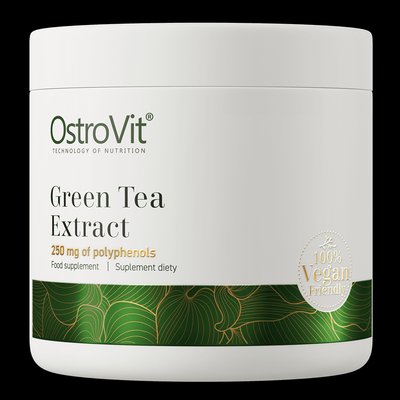 OstroVit Green Tea Extract€10.90 In stock 100g provides a concentrated plant-derived catechin source that is suitable for vegans.
L-Carnitine (Synthetic)
Although dietary carnitine comes from meat, supplemental L-carnitine is produced synthetically (fermentation-based) and is vegan-compatible. Its direct fat-loss effect in well-nourished adults is modest, but it may be more relevant for vegans who start from a lower carnitine baseline. OstroVit L-Carnitine 1250 60caps and OstroVit L-Carnitine 210g Naturaalne are two options available at maxfit.ee.
Thermogenic Blends
Many ready-made thermogenic products contain gelatin capsules derived from animal collagen, which rules them out for vegans. Look for products explicitly labelled with vegetable capsules (HPMC). OstroVit Fat Burner VEGE 60caps is specifically formulated with vegan capsules, making it one of the clearer choices in this category.
Dose Targets
For caffeine, research-supported doses used in exercise contexts typically range from 3 to 6 mg per kg of body weight, taken around 30–60 minutes before training — that is roughly 200–400 mg for a 70 kg person. Higher amounts increase the risk of side effects without proportional benefit. For green tea extract, the effective catechin dose in most trials was in the range of 270–600 mg EGCG per day (Hursel et al., 2009). For L-carnitine, commonly studied doses in humans range from 1 to 3 g per day.
What to Combine
Caffeine and EGCG together outperform either alone. If you are taking an L-carnitine supplement, pairing it with a carbohydrate source may enhance muscle uptake, as shown in insulin-mediated carnitine transport studies. Avoid stacking multiple stimulant sources (pre-workout + thermogenic + energy drink) as the combined caffeine load can exceed safe limits and increase cardiovascular stress.
Choosing a Vegan Product
When reading a label as a vegan shopper, check: (1) the capsule material — HPMC or "vegetable capsule" is safe; gelatin is not; (2) the carrier/excipient list for stearic acid (often animal-derived), lanolin-sourced vitamin D3 (plant-derived D3 from lichen exists but must be specified), and magnesium stearate (usually plant-derived, but not always). (3) Third-party certification logos (Vegan Society, Certified Vegan) remove guesswork. If a product is ambiguous, contact the manufacturer.
Browse the full fat burner range at maxfit.ee, including thermogenic fat burners, green tea extracts, and diet shakes.
FAQ
Are all fat burner supplements vegan?
No. Many fat burners use gelatin capsules (derived from animal collagen), and some contain vitamin D3 from lanolin (sheep's wool). Always check the capsule type and look for "HPMC" or "vegetable capsule" on the label. Products labelled VEGE or carrying a Vegan Society logo are the safest choices.
Can vegans get enough L-carnitine without supplements?
The body synthesises carnitine from lysine and methionine, but plant foods are low in pre-formed carnitine. Vegans tend to have lower plasma carnitine than meat eaters (Krajcovicova-Kudlackova et al., 2000). For casual exercisers this is rarely limiting, but athletes doing high-volume training may benefit from a synthetic (fermentation-derived) L-carnitine supplement.
Is green tea extract safe long-term?
Green tea extract is generally well tolerated at moderate doses. However, very high doses of isolated EGCG (above approximately 800 mg/day) have been linked to liver stress in sensitive individuals in case reports. Stick to label-recommended amounts and take with food to reduce any gastrointestinal discomfort.
References
Krajcovicova-Kudlackova, M., Simoncic, R., Bederova, A., Babinska, K., & Beder, I. (2000). Correlation of carnitine levels to methionine and lysine intake. Physiological Research, 49(3), 399-402.
Tabrizi, R., Saneei, P., Lankarani, K. B., Akbari, M., Kolahdooz, F., Esmaillzadeh, A., Nadi-Ravandi, S., Mazoochi, M., & Asemi, Z. (2019). The effects of caffeine intake on weight loss: a systematic review and dose-response meta-analysis of randomized controlled trials. Critical Reviews in Food Science and Nutrition, 59(16), 2688-2696. https://pubmed.ncbi.nlm.nih.gov/30335479/
Hursel, R., Viechtbauer, W., & Westerterp-Plantenga, M. S. (2009). The effects of green tea on weight loss and weight maintenance: a meta-analysis. International Journal of Obesity, 33(9), 956-961. https://pubmed.ncbi.nlm.nih.gov/19597519/



