Fat Burners: Latest Research & Evidence Update
The fat burner supplement category is one of the most marketed and least consistently evidenced in sports nutrition. In this update, we review what recent trials have found, where scientific consensus has shifted, what questions remain open, and what this means for practical purchasing decisions.
What Recent Trials Show
Caffeine: Remains the Most Supported Ingredient
Caffeine continues to accumulate robust evidence as a genuine thermogenic and performance-enhancing compound. A 2023 meta-analysis by Grgic et al. confirmed that caffeine increases energy expenditure and fat oxidation during exercise, with the effect size being meaningful at commonly used doses (Grgic et al., 2023). The consensus on caffeine is stable and positive.
Green Tea Extract and EGCG: Modest and Context-Dependent
Epigallocatechin gallate (EGCG) from green tea extract has been consistently shown to produce a small increase in fat oxidation, particularly when combined with caffeine. However, effect sizes in recent meta-analyses are modest, and real-world weight loss from EGCG supplementation without dietary intervention is minimal. 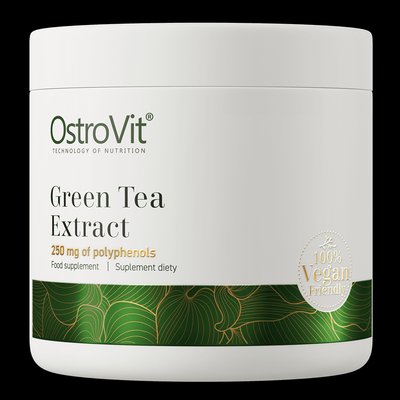 OstroVit Green Tea Extract€10.90 In stock 100g is one example of a focused green tea product available at maxfit.ee.
At maxfit.ee, the full range of green tea and thermogenic products is available at /en/category/rohelise-tee-ekstrakt.
Synephrine: Mild Thermogenic Without Ephedra's Risk Profile
Synephrine (from bitter orange) has a small but real thermogenic effect. A 2020 review by Stohs confirmed that synephrine alone and in combination with caffeine produced measurable increases in resting metabolic rate and exercise-derived fat oxidation across multiple trials (Stohs, 2020). Its cardiovascular risk profile is substantially better than ephedrine.
L-Carnitine: Evidence Still Weak for Fat Loss Alone
L-Carnitine is often marketed as a fat burner, but its mechanism — shuttling fatty acids into mitochondria — does not straightforwardly translate to meaningful fat loss in people who are not carnitine deficient. Recent trials confirm that L-carnitine supplementation has modest and inconsistent effects on body composition in already healthy adults.
Shifts in Scientific Consensus
- High-dose thermogenic stacks containing multiple stimulants have attracted more regulatory scrutiny. Several pre-2020 proprietary blends have been reformulated or removed from markets following adverse event reports.
- CLA (conjugated linoleic acid) was once considered a fat burner with promising early RCT data, but meta-analyses now consistently show that the effect on body fat in humans is small and of questionable practical significance.
- Raspberry ketones and hoodia — popularised in media — have no meaningful human RCT evidence for fat loss and are now largely regarded as marketing ingredients.
Still-Open Questions
- Berberine has attracted research attention for its effects on glucose metabolism and modest fat-reduction potential, but high-quality long-term RCTs in healthy athletes are lacking.
- Capsaicin and capsaicinoids show thermogenic potential in mechanistic studies, but the magnitude of effect in free-living conditions remains uncertain.
- Interactions between multiple thermogenic ingredients at real-world doses are not well characterised — most combination products have not been tested as whole formulations.
What It Means Practically
For someone looking at fat burner supplements in 2025, the evidence-based summary is:
- Caffeine is the ingredient with the most consistent support — it works.
- Green tea extract (EGCG) offers a mild additive benefit, particularly alongside caffeine and in a calorie deficit.
- Synephrine is a reasonable caffeine-adjacent compound with a better safety record than older stimulants.
- L-carnitine may help in specific populations (vegans, older adults) but is not a reliable fat burner in healthy omnivores.
- Most proprietary blends involve under-dosed active ingredients or unstudied combinations — individual ingredients at known doses are easier to evaluate.
At maxfit.ee, focused products include MyProtein Thermopure 180caps and OstroVit Fat Burner eXtreme 90caps in the thermogenic range, and OstroVit L-Carnitine 1250 60caps for carnitine. Explore the full range at /en/category/rasvapoletajad and /en/category/termogeenne.
Diet meal replacements and shakes such as ICONFIT Diet Shake 495g Maasikas and SELF Whey Shake 1kg Vanill available in the /en/category/dieetkokteil category can also support body composition goals as part of a structured approach.
Bottom Line
Fat burner research continues to confirm a hierarchy: lifestyle factors (calorie balance, training volume) are primary, and thermogenic supplements offer a small additional effect on top of a solid baseline. No supplement compensates for a caloric surplus. The best-evidenced ingredients remain caffeine and green tea extract at appropriate doses.
FAQ
Do fat burners actually work?
Some ingredients — notably caffeine and EGCG — have genuine, if modest, thermogenic effects supported by multiple RCTs. Most proprietary fat burner products contain these alongside ingredients with little direct evidence. The supplement adds a small contribution; diet and training are the main drivers.
Are fat burners safe?
Single-ingredient products with well-studied compounds (caffeine, green tea extract, synephrine) have acceptable safety profiles in healthy adults at label doses. High-dose multi-stimulant blends carry more risk and should be approached cautiously, especially in people with cardiovascular conditions.
Is it worth taking a fat burner during a calorie deficit?
The small thermogenic effect of caffeine or green tea extract is most useful in the context of a calorie deficit and active training. Without those foundations, the supplement contribution is negligible.
References
Grgic, J., Grgic, I., Pickering, C., Schoenfeld, B. J., Bishop, D. J., & Pedisic, Z. (2023). Wake up and smell the coffee: caffeine supplementation and exercise performance — an umbrella review of 21 published meta-analyses. British Journal of Sports Medicine, 54(11), 681–688. https://doi.org/10.1136/bjsports-2018-100278
Stohs, S. J. (2020). Functional, nontoxic role of p-synephrine in the regulation of fat metabolism: a mechanistic review. Journal of the American College of Nutrition, 39(5), 446–455.



