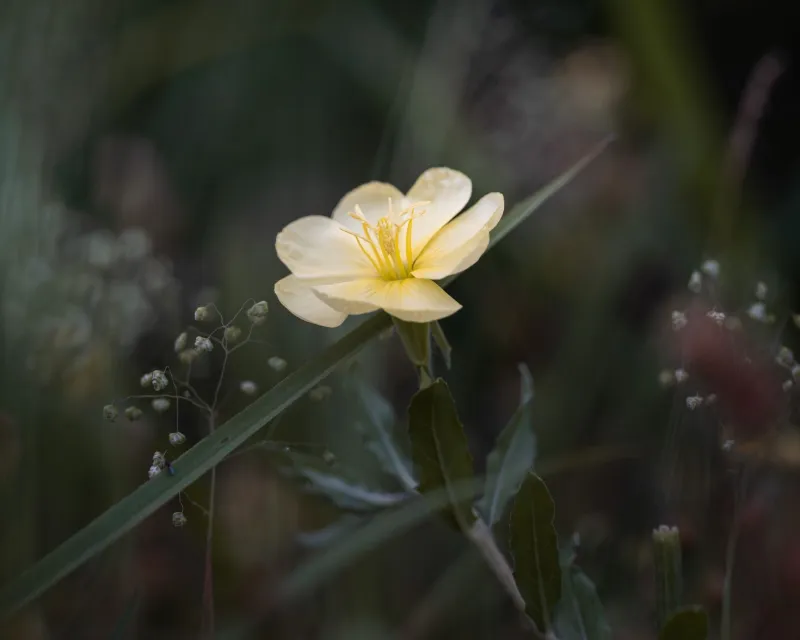
Age-Related Need for Evening Primrose Oil
Evening primrose oil (EPO) is pressed from the seeds of Oenothera biennis and is one of the richest plant sources of gamma-linolenic acid (GLA), an omega-6 fatty acid that the body uses to produce anti-inflammatory prostaglandins. After 50, the conversion of dietary linoleic acid to GLA through the delta-6-desaturase enzyme becomes progressively less efficient due to normal ageing processes, hormonal shifts, and increased oxidative burden. Supplementing directly with GLA via EPO may help bypass this bottleneck.
The reasons women over 50 most commonly reach for evening primrose oil include menopausal symptom support (especially hot flushes and breast tenderness), skin moisture retention, and joint comfort. The evidence base varies across these applications.
How Absorption and Metabolism Change with Age
GLA absorption in the gut is generally well maintained across age groups. However, the downstream conversion of GLA to DGLA (dihomo-gamma-linolenic acid) and then to anti-inflammatory eicosanoids becomes less predictable with age, partly because competing metabolic enzymes and inflammatory pathways are already more active in older adults. This means that while EPO remains a valid GLA source for seniors, higher doses may be required to achieve comparable tissue levels to those in younger adults.
Additionally, fat absorption overall tends to decline modestly with age due to reduced bile acid production. Taking EPO with the main meal of the day — ideally one that contains other dietary fats — optimises absorption under these conditions.
Dose and Safety for Seniors
Clinical studies on menopausal symptoms have used GLA-standardised EPO providing approximately 320–500 mg GLA per day, typically in the form of 1,000–2,000 mg EPO softgels daily. OstroVit Evening Primrose Oil 60caps and ICONFIT Evening Primrose seed oil 90softgels both provide standardised EPO in softgel format suitable for daily use.
For joint comfort and skin support, consistent use over at least 12 weeks is generally required before effects are noticeable. EPO does not provide rapid relief — it works through gradual modulation of the inflammatory eicosanoid profile.
At standard doses, EPO is well tolerated. The most common side effects are mild gastrointestinal symptoms — nausea, bloating — which tend to be dose-dependent. Headache has been rarely reported.
Interactions with Medication
This is the most important safety consideration for seniors, who are more likely to be on multiple medications:
- Anticoagulants (warfarin, aspirin, heparin): GLA has mild antiplatelet properties. EPO should be used cautiously alongside blood-thinning medications, and the prescribing physician should be informed.
- Phenothiazines (psychiatric medications): EPO may lower the seizure threshold in individuals taking phenothiazines. This combination is generally best avoided.
- NSAIDs: The interaction is mild, but monitoring for additive effects on platelet function is prudent.
- Anaesthesia: Some guidelines recommend stopping EPO at least one week before surgery due to its mild anticoagulant potential.
Seniors should always inform their GP or pharmacist before starting EPO if they are on any prescription medication.
When to Supplement with Evening Primrose Oil
EPO is most relevant for women over 50 experiencing menopausal symptoms such as breast tenderness, skin dryness, or joint stiffness — where the GLA pathway is most directly implicated. A randomised trial found that EPO supplementation was associated with reductions in the frequency and severity of hot flushes compared to placebo (Farzaneh et al., 2013), though effect sizes were modest and individual responses vary.
For women who have already passed through menopause and whose main concern is skin health, EPO may offer gradual improvements in skin moisture and elasticity through GLA's role in maintaining the skin lipid barrier.
EPO is not appropriate as a sole treatment for significant menopausal symptoms or for conditions such as osteoporosis or cardiovascular disease, which require medical management. It works best as a complementary approach alongside a balanced diet and any medically supervised therapies.
Products like OstroVit Evening Primrose Oil 60caps and ICONFIT Evening Primrose seed oil 90softgels are available at maxfit.ee.
Explore the evening primrose oil range at MaxFit.
References
Farzaneh, F., Fatehi, S., Sohrabi, M. R., & Alizadeh, K. (2013). The effect of oral evening primrose oil on menopausal hot flashes: a randomized clinical trial. Archives of Gynecology and Obstetrics, 288(5), 1075–1079. https://pubmed.ncbi.nlm.nih.gov/23625331/
Horrobin, D. F. (2000). Essential fatty acid metabolism and its modification in atopic eczema. American Journal of Clinical Nutrition, 71(1 Suppl), 367S–372S.
Ito, N., Seki, S., & Ueda, F. (2018). The protective role of astaxanthin for UV-induced skin deterioration in healthy people: a randomized, double-blind, placebo-controlled trial. Nutrients, 10(7), 817. https://pubmed.ncbi.nlm.nih.gov/29941810/
FAQ
Can evening primrose oil help with hot flushes after 50?
A randomised clinical trial found that evening primrose oil supplementation reduced the frequency and severity of hot flushes compared to placebo (Farzaneh et al., 2013). The effect is modest, and EPO works gradually — most women notice results after six to twelve weeks of consistent use.
Is it safe to take evening primrose oil with blood pressure or heart medications?
EPO has mild antiplatelet activity and may interact with anticoagulants and some heart medications. Women on such medications should consult their doctor or pharmacist before starting EPO. At standard doses and under medical guidance, EPO is used safely by many seniors.
How long should I take evening primrose oil to see results?
For most applications — menopausal symptoms, skin quality, joint comfort — at least 8–12 weeks of consistent daily supplementation is recommended before evaluating whether benefits are occurring. EPO modulates inflammation gradually, not acutely.



