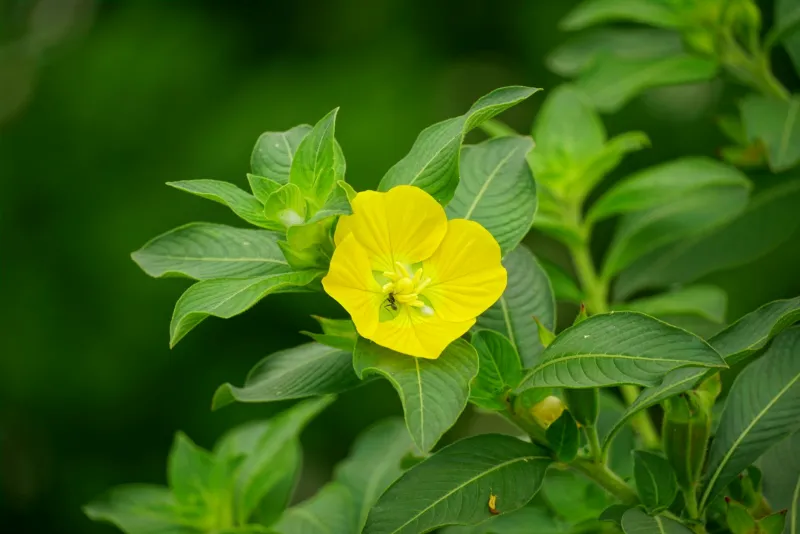
Evening Primrose Oil for Athletes: A GLA Supplement Worth Understanding
Evening primrose oil (EPO) is pressed from the seeds of Oenothera biennis and is one of the richest plant sources of gamma-linolenic acid (GLA), an omega-6 polyunsaturated fatty acid with anti-inflammatory and hormone-modulating properties. For athletes – particularly female athletes – EPO has carved out a specific niche in recovery and wellness supplementation. OstroVit Evening Primrose Oil 60caps and ICONFIT Evening Primrose seed oil 90softgels are available at maxfit.ee.
Mechanism in Sport
GLA's anti-inflammatory action operates through a metabolic pathway different from omega-3 fatty acids. GLA is converted in the body to dihomo-gamma-linolenic acid (DGLA), which competes with arachidonic acid for the same inflammatory pathway enzymes. When DGLA occupies these enzymes, it produces prostaglandin E1 (PGE1) rather than the pro-inflammatory eicosanoids derived from arachidonic acid. PGE1 has vasodilatory and anti-inflammatory effects.
This mechanism is relevant to athletes in two ways:
- Reducing systemic inflammation associated with repetitive high-load training – the chronic low-grade inflammation that can impair recovery if not managed
- Hormonal balance – GLA metabolism influences prostaglandin signalling in the reproductive system, which is particularly relevant for female athletes who may experience exercise-associated menstrual irregularities or premenstrual discomfort that affects training consistency
Strength and Endurance Evidence
Direct RCTs using EPO in physically active populations as an ergogenic aid are limited. The evidence base is stronger in clinical populations (rheumatoid arthritis, diabetic neuropathy, premenstrual syndrome) than in sport-specific contexts.
A controlled study by Brzeski et al. (1991) found that GLA supplementation reduced joint pain and morning stiffness in people with rheumatoid arthritis. While this is a clinical population, the mechanism is the same one that may support athletes with training-related joint discomfort.
For female athletes specifically, a randomised controlled trial by Rocha Filho et al. (2011) found that GLA-containing preparations reduced the severity of premenstrual symptoms including mood disturbance and physical discomfort. Given that premenstrual symptoms can measurably affect training output and recovery in female athletes, this represents an indirect but meaningful performance-relevant effect.
The anti-inflammatory properties of GLA are supported by a review by Sergeant et al. (2016), which documented GLA's inhibitory effects on NF-kB activation and cytokine production in human cells – the same inflammatory pathways elevated after intense exercise.
Effective Protocol
Most clinical trials have used evening primrose oil in the range of 500 mg to 3 grams daily, providing proportionate GLA. OstroVit Evening Primrose Oil 60caps and ICONFIT Evening Primrose seed oil 90softgels both provide standardised EPO doses per capsule.
GLA supplementation requires consistent daily use over at least four to eight weeks before anti-inflammatory effects become established, as the conversion to DGLA and tissue incorporation takes time. This is not an acute-effect supplement.
EPO is best taken with meals containing fat. For female athletes managing training around menstrual phases, the evidence suggests that supplementation throughout the month – not just in the premenstrual phase – is more effective.
Who Benefits Most
- Female athletes dealing with premenstrual symptoms, irregular cycles related to heavy training, or joint discomfort during the luteal phase
- High-volume athletes of any gender seeking additional anti-inflammatory support alongside omega-3 supplementation
- Masters athletes (35+) where systemic inflammation and joint health are increasingly relevant to sustained training capacity
- Athletes with dry skin or inflammatory skin conditions, as GLA supports skin barrier function
Honest Verdict
Evening primrose oil is a well-tolerated supplement with a plausible anti-inflammatory mechanism and the most compelling evidence in female athlete contexts. It is not a primary ergogenic and should not be expected to produce measurable acute performance improvements. As a long-term anti-inflammatory and hormonal wellness supplement, it fits well into the programmes of high-volume female athletes and masters athletes managing training-related inflammation.
Find evening primrose oil at maxfit.ee.
References
Brzeski, M., Madhok, R., & Capell, H. A. (1991). Evening primrose oil in patients with rheumatoid arthritis and side-effects of non-steroidal anti-inflammatory drugs. British Journal of Rheumatology, 30(5), 370–372. https://pubmed.ncbi.nlm.nih.gov/1913008/
Rocha Filho, E. A., Lima, J. C., Pinho Neto, J. S., & Montarroyos, U. (2011). Essential fatty acids for premenstrual syndrome and their effect on prolactin and total cholesterol levels: a randomised, double blind, placebo-controlled study. Reproductive Health, 8, 2.
Sergeant, S., Rahbar, E., & Chilton, F. H. (2016). Gamma-linolenic acid, dihommo-gamma linolenic, eicosanoids and inflammatory processes. European Journal of Pharmacology, 785, 77–86. https://pubmed.ncbi.nlm.nih.gov/27083549/
FAQ
Is evening primrose oil useful for male athletes?
Yes. While much of the specific research involves female populations, the GLA anti-inflammatory mechanism applies to any athlete dealing with systemic inflammation from high training loads. Male athletes in heavy training blocks or with training-related joint discomfort may benefit from GLA's prostaglandin E1 pathway. However, for most male athletes, omega-3 fatty acids (EPA/DHA from fish oil) are a better-established first choice for anti-inflammatory supplementation.
Can I take evening primrose oil and fish oil together?
Yes, and this combination is sometimes recommended. Omega-3s (EPA/DHA) and GLA operate through complementary anti-inflammatory pathways. There is no known interaction between them. Taking both provides broader fatty acid anti-inflammatory coverage than either alone. Standard dosing applies for each separately.
How long before evening primrose oil takes effect?
GLA needs four to eight weeks of consistent daily supplementation to measurably shift tissue prostaglandin profiles. Do not expect results from short-term use. If you are targeting premenstrual or cycle-related symptoms, allow at least two to three full menstrual cycles of supplementation before assessing effectiveness.



