
Why Women May Benefit from Energy Complexes
Energy complexes for women have grown in popularity as awareness of the physiological differences between male and female energy metabolism has increased. Women's energy needs and fatigue patterns differ from men's in several meaningful ways – influenced by the menstrual cycle, reproductive life stage, and sex-specific differences in mitochondrial function and iron status.
Fatigue is one of the most commonly reported symptoms among adult women, and its causes are multifactorial: iron deficiency (with or without anaemia), suboptimal B-vitamin status, disrupted sleep, thyroid function changes, and cyclically varying hormone levels all contribute. A well-formulated energy complex may address several of these contributors simultaneously.
The energy supplements category at maxfit.ee offers options ranging from B-complex-centred formulas to broader adaptogenic and stimulant-containing complexes.
Hormonal and Life-Stage Considerations
The menstrual cycle exerts measurable effects on energy availability and tolerance to stimulants:
- Follicular phase (days 1–14): Rising estrogen is generally associated with higher subjective energy and greater tolerance to physical and cognitive demands
- Luteal phase (days 15–28): Progesterone rises and metabolic rate increases slightly. Iron losses from menstruation earlier in the cycle may compound fatigue. Sensitivity to caffeine and stimulants may increase, and some women experience more anxiety or palpitations from stimulant-containing energy products during this phase
- Perimenopausal transition: Fluctuating estrogen and progesterone disrupt sleep quality and energy regulation. B-vitamins, adaptogenic herbs, and CoQ10 are of greater interest in this life stage
This cycle-dependent variability is a key reason why energy complexes that work well for men (or that are not tailored to female physiology) may feel inconsistent or poorly tolerated at different points in the menstrual cycle.
Key Ingredients in Women's Energy Complexes
B-vitamins (B2, B6, B12, niacin, pantothenic acid): Coenzymes in energy-producing metabolic pathways. Riboflavin (B2) and thiamine (B1) are particularly important for mitochondrial energy production. B12 deficiency is associated with fatigue and is more prevalent in women, particularly those on plant-based diets or taking medications affecting absorption.
Iron: Not typically in dedicated energy complexes (to avoid overdosing men or non-menstruating women), but menstruating women have higher iron needs. Low iron stores, even without frank anaemia, are associated with subjective fatigue (Vaucher et al., 2012). A separate iron supplement may be warranted if blood ferritin is low.
CoQ10: A cofactor in the mitochondrial electron transport chain. While evidence for CoQ10 in healthy adults is modest, interest in perimenopausal women and those on statin medications (which deplete CoQ10) is higher. ICONFIT Capsules Coenzyme Q10 90caps and MST Coenzyme Q10 100mg 60caps are available at maxfit.ee.
Adaptogens (ashwagandha, rhodiola, maca): May support stress resilience and reduce fatigue perception without the stimulant-like side effects of caffeine. Maca has been studied specifically in perimenopausal women, with one RCT finding improvements in energy and mood (Meissner et al., 2006). 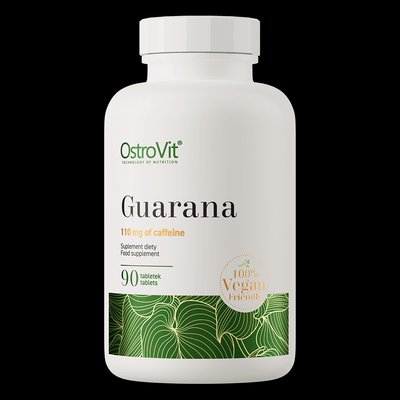 OstroVit Guarana VEGE€8.90 In stock 90tabs and
 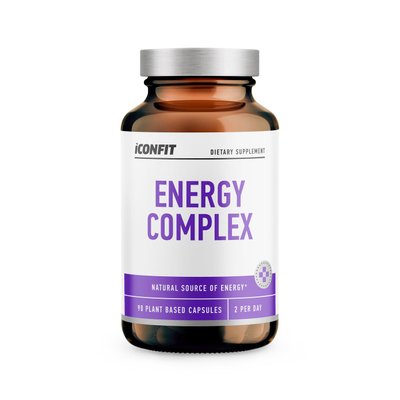 ICONFIT Capsules Energy Complex N90€12.90 In stock are also available for those seeking broader energy support.
Caffeine: Effective for acute energy and alertness, but women may metabolise caffeine more slowly than men on average (particularly those not using hormonal contraception), and luteal-phase progesterone further slows caffeine clearance. Dose and timing awareness is important.
Dose Considerations
For B-vitamin-centred energy complexes, safety at standard doses is well established. For adaptogenic complexes, the timing of use relative to the menstrual cycle can matter – avoiding high stimulant doses in the late luteal phase may reduce side-effect risk.
For caffeine-containing products:
- Consider starting at lower doses than recommended if you are caffeine-sensitive or in the late luteal phase
- Avoid use close to bedtime, as sleep disruption will counteract any energy benefit
- During pregnancy, caffeine should be limited (health authorities including national guidelines recommend no more than a specified daily limit – check your healthcare provider for current guidance)
Pregnancy and Safety Notes
Energy complexes during pregnancy require careful scrutiny:
- Caffeine: Should be limited during pregnancy. Do not use high-caffeine energy complexes
- High-dose single vitamins: Some energy formulas include high doses of specific vitamins (B6, niacin) that may need to be avoided at very high levels during pregnancy
- Adaptogens: Safety data in pregnancy is generally insufficient; most adaptogens are not recommended during pregnancy
- Standard B-vitamin complexes at food-equivalent doses are generally considered safe, but always check with your midwife or physician
Bottom Line
Energy complexes can be a practical tool for women managing fatigue related to menstrual cycle variability, B-vitamin gaps, or life-stage changes. The best-suited products centre on B-vitamins and moderate adaptogens rather than high-dose stimulants. Being aware of your menstrual cycle phase when choosing dose and product type makes a meaningful difference in tolerability and effectiveness.
References
Vaucher, P., Druais, P. L., Waldvogel, S., & Favrat, B. (2012). Effect of iron supplementation on fatigue in nonanemic menstruating women with low ferritin: a randomized controlled trial. CMAJ, 184(11), 1247–1254. https://pubmed.ncbi.nlm.nih.gov/22777991/
Meissner, H. O., Kapczynski, W., Mscisz, A., & Lutomski, J. (2005). Use of gelatinized maca (lepidium peruvianum) in early postmenopausal women. International Journal of Biomedical Science, 1(1), 33–45. https://pubmed.ncbi.nlm.nih.gov/23674952/
Reay, J. L., Kennedy, D. O., & Scholey, A. B. (2006). Single doses of Panax ginseng (G115) reduce blood glucose levels and improve cognitive performance during sustained mentally demanding activities. Journal of Psychopharmacology, 20(6), 771–781. https://pubmed.ncbi.nlm.nih.gov/16401645/
FAQ
Can I take an energy complex every day?
B-vitamin-based energy complexes can generally be taken daily without concern at standard doses. Stimulant-containing complexes (with caffeine or high-dose guarana) are better used on days when additional energy demand is expected rather than daily, to avoid tolerance build-up and sleep disruption.
Are energy complexes safe for women over 40?
For most healthy women over 40, adaptogen and B-vitamin-centred energy complexes are appropriate. Perimenopausal and postmenopausal women may particularly benefit from CoQ10, B12, and adaptogenic support. However, if you experience palpitations, anxiety, or sleep disruption, reduce or discontinue stimulant-containing products and speak with your doctor.
Do energy complexes affect the menstrual cycle?
Most energy complexes at standard doses do not meaningfully affect the menstrual cycle. High-dose adaptogenic herbs (particularly those with hormone-modulating properties like maca or ashwagandha) may influence cycle regularity in some women, but evidence is limited. If you notice cycle changes after starting a new supplement, consult your healthcare provider.



