


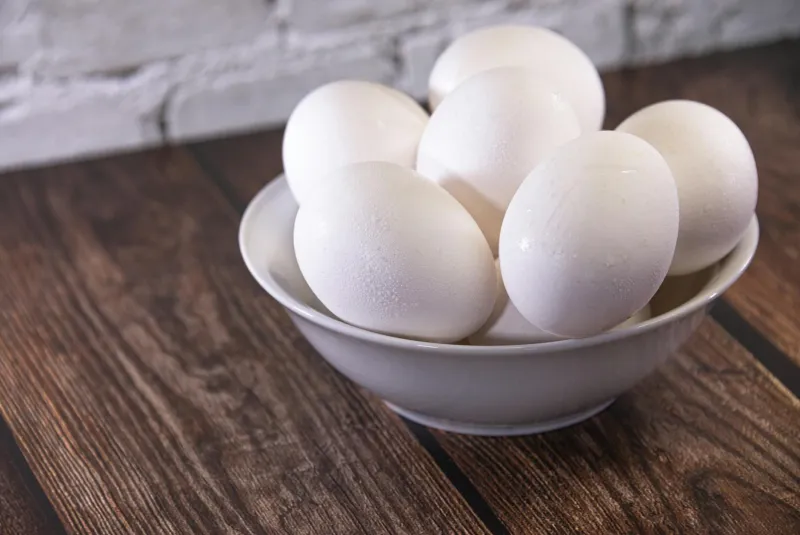
What Is Egg White Protein?
Egg white protein (egg albumin) is produced by drying egg whites — yolks are removed, whites are pasteurised, and then spray-dried. The result is a fine powder that is nearly 100% protein by dry weight.
The egg is famously the gold standard of food proteins in nutrition science — it's why the biological value (BV) scale uses egg white as the reference point at 100 (Hoffman & Falvo, 2004). This means egg protein provides the ideal amino acid set for human needs.
Amino Acid Profile
Egg white protein contains all 9 essential amino acids:
| Amino Acid | Egg White (per 100g) |
|---|---|
| Leucine | ~8.6 g |
| Isoleucine | ~6.1 g |
| Valine | ~7.3 g |
| Lysine | ~7.2 g |
| Methionine | ~3.2 g |
| Tryptophan | ~1.3 g |
Compared to whey, leucine is slightly lower but all essential amino acids are well represented. Biological value (BV) is ~88 (whey is ~104, casein ~77).
Who Should Consider Egg White Protein?
Lactose Intolerance and Dairy Sensitivity
Egg white protein is completely dairy-free. This makes it an excellent choice for:
- People diagnosed with lactose intolerance
- Those sensitive to milk proteins (whey/casein)
- Note: it is not suitable for vegans, as egg is an animal product
Keto and Low-Carb Diets
Egg white protein powder is near-zero in carbohydrates and extremely low in fat. This makes it perfect for keto and Paleo dieters.
Athletes Seeking Variety
If you already take whey regularly and want to diversify your protein sources, egg white offers a different flavour profile and similar muscle-building amino acid composition.
Digestion Speed
Egg white protein digests at a moderate rate — slower than whey, faster than casein. This makes it versatile:
- Works post-workout (fast enough)
- Works between meals (slow enough for satiety)
- Not ideal as a nighttime protein (casein is better)
Products in Estonia
MST Protein Egg White 900g Banana is a popular egg white protein choice in Estonia. MST Nutrition offers a high-protein formulation available at maxfit.ee, well-suited for daytime use.
Egg White vs Other Proteins
| Criterion | Egg White | Whey Isolate | Pea Protein |
|---|---|---|---|
| Biological value | ~88 | ~104 | ~65 |
| Dairy-free? | Yes | No | Yes |
| Vegan? | No | No | Yes |
| Digestion speed | Moderate | Fast | Moderate |
| Leucine content | Good | Excellent | Moderate |
Taste and Mixability
Egg white protein has a neutral taste and mixes well. Unflavoured versions have a mild egg aftertaste, but flavoured products eliminate this. The texture is lighter than casein protein.
Summary
Egg white protein is genuinely underrated — it provides a complete amino acid profile without lactose, works for keto diets, and digests at a useful moderate pace. Ideal for lactose-intolerant individuals, dairy-free dieters, and athletes seeking protein variety. Explore available products in the protein powders category at maxfit.ee.
FAQ
Is egg white protein suitable for vegans?
No — egg is an animal-derived product. Vegans should opt for pea, rice, or hemp protein instead.
Is it safe to consume raw egg whites?
Raw egg whites are not recommended as they contain avidin, which blocks biotin absorption. Egg white protein powder is pasteurised, which destroys avidin, making it safe to consume.
How many grams per day?
The evidence-based recommendation for active athletes is 1.6–2.2 g per kg of body weight per day. Egg white protein serves the same role as whey — just aim for your daily protein target regardless of source.
References
- Hoffman, J. R., & Falvo, M. J. (2004). Protein — which is best? Journal of Sports Science & Medicine, 3(3), 118–130.
- van Vliet, S., Burd, N. A., & van Loon, L. J. (2015). The skeletal muscle anabolic response to plant- versus animal-based protein consumption. The Journal of Nutrition, 145(9), 1981–1991.
- Burd, N. A., Yang, Y., Moore, D. R., Tang, J. E., Tarnopolsky, M. A., & Phillips, S. M. (2012). Greater stimulation of myofibrillar protein synthesis with ingestion of whey protein isolate v. micellar casein at rest and after resistance exercise in elderly men. British Journal of Nutrition, 108(6), 958–962. https://pubmed.ncbi.nlm.nih.gov/22289570/
- Mathai, J. K., Liu, Y., & Stein, H. H. (2017). Values for digestible indispensable amino acid scores (DIAAS) for some dairy and plant proteins may better describe protein quality than values calculated using the concept for protein digestibility-corrected amino acid scores (PDCAAS). British Journal of Nutrition, 117(4), 490–499. https://pubmed.ncbi.nlm.nih.gov/28382889/


