
What to Stack with EAA: A Complete Stacking Guide
EAA stacking — combining essential amino acid supplements with other products — is a practical strategy for athletes who want to maximise muscle protein synthesis, recovery, and intra-workout endurance. EAAs provide all nine essential amino acids, making them more complete than BCAA supplements alone. This guide covers which combinations are supported by evidence, which create competition, how to time them, and what to avoid.
Evidence-Based Synergies
EAA + carbohydrates. The co-ingestion of amino acids and carbohydrates produces a synergistic insulin response that is greater than either alone (Zawadzki et al., 1992). Elevated insulin drives amino acid uptake into muscle and inhibits muscle protein breakdown simultaneously. This makes the EAA + carbohydrate combination particularly effective in the post-workout window. Many intra-workout or post-workout products already combine both; checking that carbohydrate is included maximises the response.
EAA + creatine. EAAs and creatine address different rate-limiting steps in muscle protein metabolism. EAAs provide the substrate for new protein synthesis; creatine supports the ATP availability needed for the cellular work of protein assembly and subsequent training. These are complementary rather than overlapping, and combining them is one of the most consistently recommended pairings in sports nutrition (Kreider et al., 2017).
EAA + electrolytes. Intense training that depletes electrolytes also creates conditions for muscle cramps and suboptimal nerve-muscle coupling. Many EAA products already include electrolytes; if yours does not, pairing with an electrolyte product during training is a sensible choice. BIOTECHUSA Amino Energy Zero with Electrolytes 360g Laim is an example of a product that combines both categories.
EAA + vitamin D + magnesium. Vitamin D receptors are present on muscle cells, and adequate vitamin D and magnesium status is associated with muscle function. These nutrients support the cellular environment in which protein synthesis occurs, though they do not directly stimulate MPS the way leucine does.
Antagonistic Combinations
EAA and protein powder at the same time. There is no pharmacological conflict, but the combination provides redundant amino acid profiles. If you are taking a complete EAA supplement and a whey protein shake in the same sitting, the EAA contribution may be largely subsumed by the whey protein. The practical recommendation is: use EAAs when you cannot or prefer not to consume whole food protein or a full protein shake — for example, during training, or in a fasted state.
EAA and caffeine timing. Caffeine does not block amino acid uptake, but very high caffeine intake can cause GI discomfort when combined with an amino acid drink. This is more a tolerance issue than a biochemical conflict. If you use a pre-workout with caffeine, consider a gap before your EAA intra-workout drink.
High-dose BCAAs on top of EAA. BCAAs are a subset of EAAs (leucine, isoleucine, valine). Adding a BCAA supplement on top of a complete EAA supplement provides no meaningful additional benefit and is a waste of resources. Choose EAA over BCAA or combine them only if a specific BCAA:EAA ratio product is a deliberate choice.
Timing Within a Stack
| Timing | Recommendation |
|---|---|
| Pre-workout | EAA + light carbohydrate; creatine can be taken here or post |
| Intra-workout | EAA + electrolytes; for sessions >60 min, add carbohydrate |
| Post-workout | EAA (or switch to full protein) + creatine + carbohydrates |
| Fasted training | EAA before and during to minimise muscle protein breakdown |
| Avoid | Taking EAA with full protein shake — use one or the other |
Sample Stacks by Goal
Muscle gain / bulking. Post-workout EAA + creatine + carbohydrate source. This three-component stack covers substrate (amino acids), energy system support (creatine), and insulin response (carbohydrates).
Cutting / calorie deficit. EAA supplementation becomes more important in a deficit because dietary protein is often constrained and muscle preservation is a priority. Intra-workout EAA + electrolytes in a calorie-free or low-calorie format helps maintain MPS signalling without breaking a calorie budget.
Endurance sports. Intra-workout EAA + carbohydrate + electrolyte combination during sessions longer than 90 minutes. Leucine in the EAA mix helps attenuate muscle protein breakdown during prolonged exercise.
The full EAA range is available at /en/category/eaa-et on maxfit.ee. Notable options include OstroVit EAA 200g Lõuna-Ameerika puuviljad ja greip, MST BCAA EAA 40serv Must sõstar, and 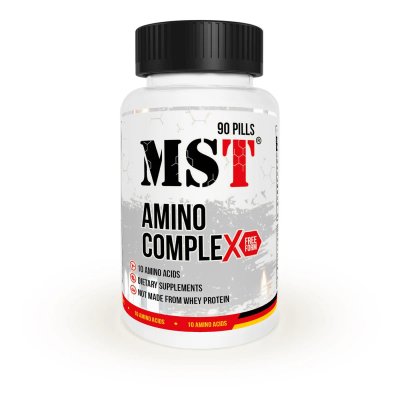 MST Amino Complex 90 pills€16.90 In stock.
What to Avoid
- Do not replace whole food protein entirely with EAA supplements — whole foods provide micronutrients, fibre, and satiety that isolated amino acids do not.
- Avoid taking EAA with meals that spike insulin on their own immediately post-workout if you are tracking macros carefully — this is not a safety concern, but a redundancy issue.
- Do not exceed the label's recommended daily serving in the expectation that more is better — the muscle protein synthesis response to leucine plateaus, and excess amino acids are simply oxidised for energy or converted to glucose.
- Check for caffeine content in your EAA product before stacking with a pre-workout — some amino acid energy products contain caffeine, and doubling up can cause jitteriness or disrupted sleep.
References
Zawadzki, K. M., Yaspelkis, B. B., & Ivy, J. L. (1992). Carbohydrate-protein complex increases the rate of muscle glycogen storage after exercise. Journal of Applied Physiology, 72(5), 1854-1859. https://pubmed.ncbi.nlm.nih.gov/1601794/
Kreider, R. B., Kalman, D. S., Antonio, J., Ziegenfuss, T. N., Wildman, R., Collins, R., & Lopez, H. L. (2017). International Society of Sports Nutrition position stand: safety and efficacy of creatine supplementation in exercise, sport, and medicine. Journal of the International Society of Sports Nutrition, 14, 18. https://pubmed.ncbi.nlm.nih.gov/28615996/
Wolfe, R. R. (2017). Branched-chain amino acids and muscle protein synthesis in humans: myth or reality? Journal of the International Society of Sports Nutrition, 14, 30. https://pubmed.ncbi.nlm.nih.gov/28852372/
FAQ
Should I take EAA or BCAA?
For most athletes, EAA provides a more complete amino acid profile than BCAA alone. Since EAA contains leucine (and all other essential amino acids), it supports muscle protein synthesis at least as well as BCAA and potentially better. BCAA can still be useful for specific intra-workout use if the product is well formulated, but EAA is generally the more versatile choice.
Can I take EAA every day?
Yes. EAA supplements provide essential nutrients that are safe for daily use. Individuals on calorie-restricted diets, those in heavy training phases, and older athletes who have higher protein utilisation challenges benefit most from consistent daily EAA use.
How much leucine do I need for muscle protein synthesis?
Studies suggest that a leucine threshold of around 2–3 g per serving is needed to maximally stimulate muscle protein synthesis in young adults (Wolfe, 2017). Most EAA products are formulated with leucine content in this range. Check the label of your specific product to confirm.



