
What Are EAA and Why Do They Matter?
Essential amino acids (EAA) are the nine amino acids your body cannot synthesise on its own — histidine, isoleucine, leucine, lysine, methionine, phenylalanine, threonine, tryptophan, and valine. Because muscle protein synthesis requires all nine to be available simultaneously, getting enough EAA is a practical priority for anyone training seriously.
Unlike BCAA supplements, which cover only three of these nine, a full EAA product provides the complete set. Research shows that complete EAA supplementation stimulates muscle protein synthesis more effectively than BCAAs alone (Wolfe, 2017).
Form and Starting Dose
EAA supplements come in powder, capsule, and ready-to-drink form. Powder dissolves quickly and lets you sip during a session; capsules suit those who prefer no flavour or extra liquid. A standard serving is typically labelled on the product — follow the manufacturer's guidance as amino acid ratios differ between products.
If you are new to EAA, start with a single serving and assess tolerance before adjusting. Most adults tolerate EAA well without gastrointestinal issues.
At maxfit.ee you can explore options such as OstroVit EAA 200g Lõuna-Ameerika puuviljad ja greip, MST BCAA EAA 40serv Must sõstar, and 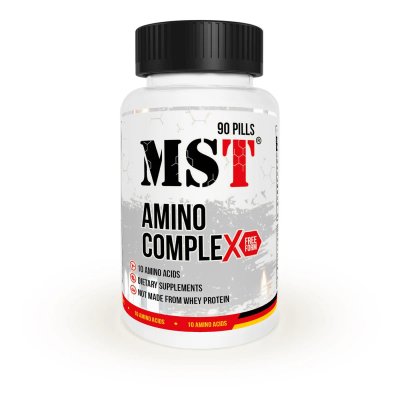 MST Amino Complex 90 pills€16.90 In stock in the EAA category.
With or Without Food?
EAA are rapidly absorbed and do not depend on a meal to be effective. Taking them with a small amount of carbohydrate (for instance, mixed in a sports drink) may help maintain energy during training, but it is not required for amino acid uptake. On the other hand, taking EAA alongside a large, protein-rich meal adds little benefit, since that meal already provides amino acids.
For fasted training — common in morning sessions — EAA taken before or during the workout can help limit muscle protein breakdown without the calorie load of a full meal.
Timing
Timing is flexible. The evidence suggests that total daily protein and amino acid intake matter more than the exact window (Morton et al., 2018). That said, three practical windows work well:
- Before training: helps prime muscle protein synthesis and may reduce catabolism during the session.
- During training (intra-workout): sipped continuously, EAA support endurance and limit fatigue, particularly in sessions exceeding 60 minutes.
- After training: supports the post-exercise muscle protein synthesis window, though the window is longer than once thought — up to several hours.
Choose the window that fits your routine and you will actually use consistently.
What to Pair EAA With
EAA combine well with several other supplements:
- Creatine: creatine supports power output and volumisation; pairing with EAA covers both strength and recovery.
- Carbohydrates: adding simple carbs (dextrose, maltodextrin) to an intra-workout EAA drink replenishes glycogen while delivering amino acids.
- Electrolytes: sweat losses during long training increase sodium and potassium needs — many ready-mix EAA products include electrolytes for this reason.
Avoid stacking EAA with a full whey protein shake at the same time unless total protein intake is being calculated — it adds amino acids with little additional benefit in that window.
Common Mistakes
Using EAA instead of total protein, not alongside it. EAA are a targeted tool, not a replacement for adequate daily protein from whole foods or complete protein supplements.
Over-relying on taste to judge quality. Flavouring masks amino acid profiles. Check the label for the full nine amino acid breakdown, not just leucine content.
Skipping on rest days. Muscle protein synthesis continues for 24-48 hours after training. Taking EAA on recovery days — especially if total food protein is lower — supports ongoing repair.
Assuming any amino acid product is EAA. BCAAs are a subset of EAA. Confirm the product lists all nine essential amino acids.
FAQ
Can I take EAA every day?
Yes. EAA are found in any complete dietary protein, so supplementing daily is safe. On training days, take them around your session; on rest days, they can serve as a protein top-up between meals.
Do EAA break a fast?
EAA contain calories (approximately 4 kcal per gram of amino acid) so they technically end a strict fast. However, for the purpose of preserving muscle during fasted training, this small calorie load is generally considered acceptable.
Are EAA better than whey protein?
Neither is universally superior. Whey provides EAA plus non-essential amino acids and is convenient as a meal supplement. Standalone EAA are faster-absorbing and calorie-lighter, making them better suited for intra-workout use.
References
Wolfe, R. R. (2017). Branched-chain amino acids and muscle protein synthesis in humans: myth or reality? Journal of the International Society of Sports Nutrition, 14, 30. https://pubmed.ncbi.nlm.nih.gov/28852372/
Morton, R. W., Murphy, K. T., McKellar, S. R., Schoenfeld, B. J., Henselmans, M., Helms, E., ... & Phillips, S. M. (2018). A systematic review, meta-analysis and meta-regression of the effect of protein supplementation on resistance training-induced gains in muscle mass and strength in healthy adults. British Journal of Sports Medicine, 52(6), 376-384. https://pubmed.ncbi.nlm.nih.gov/28698222/
Stephan van Vliet, S., Burd, N. A., & van Loon, L. J. C. (2015). The skeletal muscle anabolic response to plant- versus animal-based protein consumption. Journal of Nutrition, 145(9), 1981-1991. https://doi.org/10.3945/jn.114.204305



