
Signs You Need EAA: Deficiency & Who Benefits
Essential amino acids (EAA) are the nine amino acids the human body cannot synthesise on its own: histidine, isoleucine, leucine, lysine, methionine, phenylalanine, threonine, tryptophan, and valine. They must be obtained entirely from food or supplements. Because they are the rate-limiting inputs for muscle protein synthesis, any shortfall in EAA intake has direct consequences for muscle maintenance, recovery, immune function, and mood regulation.
Deficiency Symptoms
Severe EAA deficiency is rare in well-fed populations, but suboptimal intake — enough to limit performance and recovery — is surprisingly common among certain groups. Key signs include:
- Muscle loss or difficulty gaining muscle — muscle protein synthesis slows when leucine and other EAAs are below stimulatory thresholds.
- Prolonged soreness and slow recovery — inadequate amino acid availability impairs the repair of exercise-induced muscle damage.
- Fatigue and mood disturbances — tryptophan is the sole precursor for serotonin synthesis; chronic low tryptophan can impair mood and sleep. Phenylalanine supports dopamine production.
- Poor immune function — several EAAs, including threonine and glutamine (conditionally essential), are important for immune cell proliferation and antibody production.
- Brittle hair and nails, slow wound healing — methionine and lysine contribute to keratin and collagen synthesis.
In practice, the most common scenario is not total deficiency but a chronically insufficient protein intake where one or more limiting EAAs (typically lysine in plant-heavy diets, or leucine when total protein is inadequate) caps muscle protein synthesis rates.
At-Risk Groups
- Vegans and vegetarians — plant proteins are often low in one or more EAAs (e.g., lysine in cereals, methionine in legumes). Combining sources (rice + beans, etc.) partially corrects this, but total protein intake needs careful attention.
- Older adults — anabolic resistance means older individuals require a higher per-meal protein dose and richer leucine content to achieve the same muscle protein synthetic response as younger adults (Breen & Phillips, 2011).
- Athletes in caloric restriction — cutting phases or weight-category sports where calorie restriction limits total protein intake.
- Those recovering from illness or surgery — EAA demand is elevated during tissue repair.
- Frequent endurance athletes — high training volumes increase amino acid oxidation, particularly of branched-chain EAAs (leucine, isoleucine, valine).
How It Is Tested
There is no single simple blood test for EAA inadequacy in healthy populations. Serum albumin and pre-albumin are indirect markers of protein nutritional status and are used clinically in hospitalised patients. Plasma amino acid profiles can be measured at specialised labs but are rarely needed in practice.
Functional assessment is more practical: tracking total daily protein intake against established recommendations (the current evidence base supports around 1.6 g/kg per day for muscle gain and at least 1.0–1.2 g/kg for muscle maintenance in healthy adults) gives a reasonable indication of whether EAA intake is adequate.
Nordic and Estonian Context
Traditional Estonian and Nordic diets are meat, fish, and dairy-based, meaning EAA intake from food is generally adequate in the population at large. However, the growing trend of flexitarianism and vegan eating means that more Estonians are now at potential risk of low lysine and methionine intakes without careful dietary planning.
Dairy consumption remains high in Estonia, and dairy provides an excellent complete EAA profile including high leucine content. Athletes who reduce dairy (for example, lactose intolerant individuals or those following plant-based diets) should pay particular attention to total EAA coverage.
When to Supplement vs Dietary Approach
Whole food protein sources — meat, fish, eggs, dairy, or high-quality plant combinations — remain the optimal way to deliver EAAs for most people. Supplements are most justified when:
- Total protein intake from food is consistently below recommended levels and meal timing makes food inconvenient.
- Training sessions are fasted or very early morning where a solid meal is impractical.
- Athletes need rapid amino acid availability around training without significant caloric load (e.g., during a cut).
- Older athletes who benefit from higher per-meal leucine content.
Products like OstroVit EAA 200g Lõuna-Ameerika puuviljad ja greip and MST BCAA EAA 40serv Must sõstar offer a complete EAA profile, including all nine essential amino acids, in a convenient powder form. 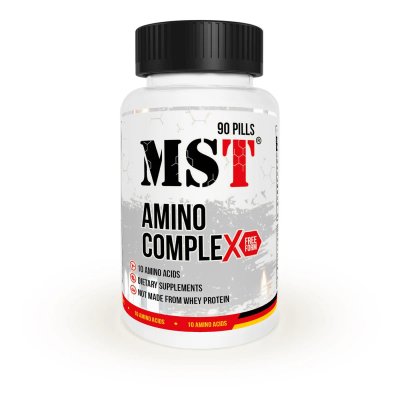 MST Amino Complex 90 pills€16.90 In stock suits those preferring capsule format.
For those who also want the added benefit of electrolytes during training, BIOTECHUSA Amino Energy Zero with Electrolytes 360g Laim combines EAA coverage with electrolyte replenishment.
Explore the full EAA range at maxfit.ee/et/category/eaa-et.
FAQ
What is the difference between BCAA and EAA?
BCAA (branched-chain amino acids) are a subset of three EAAs: leucine, isoleucine, and valine. EAA supplements contain all nine essential amino acids. Because muscle protein synthesis requires all essential amino acids to be present simultaneously, EAA supplements are generally considered more complete than isolated BCAAs for stimulating muscle protein synthesis when total dietary protein is low.
Do I need EAA supplements if I already eat enough protein?
Probably not as a priority. If total protein intake is adequate and distributed across meals, whole food protein sources cover EAA needs for most healthy adults. Supplements are useful primarily as a convenient bridge when food intake is limited or timing is challenging.
Can EAA supplements help with muscle loss in older adults?
EAA supplements, particularly those with high leucine content, have been studied as a strategy to combat age-related muscle loss (sarcopenia). The evidence suggests that EAA supplementation, especially combined with resistance exercise, can help maintain or modestly improve muscle mass in older adults, though the effects are most pronounced in those who are also improving their total protein intake (Breen & Phillips, 2011).
References
Breen, L., & Phillips, S. M. (2011). Skeletal muscle protein metabolism in the elderly: Interventions to counteract the 'anabolic resistance' of ageing. Nutrition & Metabolism, 8, 68. https://pubmed.ncbi.nlm.nih.gov/21975196/
Volpi, E., Kobayashi, H., Sheffield-Moore, M., Mittendorfer, B., & Wolfe, R. R. (2003). Essential amino acids are primarily responsible for the amino acid stimulation of muscle protein anabolism in healthy elderly adults. American Journal of Clinical Nutrition, 78(2), 250–258. https://pubmed.ncbi.nlm.nih.gov/12885705/



