


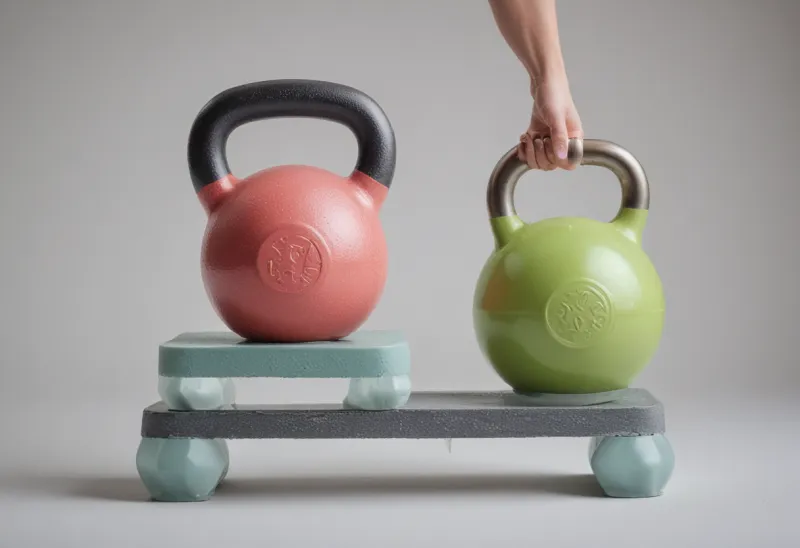
Does Muscle Weigh More Than Fat? The Answer Might Surprise You
Here is the short, honest answer: no, a kilogram of muscle does not weigh more than a kilogram of fat. A kilo is a kilo. What is different — and what makes all the difference on your body — is density. Muscle tissue is approximately 18% denser than fat tissue by volume. In practical terms, skeletal muscle has a density of roughly 1.06 g/cm³, while adipose (fat) tissue sits at around 0.9 g/cm³. That means for the same mass on the scale, muscle takes up significantly less space inside your body.
This single fact explains one of the most confusing experiences in fitness: the scale goes up, but your jeans fit better. You are not imagining it. You are recomposing — and doing it well.
Scale up but clothes looser — what are you building toward?
All proteinsA Kilo Is a Kilo — It's About Density, Not Weight
The phrase "does muscle weigh more than fat" gets searched millions of times each year, and the answer is always the same: no, it does not. Yet the myth persists because the distinction between weight and density is not intuitive. What actually differs is how much room each tissue takes up per unit of mass. Fat is porous and fluffy; muscle is compact and fibrous.
Think of it like packing for a trip. A kilogram of feathers fills your entire suitcase. A kilogram of books fits in a small bag. Same weight — completely different volume. Your body works the same way.
Because of this density difference, a person who carries more lean muscle mass at the same scale weight will appear slimmer and more defined than someone carrying more fat. This is why elite athletes can look dramatically leaner than their scale weight suggests, while a person with a "healthy" BMI might carry a disproportionately high body-fat percentage. Research by Gallagher et al. (2000) showed that BMI alone is a poor predictor of body composition, precisely because it does not account for this tissue-density distinction. Two people can share the same BMI and have entirely different body compositions.
Muscle Takes Less Space — Why This Matters Practically
Here is where the "muscle vs fat weight" confusion has real practical consequences.
When you begin a serious training programme and increase your protein intake, you may experience a phase where the scale barely moves — or even climbs slightly — while your waist measurement shrinks, your shoulders broaden and your clothes feel looser. This is not a paradox. This is your body replacing lower-density fat tissue with higher-density muscle tissue: gaining muscle means you are adding more mass per cubic centimetre.
A practical illustration: one kilogram of fat occupies roughly 1,111 cm³ of space. One kilogram of muscle occupies roughly 943 cm³. The muscle takes up about 15% less volume. Across several kilograms of body recomposition, that difference is visible and measurable — particularly in your waist, arms and thighs, and in how your clothing fits from week to week.
Muscle vs Fat: Side-by-Side Comparison
| Property | Muscle | Fat |
|---|---|---|
| Density | ~1.06 g/cm³ | ~0.9 g/cm³ |
| Space per kg | ~943 cm³ | ~1,111 cm³ |
| Appearance | Firm, defined | Soft, rounded |
| Metabolic contribution | High (burns calories at rest) | Low |
| Best tracker | Tape measure, mirror, strength log | Scale weight alone |
This table makes it clear: the scale is the worst possible tool for tracking body recomposition. It cannot distinguish muscle from fat, water from glycogen, or morning weight from evening weight. Using scale weight as your only measure is like judging a book by how heavy it is.
Why the Scale Can Go Up When You Are Getting Leaner
This is one of the most demoralising surprises in fitness. You have been eating well, training consistently, sleeping enough — and the scale has gone up by 1.5 kg over six weeks. Here is what is likely actually happening:
- Muscle gain + fat loss simultaneously — classic body recomposition. Total mass stays similar or increases slightly; body composition improves dramatically.
- Glycogen storage — every gram of muscle glycogen pulls in roughly 3 g of water. A month into strength training, your muscles store more glycogen, adding meaningful water weight.
- Inflammatory response — after intense training sessions, muscles undergo microtears and mild short-term inflammation, causing temporary water retention lasting 24–72 hours.
- Increased bone density — resistance training also stimulates small increases in bone mineral density, which adds scale weight but is an entirely positive adaptation.
Studies such as Morton et al. (2018) confirm that consistent resistance training combined with adequate protein supplementation produces measurable lean mass gains — often while body-fat percentage simultaneously decreases. The scale cannot show you this split.
How to Read Progress Correctly
Stop depending on the scale as your sole metric. Use these instead:
- Weekly tape measurements — waist, hips, arms, thighs measured at the same time of day
- Progress photos — same lighting, same time of day, every two to four weeks
- Strength log — are you lifting more than last month? This is the clearest signal of muscle development
- Clothing fit — the honest, zero-cost test
- Body fat percentage — if you have access to DEXA or a calibrated bioimpedance device
Track all of these together. The scale can be one of five data points — not the verdict on whether your programme is working.
The Role of Protein in Building Denser Lean Mass
You cannot build muscle without sufficient protein. Muscle protein synthesis — the process by which your body repairs and grows muscle fibres after training — requires a continuous supply of amino acids, particularly leucine and the other essential amino acids. The current evidence-based target is 1.6–2.2 g of protein per kg of bodyweight per day for those in active training programmes (Morton et al., 2018). Spreading intake across three to five meals is more effective than consuming the same total in one or two sittings.
Whole food sources are the foundation, but a quality protein supplement makes it significantly easier to hit your daily target, especially around training. If you are serious about building dense lean mass, Optimum-nutrition Gold Standard 100% Whey 450g Strawberry (EUR 24.90, price at the time of writing) is a reliable option: high-quality whey concentrate with a strong amino acid profile and no unnecessary fillers. A larger-tub alternative is Scitec 100% Whey Protein Professional 2350g Coconut (EUR 68.90). You can browse the full protein range at maxfit.ee in the proteins category.
For strength and power output specifically, creatine monohydrate is among the most thoroughly researched ergogenic aids available. Rawson & Volek (2003) demonstrated that creatine supplementation combined with resistance training produced significantly greater strength and lean mass gains than training alone. Scitec Creatine Monohydrate 300g provides the simple, unflavoured monohydrate form with no proprietary blends — exactly what the research supports, at a straightforward dose of 3–5 g per day.
References
- Gallagher, D., et al. (2000). Healthy percentage body fat ranges: an approach for developing guidelines based on body mass index. American Journal of Clinical Nutrition, 72(3), 694–701. PMID: 10966886. https://pubmed.ncbi.nlm.nih.gov/10966886/
- Morton, R. W., et al. (2018). A systematic review, meta-analysis and meta-regression of the effect of protein supplementation on resistance training-induced gains in muscle mass and strength. British Journal of Sports Medicine, 52(6), 376–384. https://pubmed.ncbi.nlm.nih.gov/28698222/
- Rawson, E. S., & Volek, J. S. (2003). Effects of creatine supplementation and resistance training on muscle strength and weightlifting performance. Journal of Strength and Conditioning Research, 17(4), 822–831. https://pubmed.ncbi.nlm.nih.gov/14636102/
- Mendez, J., & Keys, A. (1960). Density and composition of mammalian muscle. Metabolism, 9(2), 184–188. [Foundational data on skeletal muscle density ≈ 1.06 g/cm³ vs. adipose tissue ≈ 0.9 g/cm³.]
See also:
- Best supplement stacks for building muscle
- Creatine for older adults: preserving muscle and strength
FAQ
Does muscle really weigh more than fat? No. A kilogram of muscle and a kilogram of fat weigh exactly the same — one kilogram. The difference is density: muscle is about 18% denser by volume, which means it takes up significantly less space in your body for the same mass on the scale.
Why did I gain weight when I started strength training? Several factors are at play: increased muscle glycogen storage (which binds water), mild inflammatory water retention from new training stimuli, potential simultaneous lean mass gain, and small increases in bone density. Taken together, these effects can push the scale up by 1–2 kg in the first few months even as your body visibly improves. This is typically a positive sign, not a setback.
Is the scale useless for tracking fitness progress? Not entirely, but it should never be your only metric. Combine it with weekly tape measurements, progress photos, clothing fit and strength logs for an accurate picture of your body composition over time.