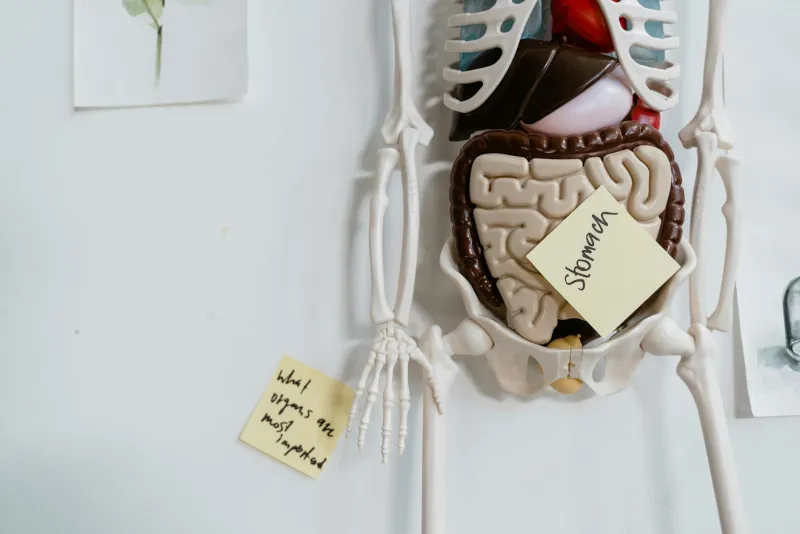
What Are Digestive Enzymes?
Digestive enzymes are protein catalysts produced mainly by the pancreas but also the stomach, small intestine, and salivary glands. Their job is to break down food molecules — proteins, fats, and carbohydrates — into smaller units the body can absorb. Without sufficient enzyme production, undigested food reaches the large intestine where it ferments, causing gas, bloating, and discomfort (Roxas, 2008).
How many people need digestive enzymes? Enzyme insufficiency is more common than assumed. Pancreatic enzyme output decreases with age. Stress, chronic inflammation, coeliac disease, and Crohn's disease can all impair enzyme production. Certain foods (notably legumes and wholegrains) also require specific enzymes that the human body does not produce.
Key Types of Digestive Enzymes
Proteases (Proteolytic Enzymes)
Proteases break dietary proteins into amino acids and peptides. The pancreas's main proteases are trypsin, chymotrypsin, and elastase. Papain (from papaya) and bromelain (from pineapple) are used in supplements as alternatives to animal-derived proteases.
Lipases
Lipases break fats into glycerol and fatty acids. Suboptimal fat digestion often manifests as pale, greasy stools and diarrhoea after fatty meals. Pancreatitis and pancreatic disease frequently impair lipase production specifically.
Amylases
Amylases break starches and carbohydrates into simple sugars. Salivary amylase begins digestion in the mouth. People prone to bloating, especially after starchy foods like rice, pasta, or bread, may benefit from amylase supplementation.
Lactase
Lactase breaks down lactose, the main sugar in milk. Lactose intolerance is one of the most common food intolerances globally — an estimated 68% of adults do not produce sufficient lactase (Swallow, 2003). Lactase supplements allow dairy consumption with minimal discomfort.
Alpha-Galactosidase
Alpha-galactosidase breaks down raffinose and stachyose — oligosaccharides found in legumes, broccoli, and cabbage that cause bloating. This enzyme is critical for anyone eating a legume-rich diet.
Digestive Enzyme Supplement Comparison
| Enzyme | Substrate | Primary Benefit |
|---|---|---|
| Protease | Proteins | Protein digestion, inflammation |
| Lipase | Fats | Fat digestion |
| Amylase | Starches | Carbohydrate digestion |
| Lactase | Lactose | Lactose intolerance |
| Alpha-galactosidase | Raffinose/stachyose | Legume-induced bloating |
| Cellulase | Cellulose | Plant cell wall digestion |
Digestive Enzymes and Sport
Athletes consuming high volumes of protein (whey, meat, legumes) may benefit from high-protease digestive enzyme supplements. MST Protein Best Whey + Enzymes 510g Banana Yogurt is a good example — this protein concentrate already contains proteolytic enzymes to help digest protein faster and more completely, shuttling amino acids to muscle more efficiently.
Research shows that adding proteolytic enzymes improves high-protein meal digestion and may shorten post-exercise muscle soreness (Miller et al., 2008).
Explore enzyme supplements at maxfit.ee's digestive enzymes and probiotics category.
When to Take Digestive Enzymes?
For optimal effect, take digestive enzymes immediately before a meal or with the first mouthfuls. After eating, stomach acid becomes increasingly hostile to exogenous enzymes.
Timing by enzyme type:
- Lactase — immediately before consuming dairy
- Alpha-galactosidase — before legume-heavy meals
- Protease — before a large protein meal
- Broad-spectrum complex — before any main meal if you experience general digestive distress
FAQ
Are digestive enzymes habit-forming?
No. Digestive enzyme supplements do not suppress the body's own enzyme production. They can be used on demand (for specific trigger foods) or as a daily routine over the long term.
What is the difference between plant-derived and animal-derived enzymes?
Animal enzymes (including pancreatin) are most active at physiological pH (6–8). Plant enzymes like bromelain and papain tolerate a wider pH range (3–10) and work even in the acidic stomach environment. Vegans should use only plant-sourced enzymes.
Do digestive enzymes help with weight loss?
Direct weight-loss evidence is lacking. However, enzymes may indirectly help by improving nutrient absorption, which reduces post-meal fatigue and food cravings.
References
- Roxas, M. (2008). The role of enzyme supplementation in digestive disorders. Alternative Medicine Review, 13(4), 307–314.
- Swallow, D. M. (2003). Genetics of lactase persistence and lactose intolerance. Annual Review of Genetics, 37, 197–219.
- Miller, P. C. et al. (2008). The effects of protease supplementation on skeletal muscle function and DOMS following downhill running. Journal of Sports Sciences, 22(4), 365–372.
- Ianiro, G. et al. (2016). Digestive enzyme supplementation in gastrointestinal diseases. Current Drug Metabolism, 17(2), 187–193.



