


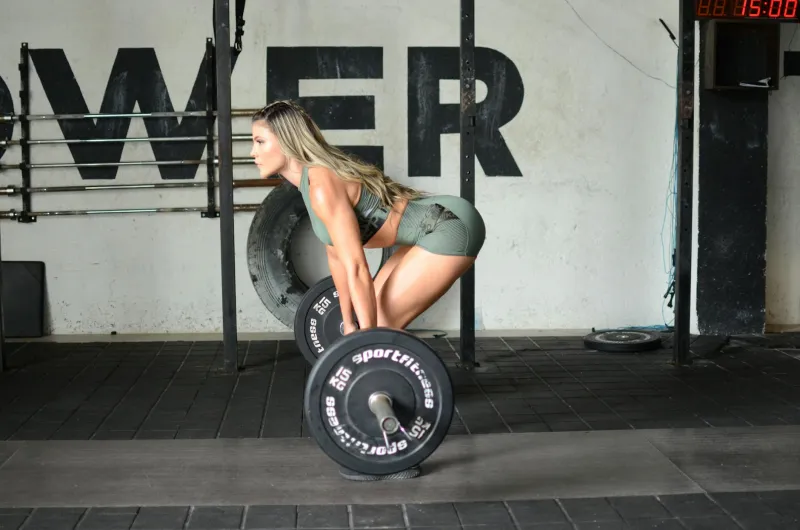
Deadlift Variations: Which to Choose and When to Use
The deadlift is one of the most powerful exercises a lifter can do. It trains the entire posterior chain - lower back, glutes, hamstrings, and even the upper back. But different variations bring different benefits. Let's examine them closely.
Conventional Deadlift
Technique
Stance:
- Hip-width (narrow)
- Toes slightly outward
- Bar against shins
Grip:
- Hands outside legs
- Mixed grip or double overhand
- Shoulders over or slightly in front of bar
Movement:
- Take the slack out
- Hips and shoulders rise together
- Bar travels close to body
- Lockout: hips forward, shoulders back
Muscles Involved
- Primary: Erector spinae, glutes
- Secondary: Hamstrings, traps, forearms
When to Use?
- Maximum strength and power
- Longer range of motion
- More posterior chain work
- Competition powerlifting
Who Should Use It?
- Lifters with longer arms
- Lifters with shorter legs
- Those with strong back extensors
- Those who prefer hip-dominant pulling
Sumo Deadlift
Technique
Stance:
- Very wide (1.5-2x shoulder width)
- Toes 45° outward
- Shins nearly vertical
Grip:
- Hands between legs
- Shoulders directly over bar
- More upright torso
Movement:
- Knees out ("spread the floor")
- Bar stays close to body
- Shorter range of motion
- Quick lockout
Muscles Involved
- Primary: Glutes, adductors, quadriceps
- Secondary: Erector spinae, traps
When to Use?
- Less lower back stress
- More quadriceps work
- Shorter range of motion
- Competition (if it suits your body)
Who Should Use It?
- Lifters with longer legs
- Lifters with shorter arms
- Those with good hip mobility
- Those with lower back issues
Romanian Deadlift (RDL)
Technique
Starting position:
- Feet hip-width apart
- Bar at hip level
- Knees slightly bent
Grip:
- Shoulder-width
- Double overhand
Movement:
- Hips back (hinge pattern)
- Bar travels down along legs
- Descend until feeling hamstring stretch
- Rise by driving hips forward
Muscles Involved
- Primary: Hamstrings, glutes
- Secondary: Erector spinae
When to Use?
- Hamstring development
- Eccentric work
- Learning hinge pattern
- Accessory to main deadlift
Who Should Use It?
- Anyone wanting to strengthen posterior chain
- For improving hip hinge
- Runners and athletes
Stiff-Leg Deadlift
Difference from RDL
- Knees completely straight
- Bar doesn't wrap around body
- Greater stretch effect
- More lower back work
Technique
- Stand upright, knees locked
- Lean forward, back straight
- Descend as low as mobility allows
- Return to start
When to Use?
- Combining stretch and strength
- Lower back strengthening
- For experienced lifters
Caution: High injury risk for beginners!
Trap Bar Deadlift (Hex Bar)
Technique
Stance:
- Stand inside the bar
- Hip-width
- Neutral grip
Grip:
- Neutral (palms in)
- High or low handle (depending on bar design)
Movement:
- Combine squat and deadlift movement
- More upright torso than conventional
- Shorter lever arm for lower back
Muscles Involved
- Primary: Quadriceps, glutes
- Secondary: Erector spinae, traps
When to Use?
- Beginners (simpler technique)
- Athletic strength training
- Less lower back stress
- Sprint power development
Who Should Use It?
- Beginners
- Athletes
- Lifters with lower back issues
- Those without access to straight bar
Deficit Deadlift
Technique
- Stand on 5-10 cm elevated platform
- Perform conventional deadlift
- Longer range of motion
When to Use?
- Developing starting strength
- Training weak points
- For advanced lifters
Who Should Use It?
- Those struggling to break bar off floor
- Longer ROM = more work
- Not for beginners
Block Pull / Rack Pull
Technique
- Bar elevated (typically knee height)
- Shorter range of motion
- Heavier weights possible
When to Use?
- Developing lockout strength
- Overload training
- Improving weak lockout
- Back and grip strengthening
Who Should Use It?
- Those with lockout problems
- Lifters with mobility issues (temporary solution)
- Getting accustomed to heavier weights
Single-Leg Deadlift
Technique
- Stand on one leg
- Lean forward, other leg rises behind
- Maintain balance
- Body forms straight line
When to Use?
- Balance development
- Unilateral strength training
- Athletic training
- Hip stabilizer strengthening
Who Should Use It?
- Athletes
- Lifters with balance issues
- For recovery and injury prevention
Choosing Variation by Goal
Maximum Strength
- Conventional deadlift - Gold standard
- Sumo - If it suits your body
- Block pulls - For lockout strength
Muscle Building
- Romanian deadlift - Hamstrings
- Sumo - Glutes and adductors
- Deficit pull - Greater ROM
Athletic Performance
- Trap bar - Explosive power (Swinton et al., 2011)
- Single-leg - Sport-specific
- Romanian - Posterior chain power
Beginners
- Trap bar - Simplest technique
- Romanian - Learning hinge pattern
- Conventional - After technique mastery
Recovery / Low Stress
- Trap bar - Less lower back load
- Romanian light - Active recovery
- Sumo - Less back stress
Programming Examples
Strength Program (4 weeks)
Weeks 1-2:
- Monday: Conventional deadlift 4x5 @75%
- Thursday: Romanian deadlift 3x8
Weeks 3-4:
- Monday: Conventional deadlift 5x3 @85%
- Thursday: Deficit deadlift 3x5 @70%
Hypertrophy Program (4 weeks)
Weeks 1-4:
- Monday: Sumo deadlift 4x8 @70%
- Thursday: Romanian deadlift 4x10
- Plus: Single-leg RDL 3x12 each side
Athletic Program
Weeks 1-4:
- Monday: Trap bar deadlift 5x3 @80% (speed)
- Thursday: Single-leg deadlift 3x8
Rotating Variations
Periodically
- 4-6 weeks one variation
- Then switch
- Maintain variety
Same Workout
- Main lift: Conventional/Sumo
- Accessory: Romanian/Deficit
Within Week
- Heavy day: Conventional/Sumo
- Light day: Romanian/Trap
Supplements for Deadlift Support
Pre-workout:
- Caffeine: Energy and focus
- beta-alanine: Endurance
- L-citrulline: Blood flow
Post-workout:
- protein powders: Muscle recovery
- Creatine monohydrate: Strength recovery
- Magnesium: Muscle relaxation
Conclusion
Each deadlift variation offers unique benefits:
| Variation | Best For |
|---|---|
| Conventional | Maximum strength, posterior chain |
| Sumo | Glutes, less back stress |
| Romanian | Hamstrings, hinge pattern |
| Trap bar | Beginners, athletes, safety |
| Deficit | Starting strength, ROM |
| Block pulls | Lockout strength, overload |
| Single-leg | Balance, sport-specificity |
Choose the variation according to your goals, body type, and experience. And don't be afraid to experiment!
MaxFit recommends: Support your deadlift training with creatine monohydrate for strength development and quality protein for muscle recovery.
References
- Bird, S., & Barrington-Higgs, B. (2010). Exploring the deadlift. Strength and Conditioning Journal, 32(2), 46-51.
- Escamilla, R.F., Francisco, A.C., Kayes, A.V., Speer, K.P., & Moorman, C.T. (2002). An electromyographic analysis of sumo and conventional style deadlifts. Medicine & Science in Sports & Exercise, 34(4), 682-688.
- Cholewicki, J., McGill, S.M., & Norman, R.W. (1991). Lumbar spine loads during the lifting of extremely heavy weights. Medicine & Science in Sports & Exercise, 23(10), 1179-1186.
- Swinton, P.A., Stewart, A., Agouris, I., Keogh, J.W., & Lloyd, R. (2011). A biomechanical analysis of straight and hexagonal barbell deadlifts using submaximal loads. Journal of Strength and Conditioning Research, 25(7), 2000-2009.
- McGuigan, M.R., & Wilson, B.D. (1996). Biomechanical analysis of the deadlift. Journal of Strength and Conditioning Research, 10(4), 250-255.
See also:
- Perfect Squat Form: Complete Guide to Proper Technique
- Complete Leg Day Guide: Exercises, Program, and Recovery
- Powerlifting Gyms in Estonia: Where to Train Squat, Bench and Deadlift
Browse our creatine selection at MaxFit.ee →


