
What Is Creatine Loading?
Creatine loading means consuming large doses (typically 20 g per day) over a short period (5–7 days) to saturate muscle creatine stores as quickly as possible. After the loading phase, the protocol shifts to a maintenance dose of 3–5 g per day.
The logic is straightforward: a large initial quantity fills muscle cell creatine stores much faster than a small daily amount.
The Biology Behind Loading
Muscle tissue stores creatine up to approximately 160 mmol per kilogram of dry muscle mass. At typical dietary intake levels, stores sit at around 60–80% of this maximum. Supplementation can fill the remaining capacity — the question is only how fast.
A meta-analysis (Lanhers et al., 2017) confirms that both protocols reach the same final outcome:
- Loading: complete saturation within 5–7 days
- Steady 3–5 g per day: complete saturation by weeks 3–4
Protocol Comparison
| Feature | Loading | Steady Maintenance |
|---|---|---|
| Initial dose | 20 g/day (4 × 5 g) | 3–5 g/day |
| Time to saturation | 5–7 days | 21–28 days |
| Final outcome | Same | Same |
| GI side-effect risk | Higher | Low |
| Short-term cost | Higher | Lower |
| Early results | Faster | Slower |
When to Choose Loading
Loading makes sense when:
- You have a hard deadline — a competition in two weeks, a key training block starting next week
- You want to feel a difference quickly — some athletes draw psychological motivation from early positive feedback
- You are an experienced user whose digestive system handles large doses well
Loading is NOT necessary when:
- You have time and no urgency to reach full saturation
- You have a sensitive digestive tract — 20 g per day is too much for many people
- You are a first-time user — starting low lets you assess tolerance before escalating
Applying the Loading Protocol
If you choose loading:
- Split into 4 doses: 5 g in the morning, 5 g before lunch, 5 g post-workout, 5 g in the evening
- Always take with food — significantly reduces GI distress
- Drink more water — creatine draws water into muscle cells; hydration needs increase
- After 5–7 days, switch to 3–5 g daily maintenance to sustain saturation
Product Recommendations from maxfit.ee
ICONFIT Creatine Monohydrate Unflavored 300g is a clean European-manufactured creatine and a solid everyday choice — economical and neutrally flavoured. Scitec Creatine Monohydrate 300g is a straightforward, reliably dissolving option. For those who prefer capsules (especially when travelling), 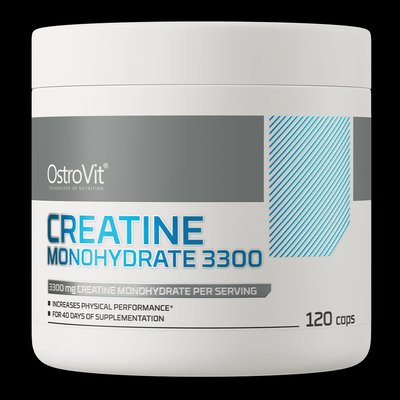 OstroVit Creatine Monohydrate€11.90 In stock 500 g (Lemon) offers convenient measured dosing. All are available in the creatine supplement category at maxfit.ee.
Creatine HCl vs. Monohydrate: Is the Premium Worth It?
Creatine hydrochloride (HCl) markets itself as a more soluble alternative requiring a smaller dose. The truth:
- Solubility: HCl is genuinely more soluble — it dissolves in less water
- Efficacy: research does not show HCl to be more effective at raising muscle creatine stores (Tallon & Child, 2007)
- Cost: HCl is significantly more expensive for the same end outcome
Bottom line: creatine monohydrate remains the gold standard. Other forms are largely marketing.
Timing Creatine Within a Training Cycle
For periodised training (e.g., a 12-week mass phase followed by a cut), a logical creatine strategy is:
- Start of mass phase: load for 5–7 days → maintain 5 g/day throughout the mass phase
- Start of cut: continue 5 g/day (creatine helps preserve lean mass in a caloric deficit)
- Planned break is not biologically necessary — muscle creatine will return to baseline within 3–4 weeks if supplementation stops
The Science Behind Creatine Saturation
The mechanism of creatine saturation is well understood. Phosphocreatine (PCr) is the primary energy source for high-intensity short-duration efforts. The more PCr available in muscle, the more ATP can be rapidly regenerated — and the longer an athlete can sustain high-intensity output before the glycolytic pathway must take over.
Loading logic is straightforward: fill muscle creatine stores to the maximum as quickly as possible to experience training performance improvements sooner.
What to Expect During the Loading Week
Most athletes experience the following during the loading phase:
- Body weight increases 1–2 kg (intramuscular water retention)
- Muscles look and feel fuller and more volumised
- Strength and performance improvements may be noticeable from the second workout onward
- Some athletes experience mild GI discomfort in the first few days, which typically resolves
These are all normal and expected responses to rapid creatine saturation.
Creatine Monohydrate vs. Other Forms: The Complete Comparison
| Form | Efficacy | Cost | Solubility | Verdict |
|---|---|---|---|---|
| Monohydrate | Excellent (gold standard) | Low | Good | Best overall value |
| HCl | Equivalent | High | Excellent | Useful for GI-sensitive users |
| Buffered (Kre-Alkalyn) | Equivalent | High | Good | Marketing advantage only |
| Ethyl ester | Inferior | High | Good | Not recommended |
| Liquid creatine | Inferior (breaks down) | High | N/A | Not recommended |
The data consistently supports creatine monohydrate as the most cost-effective and well-researched form. Creative marketing for premium forms rarely translates to superior results in controlled trials.
FAQ
Is weight gain during creatine loading normal?
Yes — and expected. Loading increases intramuscular water content by approximately 1–2 kg. This is not fat gain — it is water inside muscle cells, contributing to visible muscle fullness and supporting the phosphocreatine energy system.
Should I stop creatine when I have achieved my goals?
No biological reason compels you to. Long-term creatine use is safe (Antonio & Ciccone, 2013). On discontinuation, muscle creatine stores return to baseline over 3–4 weeks — and some strength and volume gains will decline with them.
Can creatine be used by under-18 athletes?
Creatine is generally safe for younger athletes who have completed growth. However, it is sensible to establish healthy nutrition and training foundations before adding supplements. Supplementation by minors should ideally involve parental awareness and, where relevant, medical guidance.
References
- Lanhers, C., Pereira, B., Naughton, G., Trousselard, M., Lesage, F. X., & Dutheil, F. (2017). Creatine supplementation and upper limb strength performance: A systematic review and meta-analysis. Sports Medicine, 47(1), 163–173.
- Antonio, J., & Ciccone, V. (2013). The effects of pre versus post workout supplementation of creatine monohydrate on body composition and strength. Journal of the International Society of Sports Nutrition, 10(1), 36.
- Tallon, M. J., & Child, R. (2007). Creatine monohydrate is superior to creatine ethyl ester for raising fasting serum creatine in healthy volunteers. Proceedings of the International Society of Sports Nutrition, 4(Suppl 1), P7.
- Greenhaff, P. L., Bodin, K., Söderlund, K., & Hultman, E. (1994). Effect of oral creatine supplementation on skeletal muscle phosphocreatine resynthesis. American Journal of Physiology, 266(5), E725–E730.