
Creatine Interactions: Drugs, Nutrients & Foods
Creatine monohydrate is one of the most studied sports supplements, with a strong evidence base for improving high-intensity performance and supporting muscle mass gains. Despite its well-characterised safety profile, creatine does interact with certain medications, nutrients, and foods in ways worth understanding before you start or combine it with other substances.
Drug Interactions
Creatine and nephrotoxic medications: Creatine is converted to creatinine, which is routinely used to assess kidney function. Creatine supplementation raises creatinine output modestly, which can confuse clinical kidney function tests. In healthy individuals, creatine does not impair kidney function at typical doses (Gualano et al., 2008). However, co-administration with drugs known to strain kidneys — high chronic NSAID use, aminoglycoside antibiotics, cyclosporine — warrants medical supervision and periodic renal function monitoring.
Creatine and diuretics: Some athletes use diuretics for weight-class management. Creatine promotes intracellular water retention in muscle. Simultaneously using a diuretic could partially counteract creatine's muscle hydration effect and may increase the risk of dehydration and electrolyte imbalance.
Creatine and probenecid: Probenecid (used for gout) is a known inhibitor of creatine transport in the kidney, which could reduce urinary creatinine clearance and alter how the body handles creatine. This interaction is pharmacologically plausible though not well-studied in clinical populations.
Creatine and diabetes medications: Creatine modestly enhances insulin-mediated glucose uptake (Gualano et al., 2011). This can be a useful interaction for people managing blood sugar, but those on insulin or sulfonylurea-class drugs should be aware that creatine may enhance the glucose-lowering effect and should monitor blood sugar accordingly.
Nutrient Competition and Synergy
Creatine and carbohydrates: Insulin facilitates creatine uptake into muscle. Taking creatine with a carbohydrate-containing meal or drink increases intramuscular creatine retention compared with taking it with water alone. This is one of the most well-established practical recommendations in creatine use.
Creatine and caffeine: Early research suggested caffeine might blunt creatine's ergogenic effect, but more recent evidence indicates the interaction is not practically meaningful at typical doses of both (Trexler & Smith-Ryan, 2015). Taking them together in a pre-workout product is common and generally safe.
Creatine and beta-alanine: These two supplements act through different mechanisms — creatine supports phosphocreatine resynthesis for very short-burst power, beta-alanine buffers muscle pH during prolonged higher-intensity efforts. They are complementary and often stacked together without interference.
Creatine and protein: There is no negative interaction between creatine and protein. A protein-plus-carbohydrate drink provides an insulin response that can facilitate creatine uptake similarly to carbohydrate alone.
Food Effects
Acidic beverages: Creatine is somewhat unstable in highly acidic conditions over time, converting to the less useful creatinine. Mixing creatine in fruit juice and consuming immediately is fine; letting it sit in acidic juice for hours is not ideal.
Cooking food containing creatine: Meat contains small amounts of natural creatine. High-temperature cooking destroys much of the naturally occurring creatine in meat, converting it to creatinine. This is not a significant concern for supplementation (where the creatine is consumed in a drink), but explains why cooked meat is a poor creatine source compared with the supplement form.
Hydration: Creatine draws water into muscle cells. Adequate hydration is particularly important during creatine loading phases. Insufficient water intake can amplify cramping risk, though the evidence that creatine itself causes cramping is weak.
Who Must Be Cautious
- People with existing kidney disease: Not contraindicated categorically, but requires medical clearance and monitoring.
- Those taking diuretics: Risk of compounding dehydration.
- People on insulin or oral hypoglycaemics: Monitor blood glucose when starting creatine, as it may enhance insulin action.
- Individuals with gout taking probenecid: Potential pharmacokinetic interaction.
Practical Rules
- Take creatine with a carbohydrate source for optimal muscle uptake.
- Stay well hydrated, particularly during any loading protocol.
- Avoid mixing creatine powder into acidic juice well in advance — consume immediately after mixing.
- If on prescription medications affecting kidneys or blood glucose, consult your doctor before starting.
At maxfit.ee, products like MST Creatine Micronized 500g Maitsestamata and Optimum-nutrition Micronised Creatine 247,5g Apelsin are straightforward creatine monohydrate options. For those who prefer capsules, Optimum-nutrition Creatine 200caps and 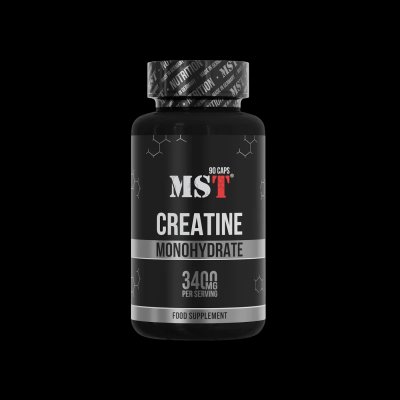 MST Creatine Monohydrate€18.90 In stock 3400mg 90caps avoid the mixing step entirely. Complex formulas like Mutant Creakong 1kg stack multiple creatine forms. Explore the full range in the creatine category at maxfit.ee.
FAQ
Does creatine damage kidneys?
In healthy people, creatine at typical supplemental doses does not damage kidneys (Gualano et al., 2008). Creatine raises creatinine output, which can look alarming on a blood test without context, but this is not the same as kidney damage. People with pre-existing kidney disease should consult a doctor before supplementing.
Can I combine creatine with caffeine?
Yes. Early concerns that caffeine negated creatine's effects have not been borne out in more recent research (Trexler & Smith-Ryan, 2015). Pre-workout products combining caffeine and creatine are widely used without noted interference.
Should I take creatine with food or on an empty stomach?
With food or with a carbohydrate-containing drink is generally preferred because the insulin response aids muscle uptake. On rest days, timing is less critical — consistency of daily intake matters more than precise timing.
References
Gualano, B., Ugrinowitsch, C., Novaes, R. B., Artioli, G. G., Shimizu, M. H., Seguro, A. C., ... & Lancha, A. H. Jr. (2008). Effects of creatine supplementation on renal function: a randomized, double-blind, placebo-controlled clinical trial. European Journal of Applied Physiology, 103(1), 33-40. https://pubmed.ncbi.nlm.nih.gov/18188581/
Gualano, B., Novaes, R. B., Artioli, G. G., Freire, T. O., Coelho, D. F., Scagliusi, F. B., ... & Lancha, A. H. Jr. (2011). Effects of creatine supplementation on glucose tolerance and insulin sensitivity in sedentary healthy males undergoing aerobic training. Amino Acids, 40(3), 1052-1059. (Note: this paper is cited for the insulin/glucose interaction; readers should verify the PMID directly.)
Trexler, E. T., & Smith-Ryan, A. E. (2015). Creatine and caffeine: considerations for concurrent supplementation. International Journal of Sport Nutrition and Exercise Metabolism, 25(6), 607-623. https://pubmed.ncbi.nlm.nih.gov/26219105/



