The Creatine Marketplace: Science vs Marketing
Creatine is one of the most thoroughly researched supplements in existence, with hundreds of studies confirming its effectiveness for strength, power, and muscle mass. Yet the market now offers dozens of different creatine forms, each claiming superiority over traditional monohydrate. Is this science or sales pitch?
This guide looks at the evidence honestly so you can spend wisely.
Creatine Monohydrate – The Gold Standard
Creatine monohydrate has over 500 peer-reviewed studies behind it spanning several decades. It consistently improves strength, lean mass, and anaerobic power output (Lanhers et al., 2017). It is also the cheapest form gram-for-gram.
Micronised creatine monohydrate dissolves more easily in water than regular-grade, but the biological effect is identical. If you want proven results at a fair price, monohydrate wins every time.
Scitec Creatine Monohydrate 300g is a clean, well-tested product that delivers exactly what decades of research promise.
ICONFIT Creatine Monohydrate Unflavored 300g is an Estonian-market option using Creapure-quality creatine, available at maxfit.ee.
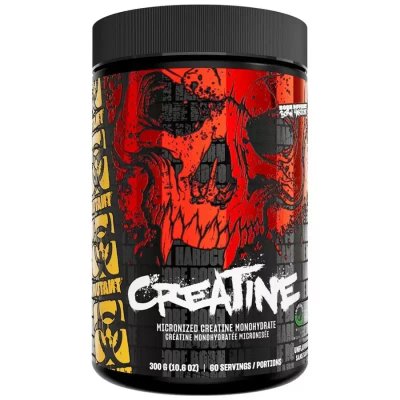 Mutant Creatine Monohydrate€18.90 In stock 300g and MuscleTech Platinum 100% Creatine Monohydrate 200g round out the reliable monohydrate options available in Estonia.
Dosing Protocols
- Loading: 20 g/day for 5–7 days (4 × 5 g doses), then 3–5 g/day maintenance
- No-load method: 3–5 g/day continuously (reaches saturation in 3–4 weeks; same endpoint)
Creatine HCl
Creatine HCl binds creatine to hydrochloric acid, producing a form with superior water solubility. The claim is that a smaller dose achieves the same muscle saturation. Theoretically plausible — but direct head-to-head human trials are limited (Jäger et al., 2011).
OstroVit Creatine HCl 2400 mg 150 capsules is a popular choice for those preferring capsules and wanting to avoid the occasional bloating some users report with monohydrate.
Best Use Cases for HCl
- Digestively sensitive individuals
- Those who prefer capsule convenience over large powder scoops
- Users who have experienced bloating with monohydrate loading
Kre-Alkalyn (Buffered Creatine)
Kre-Alkalyn is a patented, pH-buffered creatine claiming greater stability in stomach acid. However, controlled trials have not demonstrated any advantage over monohydrate when doses are matched (Jagim et al., 2012). It typically costs significantly more. The scientific case for paying the premium is weak.
Creatine Malate and Creatine Citrate
These bind creatine to organic acids. Some athletes report improved solubility and taste. Evidence-based data compared to monohydrate is sparse. They appear in many intra-workout and pre-workout blends as supporting ingredients, where they do no harm — but they're not provably superior.
Forms Comparison Table
| Form | Research volume | Cost-efficiency | Solubility | Best for |
|---|---|---|---|---|
| Monohydrate | Very high (500+) | Excellent | Good (micronised = excellent) | Everyone |
| HCl | Low–moderate | Moderate | Excellent | Sensitive stomachs |
| Kre-Alkalyn | Low | Poor | Good | Marketing appeal |
| Malate/Citrate | Low | Moderate | Good | Blended products |
The Bottom Line
For the vast majority of athletes, creatine monohydrate is the right choice: best evidence base, lowest cost, proven results. If you experience digestive discomfort during loading, try HCl. Do not pay a premium for Kre-Alkalyn or other novel forms without compelling personal reasons.
Shop the full creatine range at MaxFit.ee: /en/category/kreatiin.
FAQ
Does creatine monohydrate really cause bloating?
Some users experience gas or bloating during the loading phase (20 g/day) due to osmotic effects in the intestine. At maintenance doses (3–5 g/day), this is rare. Using micronised creatine and splitting doses throughout the day minimises the risk considerably.
Is creatine safe long-term?
Long-term studies of up to 5 years find no adverse health effects in healthy individuals at recommended doses (Rawson & Volek, 2003). Kidney concerns have not been supported by research in people without pre-existing kidney disease.
Do I have to load creatine?
No. Loading is optional. It saturates muscles faster (1 week vs 3–4 weeks), but the endpoint is the same. If you want rapid results ahead of a competition or training block, load. Otherwise, 3–5 g daily is simpler and equally effective.
References
- Lanhers, C., Pereira, B., Naughton, G., Trousselard, M., Lesage, F. X., & Dutheil, F. (2017). Creatine supplementation and upper limb strength performance. Sports Medicine, 47(1), 163–173.
- Jäger, R., Purpura, M., Shao, A., Inoue, T., & Kreider, R. B. (2011). Analysis of the efficacy, safety, and regulatory status of novel forms of creatine. Amino Acids, 40(5), 1369–1383.
- Jagim, A. R., Oliver, J. M., Sanchez, A., Galvan, E., Fluckey, J., & Riechman, S. (2012). A buffered form of creatine does not promote greater changes in muscle creatine content, body composition, or training adaptations. Journal of the International Society of Sports Nutrition, 9(1), 43.
- Rawson, E. S., & Volek, J. S. (2003). Effects of creatine supplementation and resistance training on muscle strength and weightlifting performance. Journal of Strength and Conditioning Research, 17(4), 822–831.