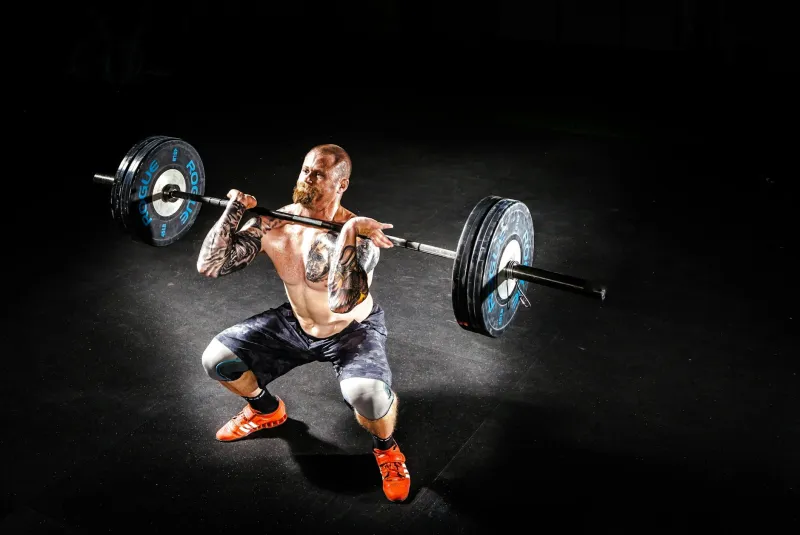
Creatine for Energy & Fatigue: Does It Help?
Creatine is one of the most extensively researched sports supplements in history. Yet many people still ask: does creatine for energy actually work, and can it help with fatigue? The answer requires understanding what creatine does — and does not do — at the cellular level.
Role in Energy Metabolism
Creatine is stored in muscle as phosphocreatine (PCr). When cells need ATP (the immediate energy currency) rapidly — such as during explosive lifts, sprints, or jumps — the creatine-phosphate system is the first to respond, transferring its phosphate group to ADP to regenerate ATP.
This system is fast but limited in duration. It supports maximal efforts lasting roughly 6–10 seconds before other energy pathways (glycolysis, oxidative phosphorylation) take over. Creatine supplementation increases the total muscle phosphocreatine pool, allowing these short, high-power bursts to last slightly longer and recover more quickly between efforts.
A landmark meta-analysis by Lanhers et al. (2017) confirmed that creatine supplementation significantly improved upper body muscle strength, validating its role in power output across many exercise types.
Evidence in Fatigue
The research on creatine and fatigue is more nuanced:
Exercise-related fatigue: strong evidence supports creatine reducing fatigue within intense training sessions. By replenishing PCr faster between sets, athletes can maintain higher performance throughout a session, which effectively reduces the performance degradation typical of repeated high-intensity efforts.
General or mental fatigue: more limited but emerging evidence suggests creatine may support brain energy metabolism. The brain also uses PCr as an energy buffer. A study by McMorris et al. (2007) found that creatine supplementation attenuated the detrimental effects of sleep deprivation on cognitive performance — suggesting some role in mental energy under stress conditions.
Fatigue in older adults and vegetarians: these groups tend to have lower baseline muscle creatine stores and may see more pronounced benefits from supplementation, including reduced fatigue during daily activities (Rawson & Venezia, 2011).
Who Is Likely to Respond?
Creatine responders versus non-responders is a real phenomenon. People who benefit most typically include:
- Those with lower baseline muscle creatine levels (e.g. vegetarians and vegans, who get minimal dietary creatine from meat and fish)
- People doing repeated high-intensity exercise (resistance training, HIIT, team sports)
- Older adults (who naturally have lower phosphocreatine reserves)
Aerobic endurance athletes (e.g. marathon runners) see smaller direct benefits, as the PCr system contributes less to aerobic exercise at moderate intensity. That said, creatine may still help with sprint efforts and late-race acceleration.
Dose
The most researched and practical dosing approach is maintenance dosing: around 3–5 g of creatine monohydrate per day, taken consistently. A loading phase (around 20 g/day split into 4–5 doses for 5–7 days) saturates muscle stores faster but produces the same end result as gradual loading over 3–4 weeks.
MST Creatine Micronized 500g Maitsestamata provides finely milled monohydrate for fast dissolution. Scitec Creatine Monohydrate 300g is a straightforward, single-ingredient option. For those who prefer capsules, Optimum-nutrition Creatine 200caps and 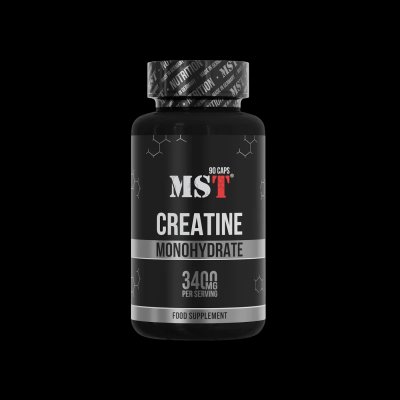 MST Creatine Monohydrate€18.90 In stock 3400mg 90caps are convenient. BIOTECHUSA Crea ZERO 320g Apelsin is flavoured for those who like a taste.
Browse the full creatine range at maxfit.ee/et/category/kreatiin-monohudraat and maxfit.ee/et/category/kreatiin-kapslites.
Realistic Expectations
Creatine is not a stimulant. It will not give you an immediate energy buzz like caffeine. Its effects are cumulative: after 2–4 weeks of consistent dosing, your muscles hold more phosphocreatine, your performance in high-intensity exercise improves, and your ability to sustain quality training over a session is better.
What creatine will not do:
- Replace adequate sleep or address underlying health-related fatigue.
- Significantly help with low-intensity exercise (walking, gentle yoga).
- Produce dramatic effects in people who already have highly optimised training and diet.
Creatine is best viewed as a modest, consistent performance enhancer — one of the few supplements with robust evidence across diverse populations.
References
Lanhers, C., et al. (2017). Creatine supplementation and upper limb strength performance: a systematic review and meta-analysis. Sports Medicine, 47(1), 163–173. https://pubmed.ncbi.nlm.nih.gov/27328852/
McMorris, T., et al. (2007). Effect of creatine supplementation and sleep deprivation, with mild exercise, on cognitive and psychomotor performance, mood state, and plasma concentrations of catecholamines and indoleamines. Journal of Sports Sciences, 25(14), 1597–1608.
Rawson, E.S., & Venezia, A.C. (2011). Use of creatine in the elderly and evidence for effects on cognitive function in young and old. Amino Acids, 40(5), 1349–1362. https://pubmed.ncbi.nlm.nih.gov/21394604/
FAQ
Does creatine give you an energy boost like caffeine?
No, creatine is not a stimulant. Its energy-related effects are cellular and accumulate over weeks of consistent use — improving performance capacity rather than providing an immediate buzz.
How long does creatine take to work for energy and fatigue?
With a loading phase, benefits may appear within 5–7 days. Without loading (3–5 g daily), expect around 3–4 weeks for full saturation and noticeable performance benefits.
Can vegetarians and vegans benefit more from creatine?
Yes. Since creatine is found primarily in meat and fish, people who avoid these foods typically have lower baseline muscle creatine stores and often experience more pronounced responses to supplementation.



