
Collagen for Weight Management: Does It Work?
Collagen has moved from skin-care shelves to weight management conversations. Proponents argue that this protein supplement can curb appetite, preserve muscle during a calorie deficit, and even boost metabolism. The reality, as usual, is more nuanced.
What Is Collagen and Why Does It Come Up in Weight Management?
Collagen is the most abundant structural protein in the human body, making up tendons, skin, cartilage, and connective tissue. Supplement forms are typically hydrolysed — broken into smaller peptides for better absorption. Because it is a protein, it naturally fits into discussions around satiety and muscle maintenance, two pillars of effective weight management.
Products like OstroVit Collagen + Vitamin C 400g Ananass and MST Fish collagen + Verisol 500ml Metsik kirss are among the collagen options available at maxfit.ee, often combined with vitamin C to support synthesis.
Proposed Mechanisms
Several pathways are proposed for how collagen peptides might support weight management:
- Satiety: Protein in general stimulates gut hormones that signal fullness. Collagen is high in glycine, proline, and hydroxyproline — amino acids that may have distinct effects on appetite compared with whey.
- Muscle preservation: During a calorie deficit, maintaining lean mass is critical for keeping resting metabolism up. As a protein source, collagen contributes to overall daily protein intake.
- Joint support: Indirect benefit — if collagen supplementation helps reduce joint discomfort during exercise, it may allow more consistent training (Zdzieblik et al., 2017).
Honest Look at the Evidence
The direct evidence for collagen as a weight management tool is modest. A randomised controlled trial by Rubio et al. (2008) found that participants consuming a specific collagen hydrolysate reported greater satiety than those receiving an equivalent dose of casein or soy protein. However, this was an industry-sponsored study and the effect sizes were small.
A 2020 review by Shaw et al. noted that collagen peptide supplementation combined with resistance training showed benefits for fat-free mass retention, but most of the effect was attributable to the protein content and training, not collagen specifically (Shaw et al., 2020).
Crucially, no large-scale, long-term RCT has demonstrated that collagen supplementation causes meaningful independent weight loss compared with an isocaloric, isonitrogenous control.
Effect Sizes: What You Can Realistically Expect
If collagen contributes to weight management at all, the mechanism is most likely through its role as a protein source increasing satiety and supporting muscle retention — not through any unique fat-burning property. The effect is therefore indistinguishable from any other adequate protein intake.
ICONFIT Beauty Collagen Sidrun-laim 300g and 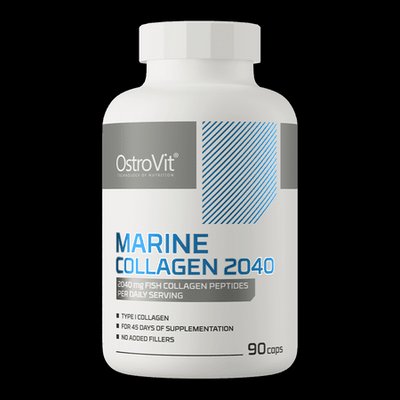 OstroVit Marine Collagen€13.90 In stock 2040mg 90caps are popular choices, but their contribution to a calorie-deficit programme is largely that of any protein supplement.
Realistic Expectations
Collagen is not a weight loss supplement in the pharmacological sense. Expecting it to drive fat loss independently is unrealistic. It can, however, play a supporting role:
- It adds variety to protein intake, particularly for those who prefer unflavoured or lightly flavoured options.
- It may support joint and connective tissue health during periods of increased exercise, helping adherence.
- As part of an adequate total daily protein target, it contributes to satiety and lean mass preservation.
Better Levers for Weight Management
If weight management is your goal, the evidence strongly favours these over any single supplement:
- Adequate total protein intake — sufficient daily protein is the most robust dietary lever for satiety and muscle preservation during a deficit.
- Calorie awareness — a consistent, moderate calorie deficit driven by whole-food dietary patterns.
- Resistance training — preserves muscle mass during fat loss and keeps resting metabolism higher.
- Sleep and stress management — both significantly affect appetite-regulating hormones.
Collagen can sit alongside these pillars, but it should not replace them.
References
Rubio, I. G., Castro, G., Zanini, A. C., & Medeiros-Neto, G. (2008). Oral ingestion of a hydrolyzed gelatin meal in subjects with normal weight and in obese patients: postprandial effect on circulating gut peptides, glucose and insulin. Eating and Weight Disorders, 13(1), 48–53. https://pubmed.ncbi.nlm.nih.gov/18319637/
Shaw, G., Lee-Barthel, A., Ross, M. L., Wang, B., & Burke, L. M. (2017). Vitamin C-enriched gelatin supplementation before intermittent activity augments collagen synthesis. The American Journal of Clinical Nutrition, 105(1), 136–143. https://pubmed.ncbi.nlm.nih.gov/27852613/
Zdzieblik, D., Oesser, S., Baumstark, M. W., Gollhofer, A., & Konig, D. (2017). Collagen peptide supplementation in combination with resistance training improves body composition and increases muscle strength in elderly sarcopenic men. The British Journal of Nutrition, 114(8), 1237–1245.
FAQ
Does collagen help with weight loss?
Not directly. Collagen is a protein source, and as such it may contribute to satiety and muscle preservation during a calorie deficit. However, there is no strong evidence that collagen has unique fat-burning properties compared with other protein sources.
How much collagen should I take daily?
Most studies use doses in the range of 10–15 g per day of hydrolysed collagen. Product labels for specific MaxFit products specify per-serving amounts; follow those and account for collagen as part of your total daily protein target.
Is collagen better than whey protein for weight management?
No head-to-head evidence strongly favours one over the other for weight management. Whey protein has more research behind it for muscle protein synthesis. Collagen is a useful complement, particularly if you are targeting joint health alongside body composition goals.



