
Two Different Proteins, Two Different Purposes
Collagen and whey protein are both popular protein supplements, but many people don't realise they serve completely different functions in the body. Whey protein is optimised for muscle growth, while collagen primarily supports connective tissues — joints, tendons, cartilage, and skin. Understanding the difference helps you choose the right product.
Whey Protein — The Muscle-Building Staple
Whey protein contains all 9 essential amino acids at high concentrations, particularly leucine — the primary trigger of protein synthesis. This makes whey protein highly effective for building and maintaining muscle mass.
Whey protein amino acid profile:
- Leucine: ~10–11% (very high)
- Isoleucine: ~6%
- Valine: ~5%
- All 9 essential amino acids represented
- DIAAS score: 1.0–1.25
Whey protein activates the mTOR pathway, which initiates protein synthesis in muscle cells. This has been confirmed in numerous studies (Tang et al., 2009).
Scitec 100% Whey Protein Professional 2350g Coconut and MyProtein Impact Whey Protein 1 kg Strawberry Cream are excellent choices for muscle support. Browse the dairy protein range at maxfit.ee.
Collagen — The Connective Tissue Builder
Collagen is the most abundant protein in the body — making up about 30% of all body proteins. It is the primary structural protein in connective tissues, cartilage, tendons, skin, and bones.
Collagen amino acid profile:
- Glycine: ~33% (very high)
- Proline: ~11%
- Hydroxyproline: ~10%
- Lacks tryptophan — therefore not a complete protein
- DIAAS score: 0 (incomplete)
Collagen is unsuitable for building muscle mass precisely because it lacks tryptophan and has low leucine content. However, collagen has its own strength: glycine and proline are essential for collagen resynthesis in the body.
OstroVit Collagen + Vitamin C 400g Pineapple, 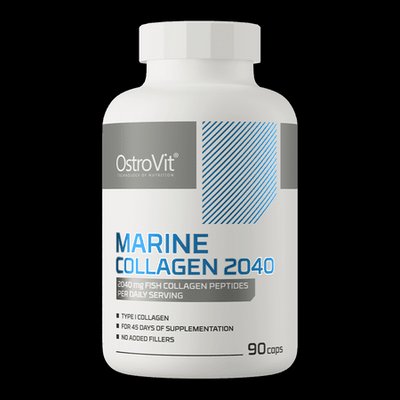 OstroVit Marine Collagen€13.90 In stock 2040mg 90 Capsules, and Fish Collagen MST + Verisol 500 ml Wild Cherry are popular collagen products at maxfit.ee. Browse the collagen range.
Comparison Table: Collagen vs Whey Protein
| Feature | Whey Protein | Collagen |
|---|---|---|
| Complete protein | Yes | No (lacks tryptophan) |
| DIAAS score | 1.0–1.25 | 0 |
| Leucine content | Very high (~10%) | Low (~0.9%) |
| Muscle growth support | Excellent | Poor |
| Joint support | Moderate | Excellent |
| Tendon/cartilage support | Moderate | Excellent |
| Skin elasticity | Moderate | Good |
| Digestibility | 90–95% | High (as hydrolysate) |
| Flavouring | Good | Neutral |
| Price | Low–medium | Medium–high |
The Science on Collagen
Recent research has given collagen's use by athletes a clearer scientific basis. A study by Shaw et al. (2017) showed that 15 g of hydrolysed collagen taken with vitamin C before exercise significantly increased collagen synthesis in cartilage and promoted tendon healing.
Whey protein cannot achieve this effect — whey amino acids are directed primarily to muscle, not cartilage.
Who benefits from collagen:
- Runners with knee problems
- Upper-body weightlifters with shoulder or elbow issues
- Those wanting to support skin rejuvenation
- Older athletes whose cartilage recovery rate has slowed
Why Use Both?
From an optimal sports nutrition perspective, whey protein and collagen are complementary, not competing products:
- Whey protein: before/after training for muscle mass support
- Collagen: before training with vitamin C for connective tissue support
This combination is especially beneficial for athletes experiencing joint problems or wanting to prevent overuse injuries.
Summary
Whey protein is the best choice for building muscle mass. Collagen is a unique tool for supporting joints, cartilage, and connective tissue. Many athletes benefit from combining both. Find the best products at maxfit.ee.
FAQ
Does collagen replace whey protein?
No. Collagen is not a complete protein and does not effectively stimulate muscle mass growth. It is a specific connective tissue support protein. For muscle growth, you must use whey protein or other complete amino acid profile protein sources.
Does collagen help with joint pain?
Several clinical studies show that hydrolysed collagen reduces joint pain and improves cartilage health, especially with advancing age (Bello & Oesser, 2006). It doesn't replace medical treatment, but serves as good supplementary support.
Which collagen is best?
Hydrolysed collagen (collagen hydrolysate) absorbs better than regular collagen capsules, as it has been pre-treated enzymatically into smaller peptides.
References
- Tang, J. E., Moore, D. R., Kujbida, G. W., Tarnopolsky, M. A., & Phillips, S. M. (2009). Ingestion of whey hydrolysate, casein, or soy protein isolate: effects on mixed muscle protein synthesis at rest and following resistance exercise in young men. Journal of Applied Physiology, 107(3), 987–992.
- Shaw, G., Lee-Barthel, A., Ross, M. L., Wang, B., & Baar, K. (2017). Vitamin C–enriched gelatin supplementation before intermittent activity augments collagen synthesis. American Journal of Clinical Nutrition, 105(1), 136–143.
- Bello, A. E., & Oesser, S. (2006). Collagen hydrolysate for the treatment of osteoarthritis and other joint disorders. Current Medical Research and Opinion, 22(11), 2221–2232.
- Dressler, P., Gehring, D., Zdzieblik, D., Oesser, S., Gollhofer, A., & König, D. (2018). Improvement of functional ankle properties following supplementation with specific collagen peptides in athletes with chronic ankle instability. Journal of Sports Science & Medicine, 17(2), 298–304.
- Boirie, Y., Dangin, M., Gachon, P., Vasson, M. P., Maubois, J. L., & Beaufrère, B. (1997). Slow and fast dietary proteins differently modulate postprandial protein accretion. Proceedings of the National Academy of Sciences, 94(26), 14930–14935.