
Collagen for Vegans and Vegetarians: A Practical Guide
Collagen is the most abundant protein in the human body and a structural component of skin, tendons, ligaments, cartilage, and bone. Conventional collagen supplements are derived from animal sources — primarily bovine hide, fish skin, or porcine by-products — making them unsuitable for vegans and many vegetarians. This article explains why collagen for vegans requires a different strategy, what plant-based diets may lack, and how to effectively support collagen synthesis without animal-derived products.
Why Plant-Based Diets May Fall Short
Collagen itself is an animal-derived protein. No plant contains collagen. The vegan challenge is not finding a plant source of collagen — there is none — but rather ensuring the body has the raw materials to synthesise its own collagen at an adequate rate.
Collagen is built primarily from three amino acids: glycine, proline, and hydroxyproline. Glycine and proline are non-essential (the body can synthesise them), but under conditions of high collagen demand — such as heavy training, recovery from injury, or ageing — endogenous synthesis may be insufficient. Plant-based eaters who rely mainly on legumes and grains tend to get less glycine than those eating meat and fish, since glycine is particularly abundant in connective tissue-rich animal products (Razak et al., 2017).
Vitamin C is the other critical factor. It is a cofactor for prolyl hydroxylase, which cross-links nascent collagen chains. Without adequate vitamin C, newly formed collagen strands cannot be properly assembled. Plant-based eaters typically have good vitamin C intake from fruits and vegetables, but athletes in heavy training may have higher requirements.
Vegan-Friendly Sources and Strategies
Targeted amino acid supplementation. Glycine supplements derived from plant sources (fermentation) are available and provide the limiting amino acid in collagen synthesis. Some products combine glycine with proline and vitamin C in a collagen-booster formula.
Vitamin C — non-negotiable. Vitamin C from food (citrus, kiwi, berries, bell peppers) or supplementation should be adequate. Supplementing around the timing of connective tissue loading (before exercise) enhances collagen synthesis, as shown by Shaw et al. (2017) using a vitamin C-enriched gelatin model.
Silicon. Dietary silicon from oats, root vegetables, and green beans is a cofactor for collagen biosynthesis, though evidence for supplemental silicon is less established than for vitamin C or glycine.
Joint and cartilage support complexes. Some products formulated for connective tissue health include plant-sourced glucosamine (derived from fungi rather than crustaceans), MSM, and hyaluronic acid — all potentially vegan, though label verification is needed.
Dose Targets
For collagen synthesis support, the most evidence-consistent approach is:
- A glycine-rich supplement or glycine-containing food protein (soy protein has a reasonably good glycine content) providing adequate total glycine intake.
- Vitamin C consumed in the 30–60 minutes before a training session that stresses connective tissue.
Exact glycine targets for vegans are not well established in controlled trials; the general dietary intake recommendation is to ensure overall protein and specific amino acid adequacy through food variety and supplementation where gaps exist.
What to Combine
For vegan athletes, a practical collagen-support stack might include:
- Vitamin C (from diet or a supplement such as
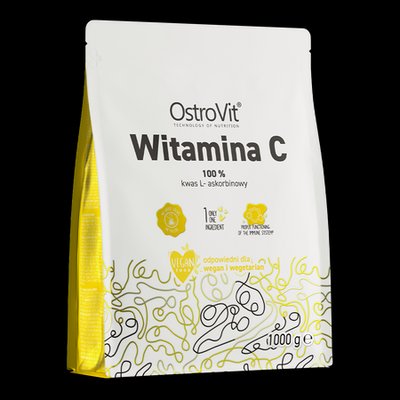 OstroVit Vitamin C€14.90 In stock 500g — check the label for vegan certification)
 - A joint support complex such as SELF Joint Cartilage 120caps or ICONFIT Capsules Joint N90 (verify vegan status per label)
- Zinc and copper (needed for collagen cross-linking enzymes) — typically covered by a plant-based multivitamin
Browse the full collagen category at /en/category/kollageen and joint complexes at /en/category/kompleksid-liigestele-koolustele-ja-kohredele. Also available at maxfit.ee is OstroVit Collagen + Vitamin C 400g Ananass, which packages collagen and its key cofactor together.
Choosing a Vegan Product
When selecting a collagen-support product as a vegan, check:
- Source declaration. Does the product state the source of each ingredient? Glucosamine from crustaceans is not vegan; glucosamine from fungi is.
- Certifications. Vegan Society certification or a certified vegan logo on the label provides assurance.
- Collagen-booster vs collagen. Some products are marketed as "vegan collagen" but are actually collagen-synthesis support products (glycine + vitamin C + cofactors). This is correct and functional — the framing can be misleading, but the product rationale is sound.
- Avoid marine collagen and bovine collagen — these are unambiguously animal-derived.
References
Razak, M. A., Begum, P. S., Viswanath, B., & Rajagopal, S. (2017). Multifarious beneficial effect of nonessential amino acid, glycine: a review. Oxidative Medicine and Cellular Longevity, 2017, 1716701. https://pubmed.ncbi.nlm.nih.gov/28337245/
Shaw, G., Lee-Barthel, A., Ross, M. L., Wang, B., & Baar, K. (2017). Vitamin C-enriched gelatin supplementation before intermittent activity augments collagen synthesis. American Journal of Clinical Nutrition, 105(1), 136-143. https://pubmed.ncbi.nlm.nih.gov/27852613/
McAlindon, T. E., LaValley, M. P., Gulin, J. P., & Felson, D. T. (2000). Glucosamine and chondroitin for treatment of osteoarthritis: a systematic quality assessment and meta-analysis. JAMA, 283(11), 1469-1475. https://pubmed.ncbi.nlm.nih.gov/10732937/
FAQ
Is there such a thing as vegan collagen?
True collagen is always animal-derived. What is marketed as "vegan collagen" is usually a combination of amino acids and cofactors (glycine, vitamin C, zinc) designed to support the body's own collagen production. This is a legitimate and evidence-informed strategy, even if the naming is imprecise.
Can vegans support joint health effectively without animal collagen?
Yes. Ensuring adequate vitamin C, glycine, zinc, and overall protein intake supports endogenous collagen synthesis. Vegan-certified glucosamine (fungal source) and MSM are additional options for joint support that do not require animal-derived ingredients.
Do plant-based athletes need more collagen support than meat-eaters?
Not necessarily more in absolute terms, but the dietary pathway is different. Meat-eaters passively consume significant glycine from connective tissue cuts and bone broth. Plant-based athletes need to be more deliberate about ensuring glycine and vitamin C from food or supplementation.



