
Collagen Myths vs Facts
Collagen supplements — powders, liquids, and capsules — have become one of the fastest-growing segments in sports nutrition and beauty. Sales pitches promise everything from wrinkle reversal to tendon repair and muscle building. The reality is more nuanced. Here we assess the three most common collagen myths against what the published science actually supports.
Common Myths
Myth 1: Oral Collagen Is Just Digested Into Random Amino Acids
This was the dominant sceptical view for many years, and it has a biological basis — collagen is indeed broken down in the gut. However, research has shown this view is incomplete. When hydrolysed collagen is ingested, specific dipeptides (particularly Pro-Hyp and Hyp-Gly) survive digestion, enter the bloodstream, and accumulate in skin tissue. These peptides have been shown to stimulate fibroblast activity in cell culture studies and have been detected in human plasma after oral supplementation (Shigemura et al., 2009).
This does not mean oral collagen is a perfect substitute for in-situ collagen, but it does mean absorption is not as passive as the myth suggests.
Myth 2: Collagen Builds Muscle Like Whey Protein
Collagen protein has a very different amino acid profile from whey. It is rich in glycine, proline, and hydroxyproline, but it is low in leucine and has no tryptophan — making it a poor muscle protein synthesis driver by standard metrics. A randomised trial comparing collagen peptides with whey protein during a resistance training programme found that whey produced significantly greater improvements in fat-free mass (Oikawa et al., 2020).
For connective tissue — tendons, ligaments, cartilage — collagen's amino acid profile is better matched to the tissue composition. Here the evidence is more favourable, with studies suggesting collagen supplementation combined with vitamin C and exercise loading may support tendon and ligament recovery.
Myth 3: More Collagen = Better Skin
The relationship between collagen dose and skin outcomes is not linear. A meta-analysis of randomised controlled trials found that oral collagen peptides improved skin hydration and elasticity versus placebo (de Miranda et al., 2021), but the studies used widely varying doses. Whether a 20 g dose is twice as effective as a 10 g dose has not been established. Habitual vitamin C intake, sun protection, and overall diet quality appear to modulate outcomes at least as much as supplement dose.
What the Evidence Actually Shows
- Skin hydration and elasticity: Meaningful improvement supported by multiple RCTs — effect size modest but real, particularly for adults above age 35.
- Tendon and ligament support: Promising early evidence; specialised collagen sources such as gelatin combined with vitamin C before loading exercise may enhance connective tissue synthesis. Evidence is less mature than for skin.
- Joint pain in osteoarthritis: Some trials show modest pain reduction with hydrolysed collagen, though effect sizes are small and not all trials are positive.
- Muscle building: Not supported as a primary protein source. Collagen supplements can complement whey to meet total protein targets in athletes with high glycine/proline demand for connective tissue repair.
Marketing Claims vs Reality
| Claim | Evidence Level |
|---|---|
| Improves skin hydration | Moderate (multiple RCTs) |
| Reduces joint pain | Weak-moderate (mixed trial results) |
| Builds muscle | Not supported (inferior amino acid profile) |
| Repairs tendons | Promising but limited evidence |
| Reverses wrinkles | Overstated — improvement modest, not reversal |
Grey Areas
Source matters more than marketing suggests. Marine collagen (fish-derived) has higher bioavailability of some peptides compared to bovine, though both provide the relevant Pro-Hyp dipeptides. Products like MST Fish collagen + Verisol 500ml Metsik kirss use specific patented peptide technologies with independent trial data. 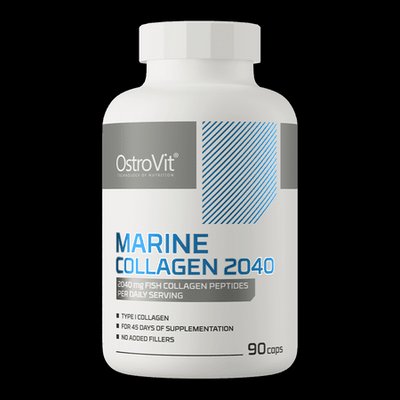 OstroVit Marine Collagen€13.90 In stock 2040mg 90caps offers a convenient capsule option.
Bovine collagen such as in MST Collagen for joints Fortigel 500ml Ananass uses a patented collagen peptide backed by independent RCT data for joint-specific applications.
ICONFIT Beauty Collagen Sidrun-laim 300g and OstroVit Collagen + Vitamin C 400g Ananass both combine collagen with vitamin C, reflecting the established cofactor relationship.
Explore the full range at maxfit.ee/et/category/kollageen or shark cartilage alternatives at /et/category/hai-kohr.
Bottom Line
Collagen supplements are neither a miracle nor a scam. For skin and joint applications, there is credible evidence of modest benefits from hydrolysed collagen, particularly with vitamin C co-supplementation. For muscle building, whey or plant protein remain far superior choices. Realistic expectations aligned with the actual evidence are the most productive framing when choosing a collagen product.
FAQ
Does the source of collagen (marine vs bovine) matter?
Both provide relevant dipeptides, but marine collagen tends to have smaller peptide fragments that may be absorbed more readily. For skin and joint applications, the specific peptide technology (as in VERISOL or FORTIGEL) may matter more than the species source. Vegans should note that plant-based collagen does not exist — plant products labelled as supporting collagen are providing collagen cofactors (vitamin C, zinc, glycine), not collagen itself.
When is the best time to take collagen?
For connective tissue applications, some researchers suggest taking hydrolysed collagen with vitamin C roughly 60 minutes before exercise to maximise the exercise-stimulated collagen synthesis window. For skin benefits, the timing is less established — consistent daily intake matters more than exact timing.
How long before collagen shows results?
Skin trials typically run 8–12 weeks to measure hydration and elasticity changes. Joint trials often run 3–6 months. Collagen is not a fast-acting supplement.
References
Shigemura, Y., Iwai, K., Morimatsu, F., Iwamoto, T., Mori, T., Oda, C., ... & Sato, K. (2009). Effect of prolyl-hydroxyproline (Pro-Hyp), a food-derived collagen peptide in human blood, on growth of fibroblasts from mouse skin. Journal of Agricultural and Food Chemistry, 57(2), 444–449. https://pubmed.ncbi.nlm.nih.gov/19128041/
de Miranda, R. B., Weimer, P., & Rossi, R. C. (2021). Effects of hydrolyzed collagen supplementation on skin aging: a systematic review and meta-analysis. International Journal of Dermatology, 60(12), 1449–1461.
Oikawa, S. Y., Kamal, M. J., Webb, E. K., McGlory, C., Baker, S. K., & Phillips, S. M. (2020). Whey protein but not collagen peptides stimulate acute and longer-term muscle protein synthesis with and without resistance exercise in healthy older women. American Journal of Clinical Nutrition, 111(3), 708–718. https://pubmed.ncbi.nlm.nih.gov/31919527/



