
Collagen for Energy & Fatigue: Does It Help?
Collagen is best known as the structural protein that supports skin, joints, and connective tissue — but a growing number of people are using it with an eye toward energy and fatigue. The connection is more indirect than supplement marketing often implies, but there are genuine mechanisms worth understanding.
Collagen's Role in Energy Metabolism
Collagen does not function as a direct energy source in the way carbohydrates or fats do. However, it contributes to energy metabolism through several indirect pathways:
Glycine and mitochondrial function. Glycine is the most abundant amino acid in collagen, making up roughly one-third of its amino acid content. Glycine is a component of haem (the oxygen-carrying moiety of haemoglobin), participates in the synthesis of creatine (the muscle's primary short-duration energy buffer), and plays a role in mitochondrial membrane integrity. Adequate glycine availability supports these functions.
Connective tissue integrity and exercise capacity. Fatigue during physical activity can be driven partly by connective tissue limitations — tendon stiffness, joint discomfort, and cartilage resilience all affect how hard and how long you can train. Collagen supplementation has shown benefits for joint pain and tendon recovery (Shaw et al., 2017), which may indirectly improve energy availability by allowing more consistent training.
Proline and hydroxyproline in gut health. Emerging research suggests that glycine and proline — the principal amino acids in collagen peptides — may support gut barrier integrity. A compromised gut barrier is associated with low-grade systemic inflammation, which in turn can manifest as chronic fatigue. This remains a plausible but not yet well-established pathway for collagen's potential fatigue-modulating effect.
Evidence in Fatigue
Direct, high-quality RCT evidence for collagen specifically reducing fatigue or improving energy in healthy adults is limited. Most research on collagen focuses on joints, skin, and gut, rather than fatigue per se.
There is some evidence that glycine, the dominant amino acid in collagen, can improve sleep quality. A study by Bannai et al. (2012) found that glycine supplementation before sleep significantly improved subjective sleep quality, reduced fatigue the following day, and improved daytime sleepiness as measured by objective tests. Since poor sleep is a primary driver of daytime fatigue, collagen's glycine content may support energy indirectly through this pathway.
Among specific populations, individuals recovering from surgery or illness (who commonly experience fatigue alongside tissue wasting) have shown faster recovery with collagen protein supplementation in some studies, though this involves a context where tissue synthesis demand is very high.
Who Is Likely to Respond
Collegen for energy and fatigue is most likely to be beneficial for:
- People whose fatigue is partly related to poor sleep — via the glycine content
- Active individuals with joint or tendon discomfort that limits their training consistency and thereby their energy levels
- People who eat little meat or connective-tissue-rich food, who may have chronically low glycine intake relative to their protein intake (since muscle meat is high in methionine and low in glycine)
- Older adults in whom collagen synthesis declines with age, and who may find joint comfort improvements enable more physical activity
For someone who sleeps well, trains without joint issues, and eats varied whole-food sources of protein including connective tissue, the energy benefit of collagen supplementation is likely minimal.
Dose
For joint and tendon benefits, the most commonly studied dose in RCTs is in the range of 5–15 g of collagen peptides per day, taken alongside vitamin C to support hydroxylation of proline and lysine in new collagen (Shaw et al., 2017). For glycine's sleep effects, the study by Bannai et al. (2012) used a standalone glycine dose, though collagen provides significant glycine as well.
Products like MST Collagen for joints Fortigel 500ml Ananass (liquid collagen with Fortigel-patented peptides), OstroVit Collagen + Vitamin C 400g Ananass (combined with vitamin C for optimal synthesis support), ICONFIT Beauty Collagen Sidrun-laim 300g, and 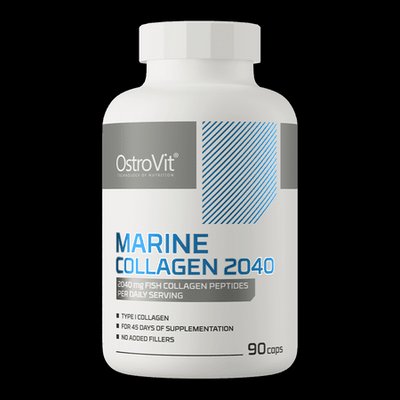 OstroVit Marine Collagen€13.90 In stock 2040mg 90caps are available in the collagen category at maxfit.ee.
For joint-specific support, MST Flex Pro Mango-passionvilja 300g and MST Chondroitin Glucosamine MSM + HA 90tabs from the joint complexes category combine collagen-compatible ingredients for connective tissue.
Realistic Expectations
Be honest with yourself about what you are treating. Collagen will not replace sleep, fix anaemia, treat thyroid dysfunction, or overcome the fatigue of overtraining. These require their own interventions.
What collagen may offer:
- Gradual improvement in joint comfort over 8–12 weeks of consistent supplementation
- Possible modest improvement in sleep quality via glycine, which may reduce morning fatigue
- Indirect support for training consistency if joint issues were previously limiting activity
Collagen is a slow-acting structural supplement, not an acute energy booster. Set expectations for a 2–3 month trial before drawing conclusions.
References
Shaw, G., Lee-Barthel, A., Ross, M. L., Wang, B., & Baar, K. (2017). Vitamin C-enriched gelatin supplementation before intermittent activity augments collagen synthesis. American Journal of Clinical Nutrition, 105(1), 136–143. https://pubmed.ncbi.nlm.nih.gov/27852613/
Bannai, M., Kawai, N., Ono, K., Nakahara, K., & Murakami, N. (2012). The effects of glycine on subjective daytime performance in partially sleep-restricted healthy volunteers. Frontiers in Neurology, 3, 61. https://pubmed.ncbi.nlm.nih.gov/22529837/
Oikawa, S. Y., Kamal, M. J., Webb, E. K., McGlory, C., Baker, S. K., & Phillips, S. M. (2020). Whey protein but not collagen peptides stimulate acute and longer-term muscle protein synthesis with and without resistance exercise in healthy older women. American Journal of Clinical Nutrition, 111(3), 708–718. https://pubmed.ncbi.nlm.nih.gov/31919527/
FAQ
Can collagen replace a protein supplement for muscle recovery?
No. Collagen lacks tryptophan and has a poor leucine content, meaning it does not adequately stimulate muscle protein synthesis on its own. Studies by Oikawa et al. (2020) confirm that whey protein — not collagen — drives muscle protein synthesis. Collagen is a complement to, not a replacement for, complete protein sources for muscle building.
How long does it take to feel the effects of collagen on energy?
If the mechanism is via joint comfort improvements enabling more activity, allow 8–12 weeks of consistent supplementation. If via sleep quality (glycine), some effect may be noticeable within a few weeks. There is no acute energy effect from collagen — it is a structural and metabolic support, not a stimulant.
Should I take collagen in the morning or at night?
For joint benefits, timing around exercise (30–60 minutes before activity) may optimise collagen synthesis in tendons and cartilage, as exercise stimulates local collagen turnover. For sleep and fatigue benefits via glycine, taking it in the evening makes mechanistic sense. Both timings can be valid depending on your primary goal.



