
Collagen for Beginners: A Complete Guide
Collagen is the most abundant protein in the human body, making up the structural framework of skin, tendons, ligaments, cartilage, and bones. As a supplement, hydrolysed collagen has attracted significant research attention — and for good reason. This guide covers everything a beginner needs to know: what collagen does, how to start, what to expect, common mistakes, and how to choose the right product.
What Collagen Does
Collagen provides structural support across multiple tissues:
- Skin: Type I and III collagen form the dermis, maintaining firmness, hydration, and elasticity. Natural collagen production declines with age, beginning gradually in the mid-twenties.
- Joints and cartilage: Type II collagen is the primary collagen in cartilage. Supplements containing hydrolysed collagen peptides have been studied for joint comfort, particularly in athletes.
- Tendons and ligaments: Type I collagen dominates these structures; supplementation combined with brief exercise has been investigated for connective tissue support.
A well-cited randomised trial by Shaw et al. (2017) found that gelatin (a hydrolysed collagen source) supplementation taken with vitamin C before brief exercise increased collagen synthesis in tendons, suggesting a role in supporting connective tissue in physically active people.
How to Start
- Choose a hydrolysed collagen product: look for "collagen peptides" or "hydrolysed collagen" on the label. This form is absorbed more efficiently than native collagen.
- Pair with vitamin C: vitamin C is a required co-factor for collagen synthesis. Many collagen supplements include it; if yours does not, have a vitamin-C-rich food or supplement around the same time.
- Consistency matters more than timing: take it daily. Some people take it in the morning in their coffee or a smoothie; others prefer it post-workout. Evidence does not strongly favour one window.
- Typical starting doses: most studied doses range from around 5–15 g of hydrolysed collagen per day for skin and joint outcomes. Follow the label guidance for your specific product.
OstroVit Collagen + Vitamin C 400g Ananass already combines both ingredients conveniently. MST Collagen for joints Fortigel 500ml Ananass and ICONFIT Beauty Collagen Sidrun-laim 300g are additional options at maxfit.ee.
What to Expect and When
Expectations should be calibrated to the timeline of biological change:
- Weeks 1–4: no visible results; collagen accumulates and begins to be incorporated into tissues.
- Weeks 8–12: skin studies start to show measurable improvements in hydration and elasticity at this point. Proksch et al. (2014) detected significant improvements in skin elasticity after 4–8 weeks of hydrolysed collagen supplementation.
- 3–6 months: joint comfort improvements tend to take longer. Hair and nail changes follow a similar slower timeline.
Collagen is not a fast-acting supplement. If you stop after two weeks because you see nothing, you have not given it a fair trial.
Common Mistakes
Mistake 1: Expecting Results Too Quickly
The most common beginner mistake. Collagen works gradually through biological remodelling — set a 12-week trial horizon.
Mistake 2: Skipping Vitamin C
Without adequate vitamin C, your body cannot efficiently synthesise collagen even if you are supplementing. This is not optional — it is biochemistry.
Mistake 3: Inconsistent Dosing
Taking collagen three times one week and then forgetting for ten days breaks the sustained signal the body needs. Daily consistency is the single most important variable.
Mistake 4: Choosing the Wrong Type for Your Goal
- Skin and hair: Type I and III (bovine or marine hydrolysed peptides).
- Joints and cartilage: Type II (found in products like MST Chondroitin Glucosamine MSM + HA 90tabs or
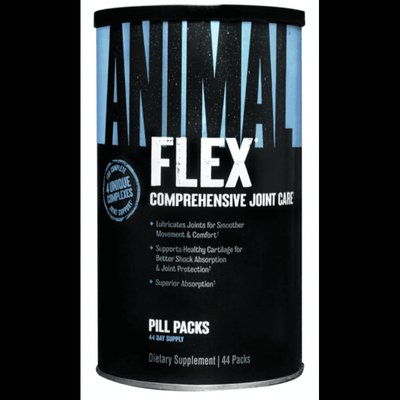 Universal Animal Flex€59.90 In stock 30serv Apelsin).
 - Tendons: any hydrolysed Type I collagen taken with vitamin C before exercise.
Mistake 5: Relying on Topical Collagen Alone
Collagen molecules in creams are too large to penetrate the dermis. Oral supplementation is the delivery mechanism with an actual evidence base.
Choosing a Product
Key label checklist:
- "Hydrolysed" or "collagen peptides" — not native or whole collagen.
- Collagen type stated — I and III for skin/hair, II for joints.
- Vitamin C included — or plan to add it separately.
- Source transparency — bovine (cattle hide/bones) or marine (fish skin/scales). Both are effective; marine is preferred by those avoiding bovine products.
- Added sugars or fillers — some flavoured powders add significant sugar; check the label.
For the full range, browse the collagen category and joint support category at maxfit.ee.
FAQ
Can I take collagen if I am vegetarian or vegan?
All commercially available collagen supplements are derived from animal sources (bovine, marine, or poultry). There is no plant-sourced collagen. Vegans can support collagen synthesis by ensuring adequate intake of vitamin C, lysine, and proline — found in legumes, nuts, and citrus — but this is not the same as supplementing with collagen peptides directly.
Does cooking destroy collagen in food?
Cooking does not destroy collagen — bone broth is a traditional collagen source made by long cooking. However, the collagen in broth is not as reliably standardised for dose as commercial hydrolysed collagen supplements.
Should I take more collagen if I exercise a lot?
Athletes may have higher connective tissue turnover and some evidence suggests that physically active people could benefit from the tissue-remodelling support that collagen provides. There is no strong evidence that very large doses (above roughly 15 g/day) provide additional benefit compared to the studied range.
References
Proksch, E., Segger, D., Degwert, J., Schunck, M., Zague, V., & Oesser, S. (2014). Oral supplementation of specific collagen peptides has beneficial effects on human skin physiology: a double-blind, placebo-controlled study. Skin Pharmacology and Physiology, 27(1), 47–55. https://pubmed.ncbi.nlm.nih.gov/23949208/
Shaw, G., Lee-Barthel, A., Ross, M. L., Wang, B., & Baar, K. (2017). Vitamin C-enriched gelatin supplementation before intermittent activity augments collagen synthesis. American Journal of Clinical Nutrition, 105(1), 136–143. https://pubmed.ncbi.nlm.nih.gov/27852613/
Clark, K. L., Sebastianelli, W., Flechsenhar, K. R., Aukermann, D. F., Meza, F., Millard, R. L., & Albert, A. (2008). 24-Week study on the use of collagen hydrolysate as a dietary supplement in athletes with activity-related joint pain. Current Medical Research and Opinion, 24(5), 1485–1496. https://pubmed.ncbi.nlm.nih.gov/18416885/



