What Is Coenzyme Q10 and Who Uses It
Coenzyme Q10 (CoQ10), also known as ubiquinone or — in its reduced form — ubiquinol, is a fat-soluble compound found in virtually every cell of the body. It is a critical component of the mitochondrial electron transport chain, where it helps convert nutrients into adenosine triphosphate (ATP), the cell's primary energy currency. It also functions as a lipid-soluble antioxidant, protecting cell membranes from oxidative damage.
Endogenous CoQ10 synthesis declines with age, and some medications — most notably statins — are known to reduce circulating CoQ10 levels. This has driven interest in CoQ10 supplementation among older adults, athletes seeking mitochondrial support, and people taking statins who wish to counteract the potential reduction. The question for regular supplementers is whether coenzyme q10 long term use is safe and whether continuous daily supplementation is preferable to cycling.
What Long-Term Studies Show
CoQ10 has one of the more robust long-term safety records among popular supplements. Multiple studies have used supplementation periods of several months without safety signals, and some trials have extended longer. A notable long-term study is the Q-SYMBIO trial (Mortensen et al., 2014), a multicentre randomised controlled trial that used CoQ10 supplementation over two years in patients with severe heart failure and found a favourable safety profile alongside its primary efficacy outcomes.
The Italian Multicenter Study on CoQ10 (Baggio et al., 1994) also collected long-term safety and tolerability data across a large clinical population. Both studies support the conclusion that CoQ10 at typical supplementation doses has a good long-term safety profile in adults.
Short-term adverse effects at high doses can include gastrointestinal symptoms such as nausea and stomach discomfort. These are generally mild and dose-dependent.
Ubiquinone vs Ubiquinol: Does Form Matter Long Term?
Ubiquinone is the oxidised form of CoQ10 and has historically been the most studied. Ubiquinol is the reduced (active antioxidant) form and is marketed as having higher bioavailability. Research does suggest that ubiquinol may achieve higher plasma levels more rapidly — particularly in older adults, in whom the conversion of ubiquinone to ubiquinol may be less efficient.
For long-term use, the key practical difference is cost: ubiquinol products are generally more expensive per milligram. Products like ICONFIT Capsules Coenzyme Q10 90caps and OstroVit Ubichinon Q10 100mg 60caps use the ubiquinone form, which remains well-studied. NOW Ubiquinol 200mg 60 softgels is a ubiquinol product for those specifically seeking the reduced form.
MST Coenzyme Q10 100mg 60caps, 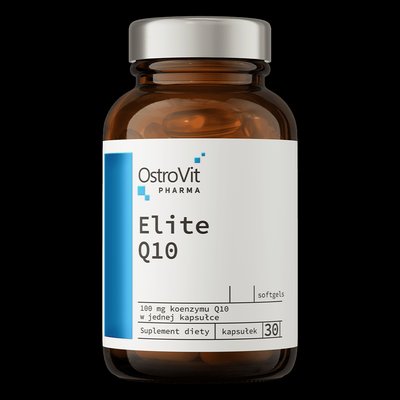 OstroVit Pharma Elite Q10€8.90 In stock 30caps, NOW CoQ10 200mg 60 veg. caps., and NOW CoQ10 100mg 90 veg. caps. represent a range of formats and concentrations to suit different use cases.
Upper Safe Limits Over Time
Regulatory agencies and expert review bodies have evaluated CoQ10 safety data. The compound does not accumulate to toxic levels in the body — excess is cleared via biliary excretion. Long-term studies at doses used in clinical research have not identified a narrow safety margin, which distinguishes CoQ10 from supplements like fat-soluble vitamins (A, D, E, K) that can accumulate. The absence of identified toxicity at typical doses is one reason CoQ10 has no established formal upper intake level in most regulatory frameworks.
This does not mean unlimited quantities are appropriate — gastrointestinal tolerance is the practical upper constraint for most people rather than systemic toxicity.
Do You Need to Cycle Coenzyme Q10?
There is no established scientific basis for cycling CoQ10 supplementation. The compound does not cause receptor downregulation, adrenal suppression, or other physiological changes that might justify a break cycle. The clinical trials that have used CoQ10 — including those over multiple months — have used continuous daily dosing throughout.
People who take CoQ10 specifically to counteract statin-related reductions in plasma CoQ10 should maintain consistent daily supplementation for as long as statin therapy continues, rather than cycling. In this context, cycling would defeat the purpose.
For healthy adults without a specific clinical indication, continuous daily use at moderate doses is generally considered appropriate. There is no evidence that periodic breaks improve outcomes or reduce risk.
Monitoring
For most healthy adults taking CoQ10 at common supplement doses, routine monitoring is not considered necessary. If you are taking CoQ10 alongside a statin or other cardiovascular medication, your doctor or cardiologist may already be monitoring relevant blood markers. Mentioning your CoQ10 supplementation at medical appointments is good practice so your physician has a complete picture of your supplement use.
People with specific conditions who use higher doses — as in some cardiology protocols — may undergo periodic plasma CoQ10 testing to confirm adequate levels. For general wellness supplementation, this level of monitoring is usually not warranted.
Honest Verdict
Long-term coenzyme Q10 use at sensible doses is supported by a good safety record in clinical research. The compound is well-tolerated, does not accumulate to toxic levels, and does not require cycling. The main considerations are: (1) choose an appropriate form — ubiquinone is well-established; ubiquinol may offer better bioavailability for older users; (2) take it with a fat-containing meal to support absorption (CoQ10 is fat-soluble); (3) be consistent — CoQ10 does not provide an acute effect and works cumulatively.
Available at maxfit.ee in the koensuum-q10 and koensuum-q10-ubiquinol categories, giving you the choice of multiple brands and forms.
FAQ
Should I take ubiquinone or ubiquinol?
For most adults under the age of roughly 40, ubiquinone is effective and well-studied at a lower cost. For older adults or those with conditions affecting CoQ10 utilisation, ubiquinol may provide better plasma levels more reliably. Both forms are legitimate; the choice depends on individual factors, age, and budget.
Can CoQ10 be taken indefinitely?
Based on available clinical evidence, yes. Long-term trials including Mortensen et al. (2014) over two years have not identified safety concerns at typical supplementation doses. There is no established upper limit that makes indefinite use unsafe at common doses, and no evidence that cycling is beneficial.
Can I combine CoQ10 with other antioxidants?
Yes. CoQ10 is commonly combined with vitamin E, vitamin C, alpha lipoic acid, and omega-3s without interaction concerns. In fact, CoQ10 can recycle tocopherol (vitamin E) in cell membranes, making their combination theoretically complementary. Always inform your doctor of your supplement use, particularly if you take blood thinners or cardiovascular medications.
References
Mortensen, S. A., Rosenfeldt, F., Kumar, A., Dolliner, P., Filipiak, K. J., Pella, D., Alehagen, U., Steurer, G., & Littarru, G. P. (2014). The effect of coenzyme Q10 on morbidity and mortality in chronic heart failure: results from Q-SYMBIO: a randomized double-blind trial. JACC: Heart Failure, 2(6), 641-649. https://pubmed.ncbi.nlm.nih.gov/25282031/
Baggio, E., Gandini, R., Plancher, A. C., Passeri, M., & Carmosino, G. (1994). Italian multicenter study on the safety and efficacy of coenzyme Q10 as adjunctive therapy in heart failure. Molecular Aspects of Medicine, 15(Suppl), S287-S294.
Kaneko, K., Manabe, Y., Nagasawa, K., & Narahara, H. (2020). Ubiquinol versus ubiquinone: evidence, bioavailability, and application in clinical settings. Integrative Medicine Reports, 1(1), 123-130.



