Coenzyme Q10 After 50: Benefits & Safety
Coenzyme Q10 (CoQ10) — also known as ubiquinone — is a fat-soluble compound that plays a central role in mitochondrial energy production and serves as a cellular antioxidant. Unlike many popular supplements, CoQ10 is something the body synthesizes naturally. The key issue for people over 50 is that endogenous CoQ10 production declines with age, and certain widely used medications — particularly statins — further reduce it.
Age-Related Need
CoQ10 is found at highest concentrations in tissues with high energy demands: the heart, liver, kidneys, and skeletal muscle. As we age, tissue CoQ10 concentrations decline. The reasons include reduced biosynthetic capacity, increased oxidative consumption, and potentially reduced dietary CoQ10 absorption efficiency.
The decline is gradual and does not typically produce overt clinical symptoms in healthy older adults. However, it represents a genuine biological change that may become more relevant when compounded by statin use, high oxidative load from chronic disease, or simply the cumulative effects of aging on mitochondrial function.
Absorption Changes
CoQ10 is fat-soluble and its absorption depends on dietary fat intake and functional gastrointestinal capacity. With aging, slight reductions in fat digestion efficiency may affect absorption marginally. Taking CoQ10 with a fat-containing meal improves absorption in all age groups.
Ubiquinol (the reduced form of CoQ10) is sometimes marketed as superior to ubiquinone (the oxidized, classic form) because it does not require conversion before use in antioxidant pathways. Evidence on clinically meaningful absorption differences between forms is mixed; some studies suggest ubiquinol may have an advantage in older adults, particularly above age 70.
Dose and Safety
Most clinical trials have used doses ranging from 100 mg to 300 mg per day. For general supplementation in healthy older adults, 100–200 mg per day is a commonly cited range. CoQ10 has a well-established safety record at these doses with no serious adverse effects documented in controlled trials. No regulatory upper limit has been established for the general population.
Gastrointestinal symptoms (mild nausea, upset stomach) are the most commonly reported side effects at higher doses and are usually manageable by dividing doses or taking with food.
Interactions with Medication
The most clinically important interaction is with statins (cholesterol-lowering drugs such as atorvastatin, rosuvastatin). Statins inhibit the mevalonate pathway, which also reduces CoQ10 synthesis. Plasma CoQ10 levels are lower in statin users compared to non-users (Mortensen et al., 2014). Whether supplementing CoQ10 in statin users meaningfully reduces statin-associated muscle symptoms remains an area of active study with mixed results.
CoQ10 has mild blood-pressure-lowering potential. Individuals taking antihypertensive medications should monitor blood pressure if adding CoQ10, though clinically significant interactions are not well documented at normal supplement doses.
Warfarin interaction: some evidence suggests CoQ10 may modestly affect anticoagulant response. Anyone on warfarin should consult a healthcare provider before starting CoQ10.
When to Supplement
The clearest case for supplementation after 50 is in statin users who experience unexplained muscle fatigue or weakness — a common statin side effect that may be partly related to CoQ10 depletion. Research in this area is ongoing, but the supplement is generally safe to try under these circumstances with medical awareness.
For healthy older adults without statin use, CoQ10 supplementation is a reasonable approach for supporting mitochondrial function and cellular antioxidant capacity, though direct evidence that it significantly alters clinical outcomes in otherwise healthy people is not robust.
At maxfit.ee you will find ICONFIT Capsules Coenzyme Q10 90caps, MST Coenzyme Q10 100mg 60caps, OstroVit Ubichinon Q10 100mg 60caps, and NOW CoQ10 200mg 60 veg. caps. — the latter providing a higher dose that may suit individuals with confirmed statin use or higher supplementation goals. 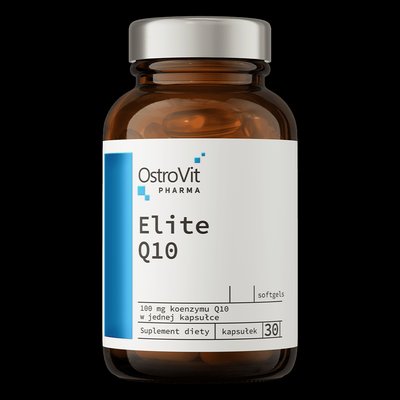 OstroVit Pharma Elite Q10€8.90 In stock 30caps and NOW Ubiquinol 200mg 60 softgels offer the ubiquinol form.
Bottom Line
CoQ10 is one of the most biologically rational supplements for adults over 50. Its endogenous synthesis declines with age, its safety record is excellent, and its relevance is particularly clear in statin users. Expectations should be proportional: it supports mitochondrial function and cellular antioxidant capacity, but is not a dramatic energy booster in healthy adults without deficiency.
FAQ
Why does CoQ10 decline with age?
Endogenous CoQ10 biosynthesis relies on pathways that become less efficient with aging. Additionally, older tissues may have higher oxidative stress leading to faster consumption of CoQ10 as an antioxidant. The combined result is lower tissue CoQ10 concentrations.
Should statin users take CoQ10?
Statins reduce CoQ10 synthesis through the same pathway they block for cholesterol reduction. Plasma CoQ10 levels are lower in statin users (Mortensen et al., 2014). Evidence that supplementation fully resolves statin-related muscle symptoms is mixed, but CoQ10 is safe to use, and discussing it with the prescribing doctor is reasonable.
What is the difference between ubiquinone and ubiquinol?
Ubiquinone is the oxidized form and the most common form in supplements. Ubiquinol is the reduced, active antioxidant form. The body interconverts these forms. Some evidence suggests ubiquinol may be better absorbed in older adults, but the clinical significance of this difference in the average supplementation context is debated.
References
Mortensen, S. A., Rosenfeldt, F., Kumar, A., Dolliner, P., Filipiak, K. J., Pella, D., & Littarru, G. P. (2014). The effect of coenzyme Q10 on morbidity and mortality in chronic heart failure: results from Q-SYMBIO. JACC: Heart Failure, 2(6), 641-649. https://pubmed.ncbi.nlm.nih.gov/25282031/
Langsjoen, P. H., & Langsjoen, A. M. (2008). Supplemental ubiquinol in patients with advanced congestive heart failure. BioFactors, 32(1-4), 119-128. https://pubmed.ncbi.nlm.nih.gov/19096107/
Pepe, S., Marasco, S. F., Haas, S. J., Sheeran, F. L., Krum, H., & Rosenfeldt, F. L. (2007). Coenzyme Q10 in cardiovascular disease. Mitochondrion, 7(S), S154-S167. https://pubmed.ncbi.nlm.nih.gov/17485243/



